



In many homes, outdoor spa hot tubs have become an essential facility for relieving stress, relaxing muscles, and enjoying a private spa experience. However, many users only focus on how to heat the tub and maintain the jet effect, often overlooking a crucial issue—regularly changing the water in the whirlpool spa hot tub.
So, what happens if you don't change the water in your whirlpool spa hot tub for a long time? This not only affects water quality and the experience but can also pose safety hazards.
This article will provide a comprehensive answer to every detail you should know from a professional perspective, with clear logic and in-depth analysis.
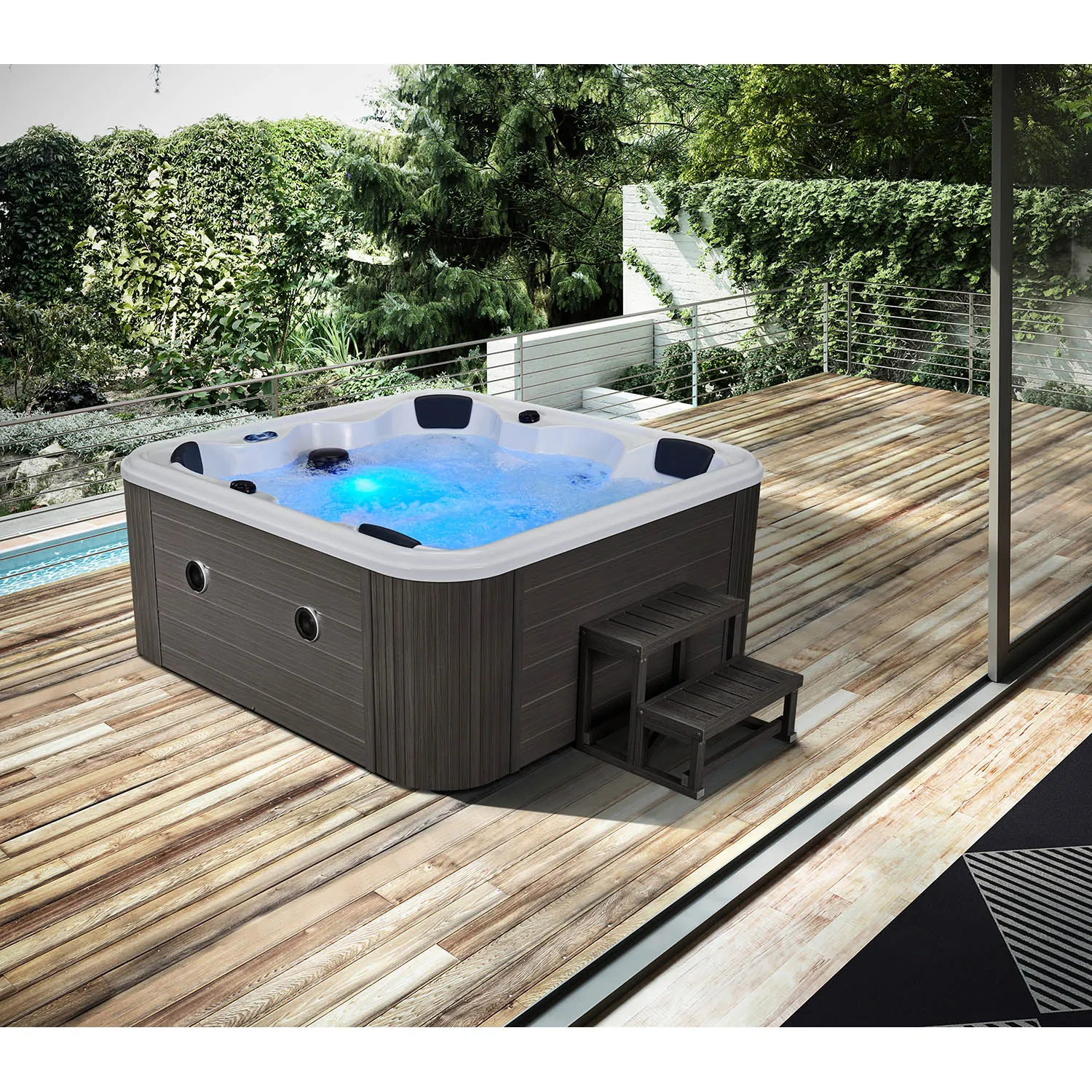
Why does not changing the water in a spa hot tub for a long time lead to water quality deterioration?
The water in a spa hot tub is not used once and then drained like in a regular bathtub; it is circulated, filtered, continuously heated, and reused multiple times. Therefore, even if you use chemical agents such as chlorine, bromine, or other disinfectants, the water quality will still gradually decline over time, leading to a series of problems that cannot be ignored.
1. Continuous Accumulation of Total Dissolved Solids (TDS) in Water
With continuous circulation in the spa hot tub, when you add chemicals such as disinfectants, pH balancers, and foam suppressants, these substances don't completely disappear but gradually accumulate as TDS.
High TDS can lead to the following:
• The water becomes cloudy and no longer clear.
• Increased foaming, with limited effectiveness even with foam suppressants.
• Reduced efficiency of chlorine or bromine.
• Difficulty in maintaining water balance.
As TDS continues to rise, the spa hot tub's filtration system becomes more overburdened, and its filtration effect deteriorates.
2. Continuous Increase in Organic Matter in Water
Sebum, sweat, cosmetics, skincare products, and hair conditioners brought in by your body will remain in the water. These organic substances cannot be completely broken down by chemicals, and prolonged lack of water changes can lead to:
• Unpleasant odors in the water.
• Accelerated filter clogging.
• Formation of an oily film on the water surface.
• Increased likelihood of bacterial growth.
Even with daily filtration circulation, organic matter will continue to accumulate.
3. Chemical Balance Becomes Increasingly Difficult to Control
The water volume in a whirlpool spa hot tub is small, making its chemical balance particularly sensitive. If the water isn't changed for an extended period:
• pH levels become difficult to maintain
• Alkalinity fluctuates easily
• Calcium hardness becomes unstable, potentially leading to scaling
• Increased demand for disinfectants, a phenomenon known as "disinfectant fatigue"
This not only increases the cost of disinfectants but also makes the adjustment process increasingly complex.
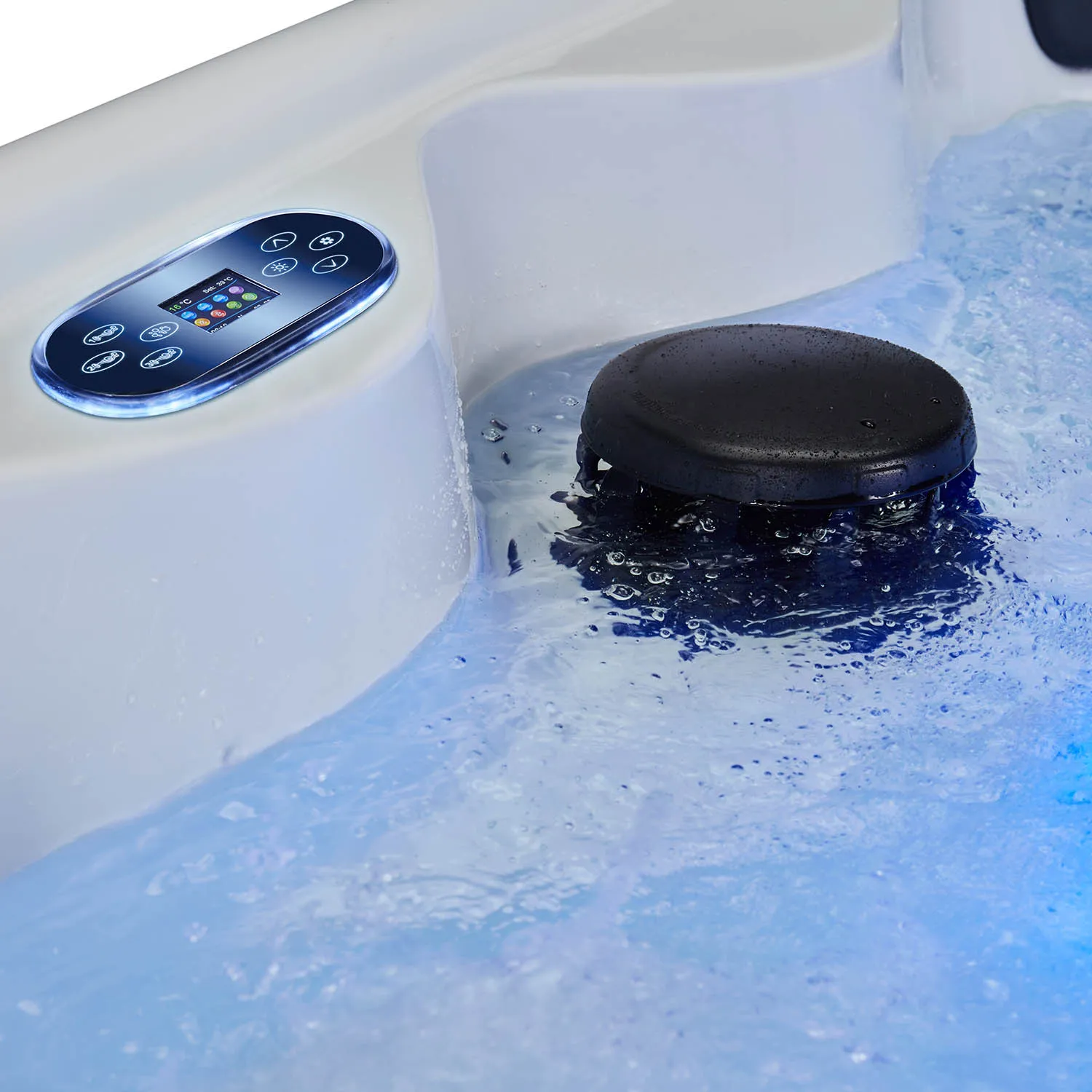
Will not changing the water for a long time affect the performance of the spa hot tub?
Many users believe that "not changing the water just means the water gets a little dirty," but in reality, the impact on the equipment is much greater. A whirlpool spa hot tub is a complex system, and prolonged use of stale water can damage its hardware.
1. Harm to the Heater
Minerals and chemical residues in the water will accumulate on the heater surface, leading to:
• Decreased heating efficiency
• Extended heating time
• Significantly increased operating energy consumption
• Shortened heater lifespan
In severe cases, it can even cause heater damage, with repair costs far exceeding the cost of regular water changes.
2. Impact on the Jet System
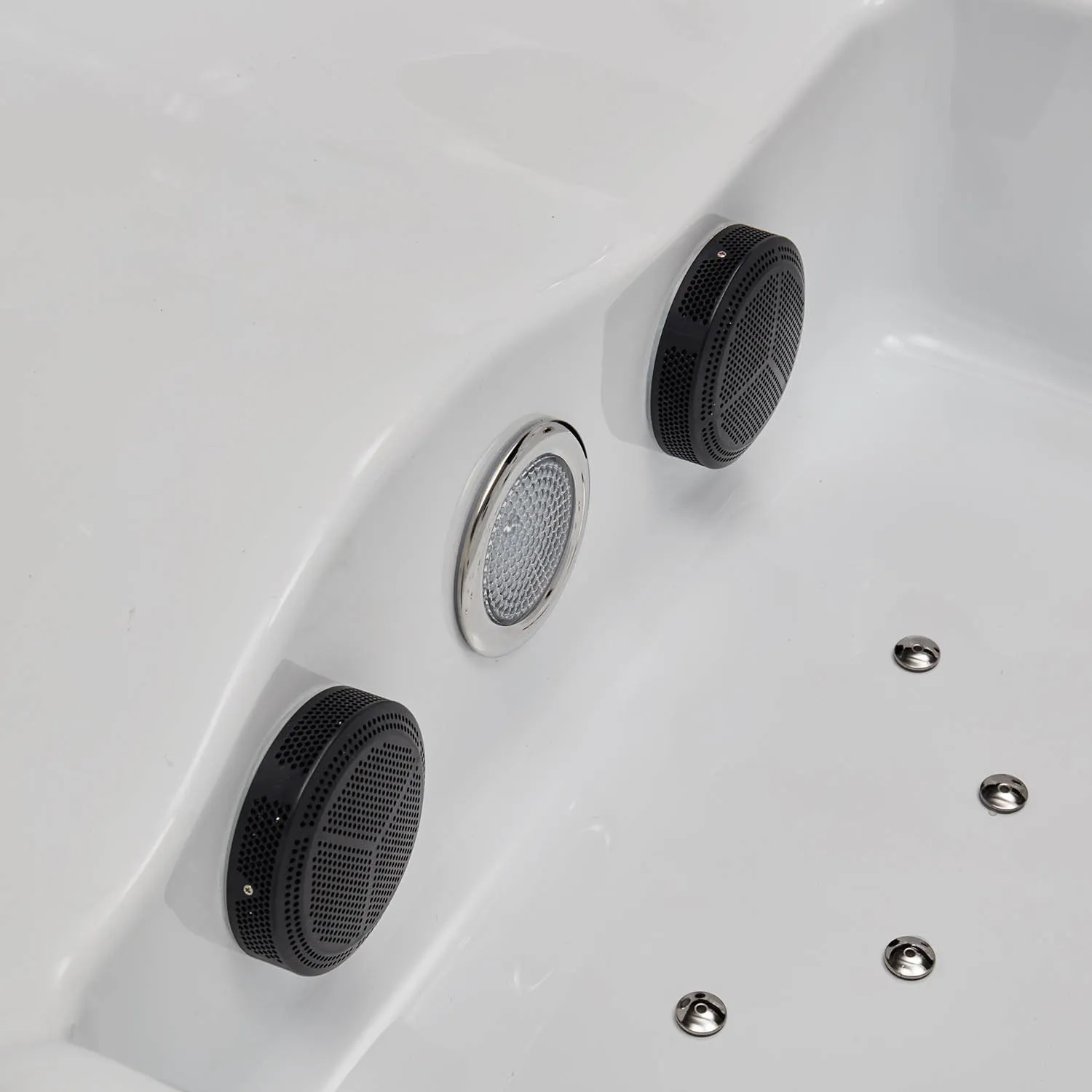
The jet function is the core of the whirlpool spa hot tub experience. However, dirty or chemically imbalanced water can cause:
• Scale buildup in the internal pipes of the jets
• Foam entering the showerheads and causing blockages
• Reduced water flow
• Noise or malfunctions
These problems ultimately reduce the overall user experience.
3. Damage to the Filter
The filter already performs a significant purification task. If you don't change the water regularly, it will age prematurely or become clogged:
• Reduced filtration efficiency
• More frequent cleaning or replacement
• Increased maintenance costs
It can even cause the whirlpool spa hot tub system to malfunction and stop circulating properly.
Does not changing the water increase health risks?
The answer is yes. The continuous heating, closed-loop circulation, and suitable water temperature of a spa hot tub create ideal conditions for microbial growth. Even adding disinfectants cannot completely eliminate the risks if the water isn't changed for an extended period.
1. Accelerated Bacterial Growth
Warm water is a natural "culture medium." Not changing the water for a long time can lead to:
• Bacterial growth
• Unpleasant odors or cloudiness in the water
• Accelerated disinfectant degradation
This exposes users to potential risks during soaking.
2. Chemical Residues Irritating the Skin
When the chemical balance is disrupted:
• High pH levels can cause dry, itchy skin
• Low pH levels can cause stinging or burning sensations
• Hard water can make the skin feel sticky or uncomfortable
People with sensitive skin are especially susceptible.
3. Inhalation Irritation
If organic matter and TDS accumulate in the water, the following may rise when the jet system is activated:
• Chemical vapors
• Irritating odors
• Particulate matter that affects respiration
Especially at higher temperatures, the impurities in the vapor also increase.
How long should you not change the water in a spa hot tub before noticeable problems occur?
While the frequency of use varies from whirlpool spa hot tub to spa water, from a professional maintenance perspective, the following general guidelines apply:
1. Frequent Use (3-5 times per week)
It is recommended to change the water every 2-3 months.
After 3 months, the following phenomena usually become apparent:
• Difficulty maintaining chemical balance
• Increased foaming
• Water begins to turn cloudy
2. Moderate Use (1-2 times per week)
It is recommended to change the water every 3-4 months.
3. Infrequent Use (Occasional Use)
Even with infrequent use, water quality will still deteriorate due to aging, so it should not be left for more than 4 months.
In addition, if you notice:
• A change in the smell of the water
• Adding too many chemicals cannot restore its quality
• Recurring foaming
• Noticeably cloudy or viscous water
→ These are all signs that the water must be changed.
Why is the water in my spa hot tub still unhealthy even after adding a lot of disinfectant?
Many people mistakenly believe that "chemicals can solve all problems," but the truth is, if water is too old, even constantly adding disinfectants won't truly restore its quality.
Reasons include:
1. High TDS reduces disinfectant efficiency
When there are too many substances in the water:
• Chlorine or bromine combines with impurities.
• It cannot effectively kill bacteria.
• More disinfectant is needed to achieve the same effect.
But the more you add, the higher the TDS rises, creating a vicious cycle.
2. Organic matter consumes a large amount of disinfectant
Skin oils and skincare product residues significantly reduce the effectiveness of disinfectants.
3. Chemical imbalance
If the pH is not between 7.2 and 7.8, disinfectants will quickly become ineffective.
Aged water often struggles to maintain this range.
Will not changing the water negatively impact the spa hot tub experience?
Absolutely, and usually very noticeably.
1. The water is no longer clear and transparent
Turbidity, floating matter, and oil films all affect the visual experience.
2. Deteriorating Texture
Aged water will feel:
• Slippery
• Increased adhesion
• No longer clean and refreshing
3. Unpleasant Odor
Aged water may develop:
• Chemical smell
• Fishy smell
• Musty smell
• Foamy smell
These will severely damage the user experience.
4. Reduced Relaxation
You might want to relax, but poor water quality will only make you more stressed.
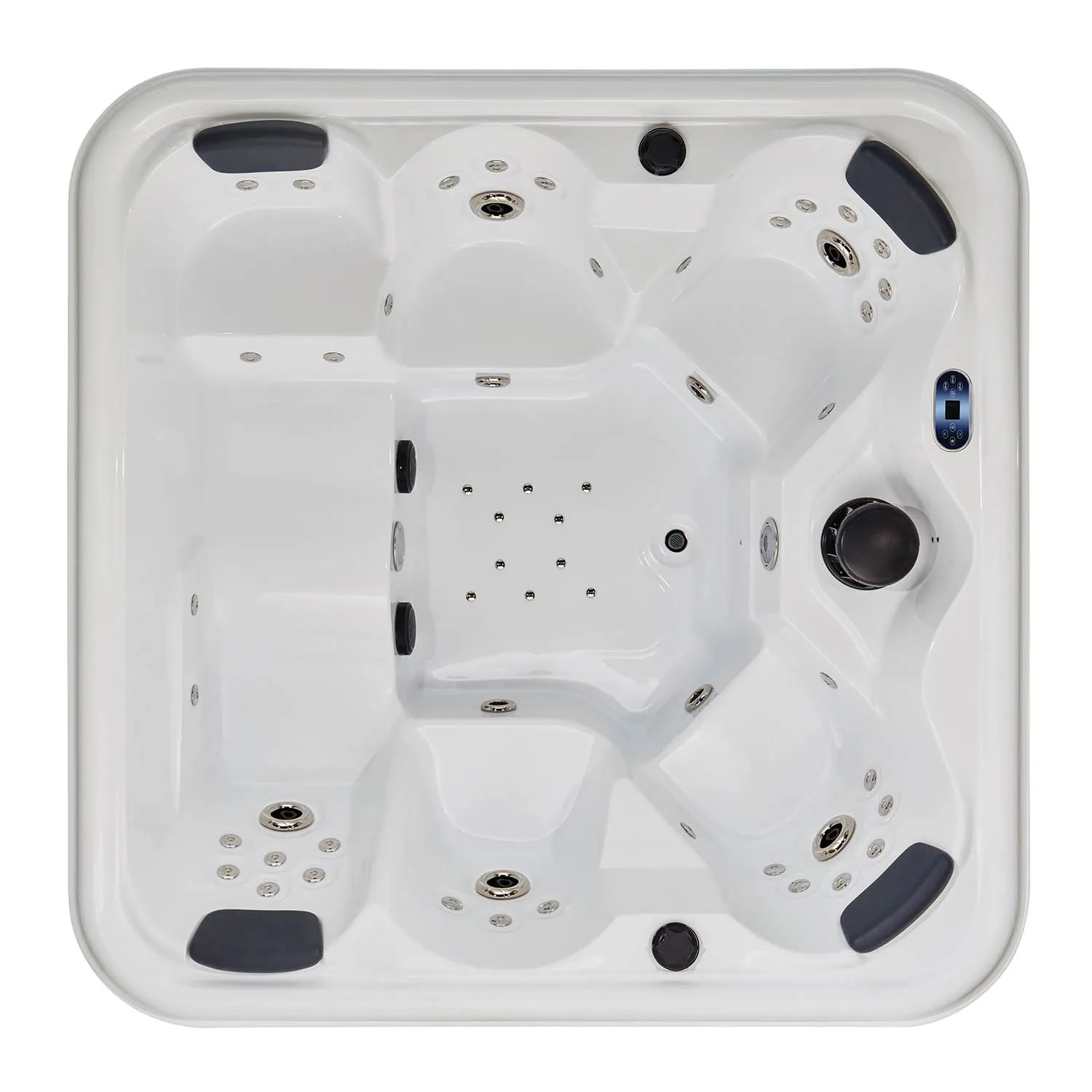
When should I change the water in my spa hot tub immediately?
If any of the following occurs, even if it's not the scheduled water change, you must change the water immediately:
• The water becomes noticeably cloudy
• Excessive and persistent foaming
• The water has an unusual odor
• pH and alkalinity cannot be adjusted for several days
• The last water change was more than 4 months ago
• The filter is persistently clogged
• The jets' water flow is weak, but the hardware is functioning correctly
These are typical signs that the water is beyond repair.
How to create a reasonable spa hot tub water change schedule?
A good water change schedule should include:
1. Fixed frequency
• High-frequency use: 2–3 months
• Medium-frequency use: 3–4 months
• Low-frequency use: 4 months
2. Weekly routine testing
Tests:
• pH
• Alkalinity
• Chlorine or bromine levels
3. Monthly deep cleaning
Includes:
• Filter flushing
• Adding appropriate cleaning agent
• Defoaming treatment
4. Pipe cleaning during each water change
To prevent scale and deposit buildup inside the pipes.
The Water In Your Spa Hot Tub Must Be Changed Regularly, Otherwise the Consequences Can Be Severe
If you don't change the water in your whirlpool spa hot tub for a long time, you may encounter the following problems:
• Irreversible water quality deterioration
• TDS accumulation leading to chemical imbalance
• Increased risk of bacterial growth
• Skin irritation
• Damage to the heater, jet system, and filtration system
• Significantly reduced user experience
• Maintenance costs ultimately exceed the cost of changing the water.
Changing the water is not only for cleanliness, but also for safety, equipment protection, and cost savings. By replacing the hot tub on schedule and performing routine maintenance, your whirlpool spa hot tub can maintain optimal condition for a long time, ensuring a comfortable, safe, and enjoyable soak every time.
How does Yuehua ensure accurate jet placement and hydrotherapy performance in spas?
Using digital measurement systems and ergonomic design principles, Yuehua calculates optimal jet positions to deliver effective hydrotherapy. Each spa undergoes water-flow testing to ensure balanced pressure and smooth operation. This scientific approach sets our products apart from low-end suppliers and ensures high-quality performance. Buyers gain premium features at affordable factory prices, strengthening their market competitiveness.