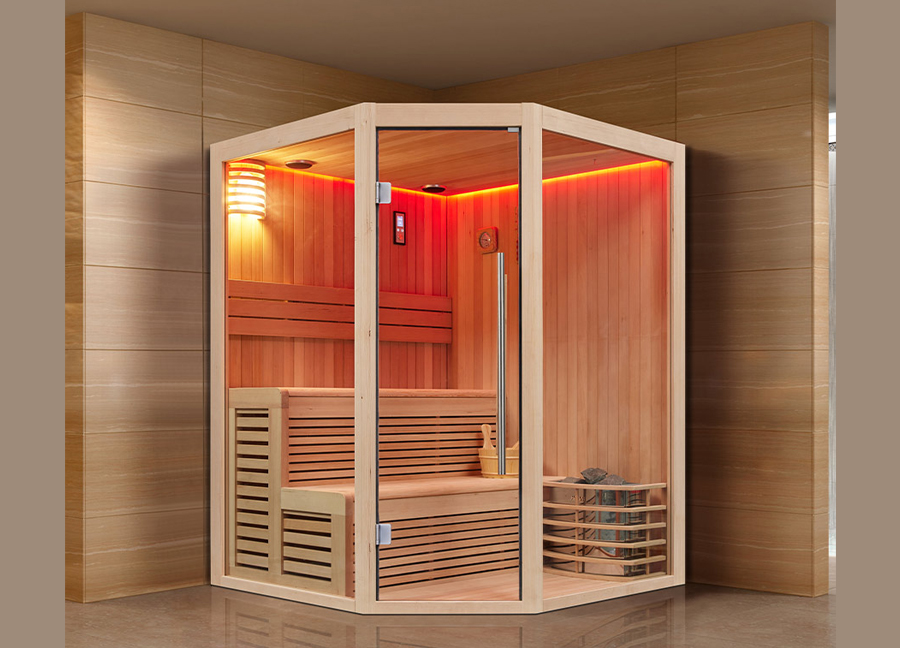
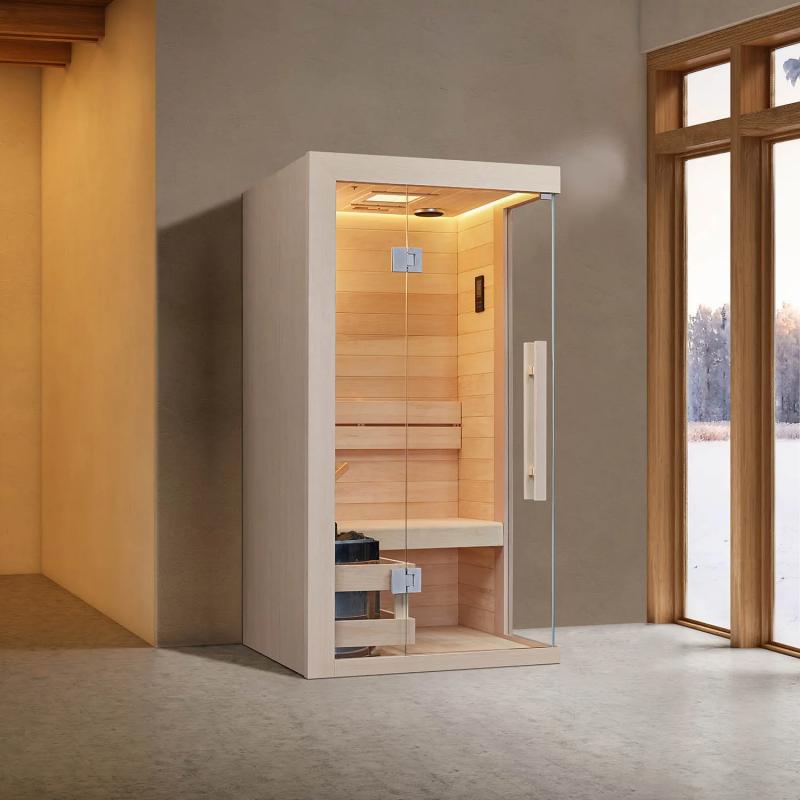
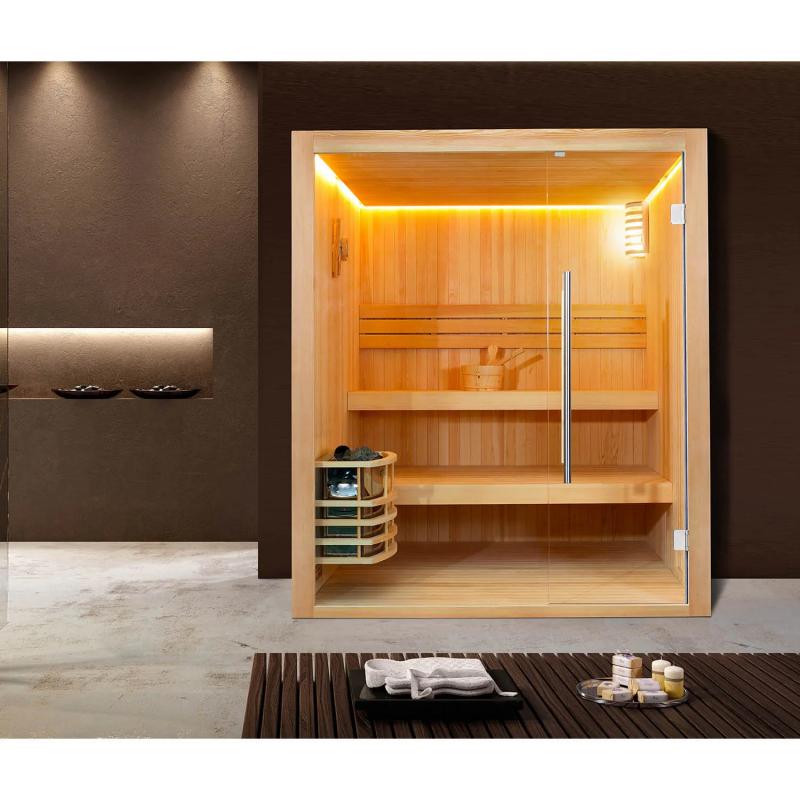
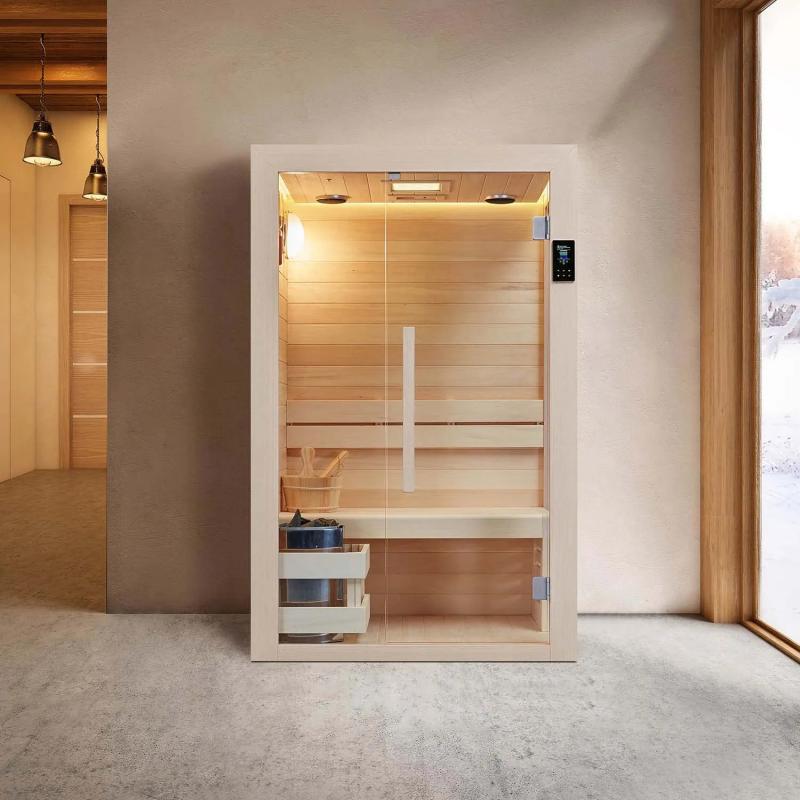
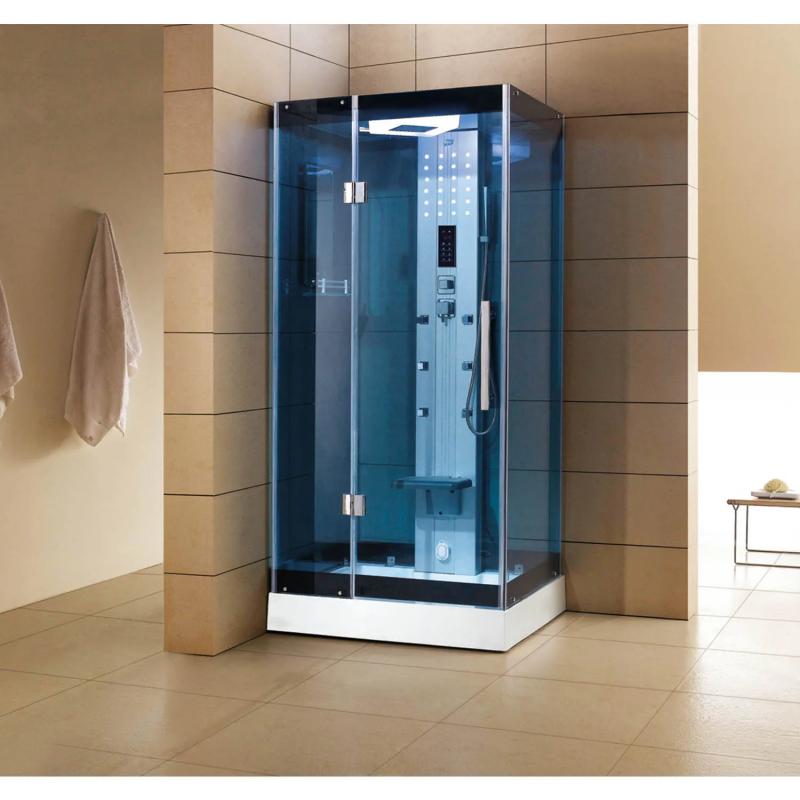
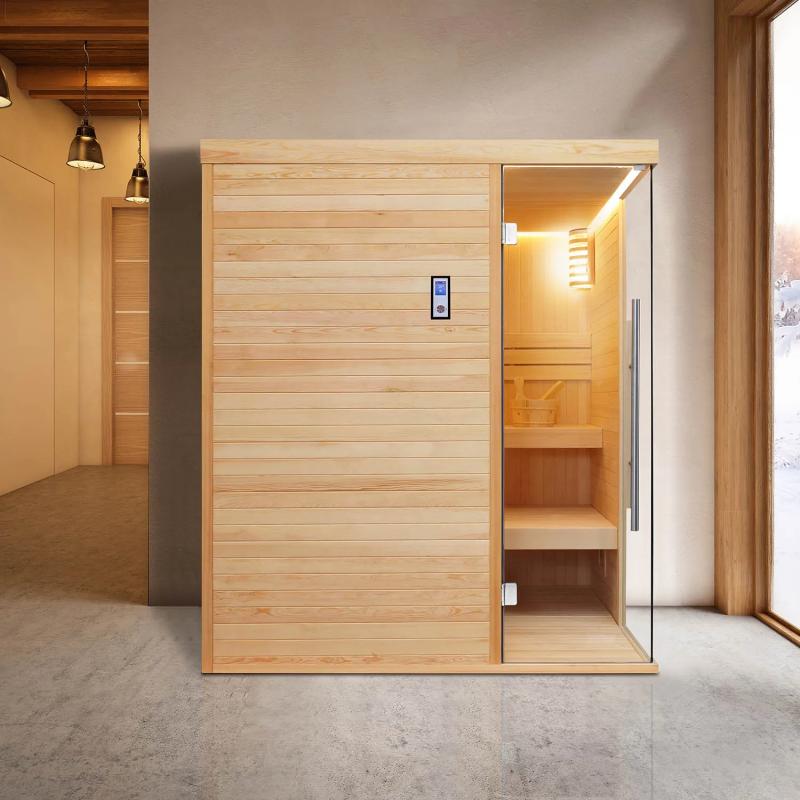
Installing a steam sauna at home allows for convenient use anytime, eliminating reliance on gym or spa opening hours. This convenience is highly appealing to busy individuals or those living in remote areas.
Steam sauna rooms rely on direct contact between steam and skin for heat transfer. If you wear clothing:
• Clothing will block direct contact between steam and skin, reducing heat transfer efficiency.
• The fibrous materials will absorb some of the steam's heat, slowing down the rate at which the skin warms up.
In terms of specific space selection, the area near the bathroom, basement, or a separate empty room are the ideal installation locations for a steam sauna room, while balconies or enclosed terraces are suitable for families with the ability to renovate.
Based on medical advice and the physical characteristics of the elderly, it is generally not recommended for people over 70 years old to stay in a steam sauna room for more than 10–15 minutes.
Based on existing research, sauna therapy may help lower low-density lipoprotein cholesterol (LDL-C) and triglycerides (TG), and increase high-density lipoprotein cholesterol (HDL-C). This change has positive implications for the prevention of dyslipidemia and cardiovascular disease.
Sweating Promotes Reduced Antidiuretic Hormone (ADH) Secretion
However, in the high temperature and humidity environment of a steam sauna, increased body temperature and external stimuli temporarily inhibit ADH secretion.