
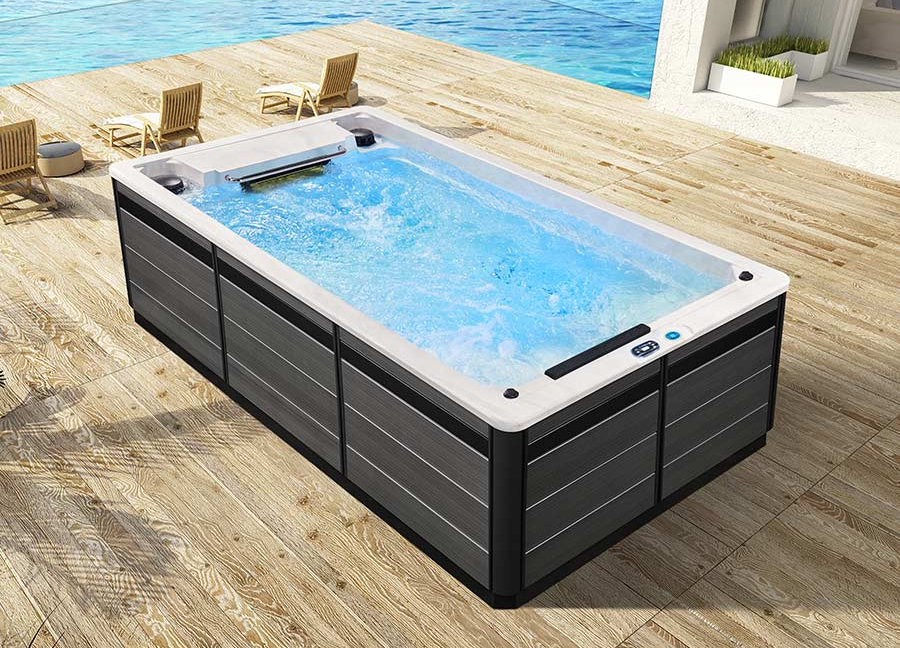
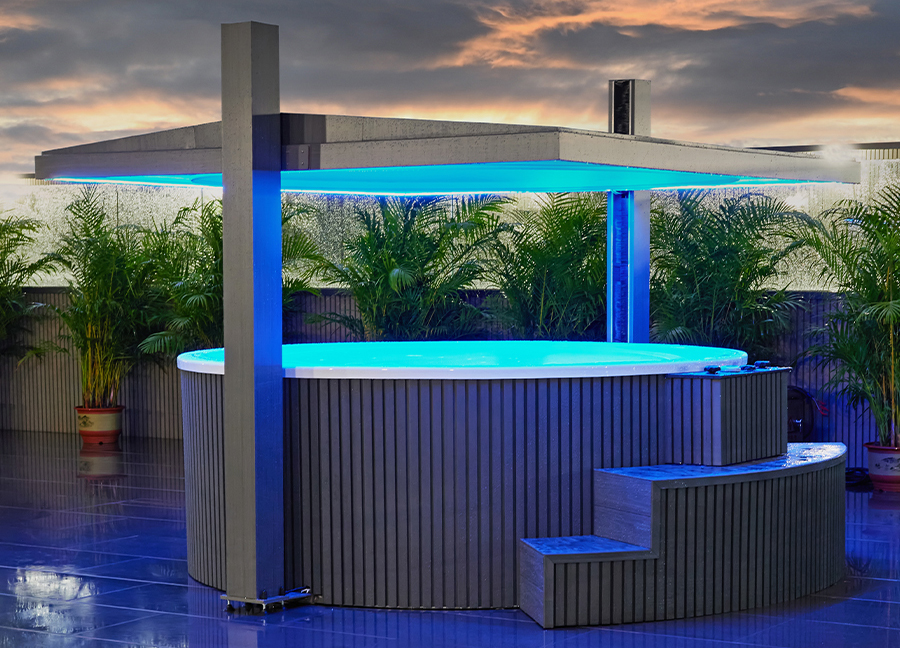



Many people who use a spa hot tub experience physical relaxation, an elevated heart rate, and soothed muscles.
Consequently, a common question arises:
"Does the experience of simply sitting in a whirlpool spa hot tub actually count as a form of exercise?"
While this question may seem simple on the surface, it actually involves multiple layers of inquiry, touching upon human physiological responses, metabolic mechanisms, and the very definition of exercise.
In this article, we will conduct an in-depth analysis from a scientific perspective: What exactly are the physiological effects of soaking in a spa hot tub? And can these effects truly be considered equivalent to the benefits of exercise?
Through a systematic explanation, you will come to understand that while a whirlpool spa hot tub can indeed induce certain physiological changes similar to those of exercise, it cannot truly serve as a substitute for actual physical training.
What Qualifies as "Exercise"?
According to the standards set by the World Health Organization (WHO) and the field of exercise physiology:
Exercise is defined as a process involving planned, purposeful, and repetitive physical activity undertaken to improve or maintain physical fitness and health.
The three core elements of exercise include:
• Active Muscle Contraction—requiring energy expenditure;
• Increased Cardiopulmonary Load—resulting in elevated heart rate and respiratory rate;
• Physiological Adaptations—leading to long-term improvements in strength, endurance, or metabolic efficiency.
In other words, an activity can only be classified as "exercise" when the body generates energy expenditure and physiological stimulation through voluntary movement.
How Does a Spa Hot Tub Affect the Body?
To answer our central question, we must analyze the specific physiological responses that occur within the body while soaking in a whirlpool spa hot tub.
1. The Thermal Effect
Spa hot tubs are typically maintained at a temperature range of 37°C to 40°C.
This level of heat serves to:
• Dilate blood vessels, thereby promoting blood circulation;
• Increase heart rate by approximately 10 to 15 beats per minute;
• Relax muscle fibers, alleviating tension and stiffness.
These effects are similar to those of a mild warm-up routine; however, the energy expenditure involved stems primarily from the body's thermoregulatory response rather than from active muscular exertion.
2. Hydrostatic Pressure and Buoyancy Effects
The warm aquatic environment exerts uniform hydrostatic pressure on the body, which helps facilitate venous return (the flow of blood back to the heart).
Additionally, the buoyancy provided by the water reduces the load on weight-bearing joints, thereby relieving pressure on the spine and knees. This creates a sensation of lightness and relaxation, yet it also implies that the body is not truly exerting itself against any resistance.
3. Neuroendocrine Response
Soaking in a whirlpool spa hot tub promotes:
• The release of endorphins—inducing a sense of pleasure;
• A decrease in cortisol levels—alleviating stress;
• The relief of muscle tension and metabolic relaxation.
While these responses resemble the relaxation experienced after exercise, the underlying causes differ fundamentally.
Exercise-induced endorphin release stems from the metabolic stress caused by muscular exertion, whereas the relaxation triggered by a hot bath is primarily the result of external thermal stimulation.
Does sitting in a spa hot tub increase calorie expenditure?
Many people believe that sweating in a warm environment signifies that the body is "burning fat"—a common misconception.
1. Sweating ≠ Fat Burning
Sweating while soaking in a whirlpool spa hot tub occurs because your core body temperature has risen; the body sweats to dissipate heat through evaporation and maintain thermal equilibrium.
The energy consumed during this process is primarily used to regulate body fluids, not to burn fat.
Any weight loss observed is largely due to water loss, which is immediately regained once you rehydrate.
2. Metabolic Changes in a Hot Environment
Although elevated temperatures can cause a slight increase in heart rate, the actual energy expenditure remains limited.
For example:
• Sitting in hot water for 30 minutes burns approximately 80–100 calories;
• Light walking for 30 minutes burns approximately 150–200 calories.
As is evident, the difference between the two is nearly twofold.
Therefore, while sitting in a whirlpool spa hot tub does provide a mild metabolic stimulus, it is far from sufficient to be classified as "exercise."
Why does a spa hot tub make you "feel like you’ve exercised"?
Although scientifically speaking it does not constitute exercise, many people experience a sense of "mild fatigue" or "relaxed exhaustion" after soaking in a whirlpool spa hot tub. This occurs for the following reasons:
1. The Body-Cooling Effect Resulting from Accelerated Blood Circulation
After exiting a hot environment, the body's core temperature begins to drop.
This physiological regulatory process resembles the "cooling-down phase" following a workout, leading people to mistakenly believe they have just completed an exercise session.
2. Short-Term Fluctuations in Blood Pressure and Heart Rate
A hot bath can cause a temporary drop in blood pressure and an increase in heart rate; these circulatory changes mimic the cardiovascular responses observed during physical exercise.
3. The Psychological Suggestion of Muscle Relaxation
When tense muscles relax in warm water, the brain receives signals of "recovery and relaxation"—much like the sensation experienced after stretching post-workout.
These reactions make a person "feel like they’ve exercised," yet, in reality, the body has not undergone actual muscle training or metabolic stimulation.
Does sitting in a spa hot tub offer any exercise value?
While passive soaking cannot replace physical exercise, on certain levels, it can indeed yield supplementary fitness benefits.
1. Aiding Muscle Recovery
The heat of a whirlpool spa hot tub promotes lactic acid metabolism and alleviates muscle soreness, thereby assisting in post-workout recovery.
This constitutes a form of passive rehabilitation that indirectly supports the effects of exercise, rather than being an active workout itself.
2. Improving Blood Circulation
A hot-water environment dilates blood vessels and facilitates oxygen delivery, offering mild benefits for cardiovascular health.
However, these benefits align more closely with hydrotherapy (relaxation therapy) than with physical fitness training.
3. Enhancing Flexibility
Elevated temperatures can temporarily increase joint mobility, making stretching easier.
Consequently, some rehabilitation exercises are performed in whirlpool spa hot tubs—though the key lies in "movement," not merely "sitting."
4. Stress Relief and Sleep Improvement
Warm water stimulates parasympathetic nervous system activity, guiding both mind and body into a state of relaxation, which helps improve sleep quality.
While beneficial for overall health, this does not fall under the category of physical exercise.
How can you truly achieve "exercise results" in a spa hot tub?
If you wish to reap the benefits of exercise while enjoying the comfort of a whirlpool spa hot tub, consider trying the following scientifically-backed methods:
1. Engage in Light Aquatic Activities
Performing simple movements within the spa hot tub can elevate your heart rate and increase muscle engagement:
• Underwater leg lifts and circles;
• Forward and backward arm swings;
• Seated abdominal contractions and breath control exercises.
This approach leverages both buoyancy and water resistance to generate a mild workout effect.
2. Utilize Water Jets for Resistance Training
The jets in a whirlpool spa hot tub can serve as a source of natural resistance.
For example:
• Pressing your legs against the flow of the jets;
• Resisting the water current with your arms;
• Core-balancing exercises against the water flow.
These activities activate deep muscle groups and constitute a form of low-impact resistance training.
3. Control Time and Temperature
During your session, the water temperature should be maintained between 36°C and 38°C, and the duration limited to 15–20 minutes.
Excessively high temperatures may lead to an elevated heart rate or dehydration.
4. Post-Workout Stretching and Cool-Down
Performing gentle stretches after your soak helps your body transition more smoothly from a state of relaxation back to its normal state.
What are the risks of using a spa hot tub as a "substitute for exercise"?
If one mistakenly equates soaking in a hot tub with actual exercise over the long term, the following issues may arise:
• Decline in Physical Fitness: Muscles do not receive sufficient stimulation, leading to a gradual decline in strength and endurance.
• Slowed Metabolism: A lack of physical activity lowers the basal metabolic rate, making it easier for body fat to accumulate.
• Cardiovascular Strain: Prolonged immersion in high-temperature water can increase the workload on the heart.
• Risk of Dehydration: Fluid loss occurs rapidly in hot environments; failure to rehydrate promptly can lead to dizziness.
Therefore, while soaking in a whirlpool spa hot tub offers soothing benefits, it cannot serve as a substitute for regular physical exercise.
Spa Hot Tubs Can Promote Health, But Do Not Equal Exercise
Based on scientific evidence, we can conclude that:
Sitting in a whirlpool spa hot tub does not constitute exercise.
It does indeed raise your heart rate, improve blood circulation, and relax your muscles; however, these physiological changes are triggered by external thermal stimulation rather than by active muscular exertion.
In other words, soaking is a form of "passive relaxation therapy," not active physical training.
Nevertheless, spa hot tubs still play a vital role in health management:
• They serve as an effective tool for post-workout recovery.
• They help alleviate stress and combat insomnia.
• They improve blood circulation and flexibility.
The ideal approach to health involves:
• Regular Exercise + Mindful Soaking. Combining these two elements allows you to simultaneously enhance your physical fitness and maintain your mental equilibrium.
Are your outdoor spa prices competitive for global buyers?
As a direct manufacturer and factory based in China, Yuehua offers highly competitive pricing for a wide range of products, including outdoor spas, swim spas, saunas, and steam rooms. Our vertically integrated production system allows us to minimize costs while upholding the highest standards of quality. Whether you are looking to make wholesale purchases, engage in OEM partnerships, or source products for your brand, buyers can benefit from our direct-from-factory pricing and reliable supply chain.