
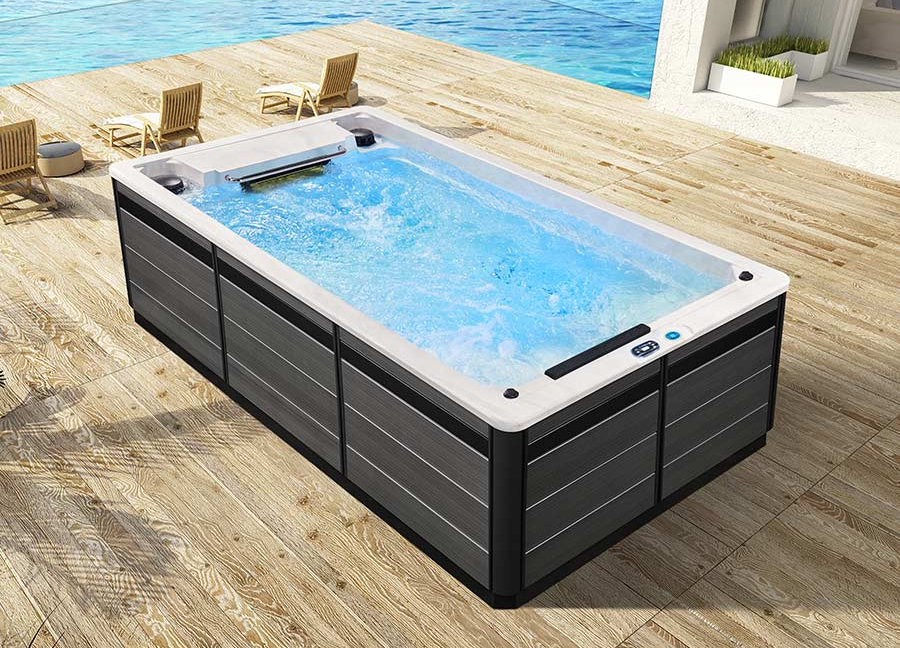
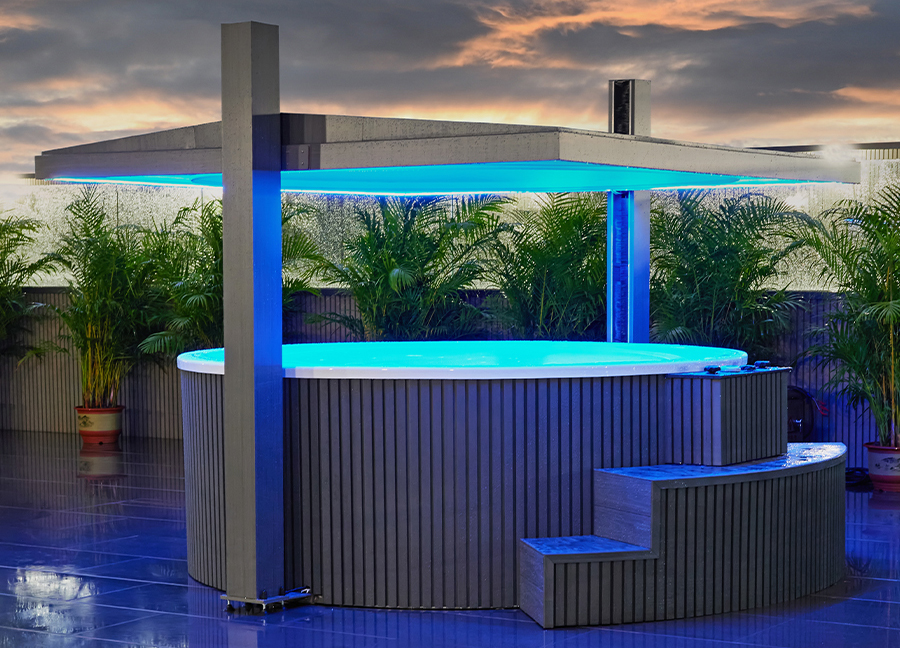

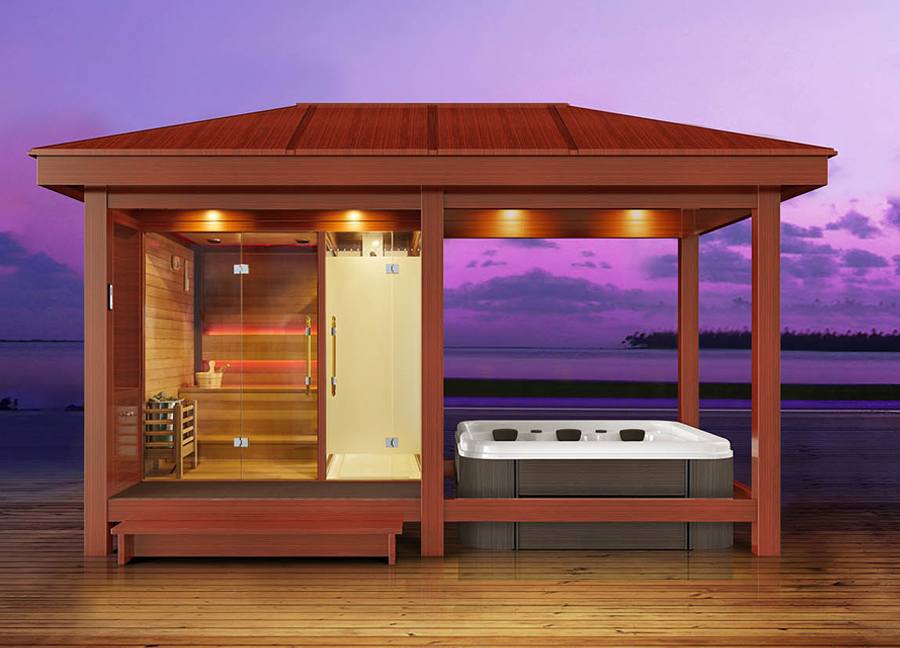


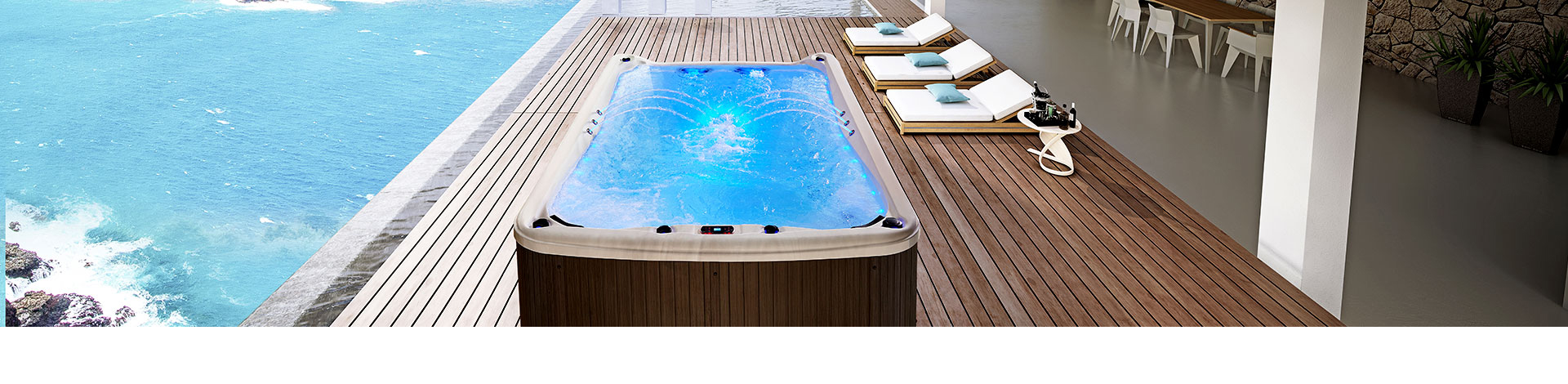
A swim spa hot tub is a multi-functional bathtub system that integrates swimming, massage, spa treatments, and fitness.
It combines the spaciousness of a swimming pool with the massage experience of a hot tub, providing modern families with a healthy and relaxing lifestyle all year round.
However, when maintaining this high-end equipment, users often encounter a question:
"Is the disinfectant in a swim spa hot tub the same as bleach?"
This question sounds simple, but it involves multiple dimensions, including chemical composition, oxidation principles, water quality balance, and safe usage standards.
To answer it correctly, it's essential to understand the nature of bleach, the mechanism of action of disinfectants, and the differences and connections between the two in spa systems.
This article will delve into this topic, revealing the scientific truth about "swim spa hot tub disinfectants versus bleach."
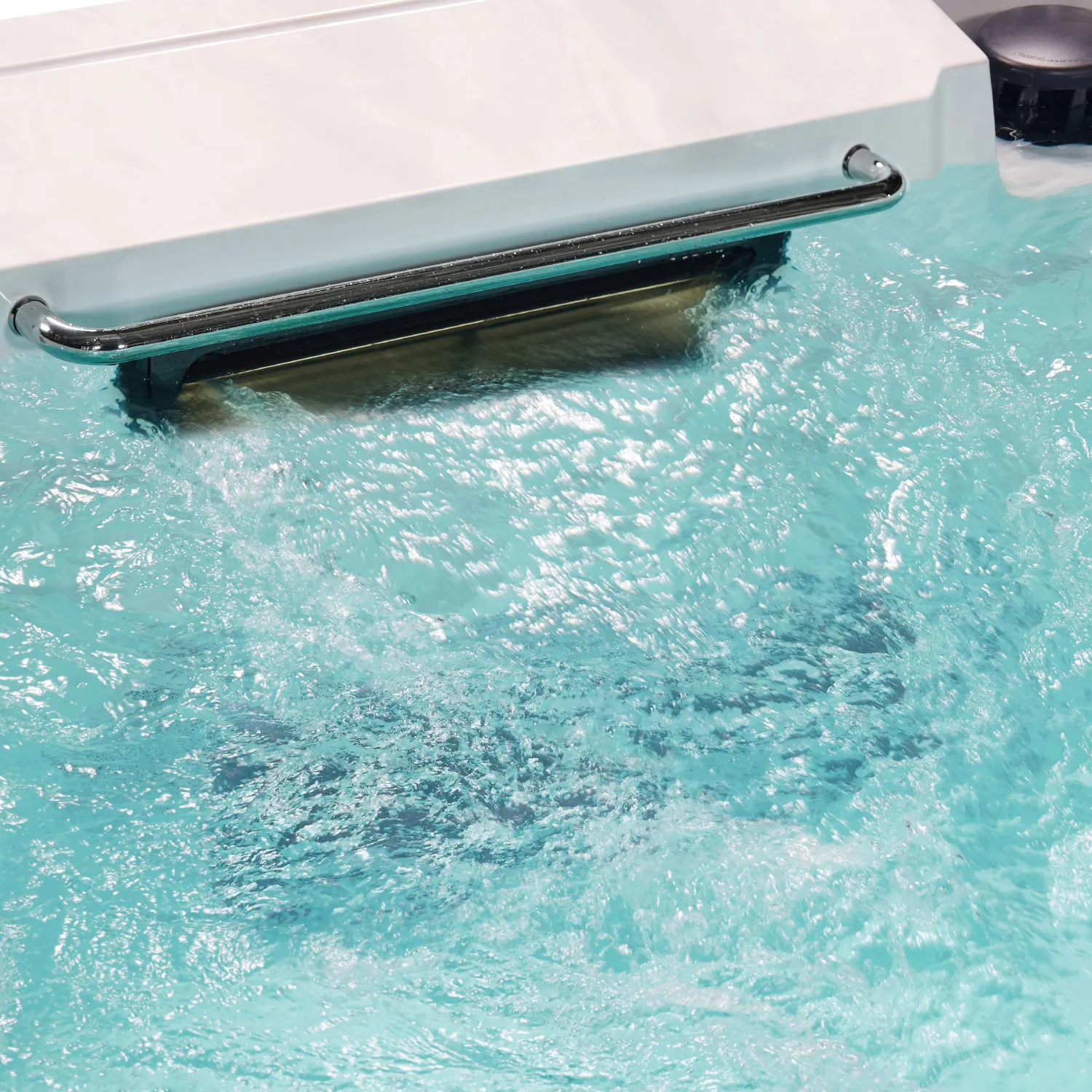
What is a swim spa hot tub?
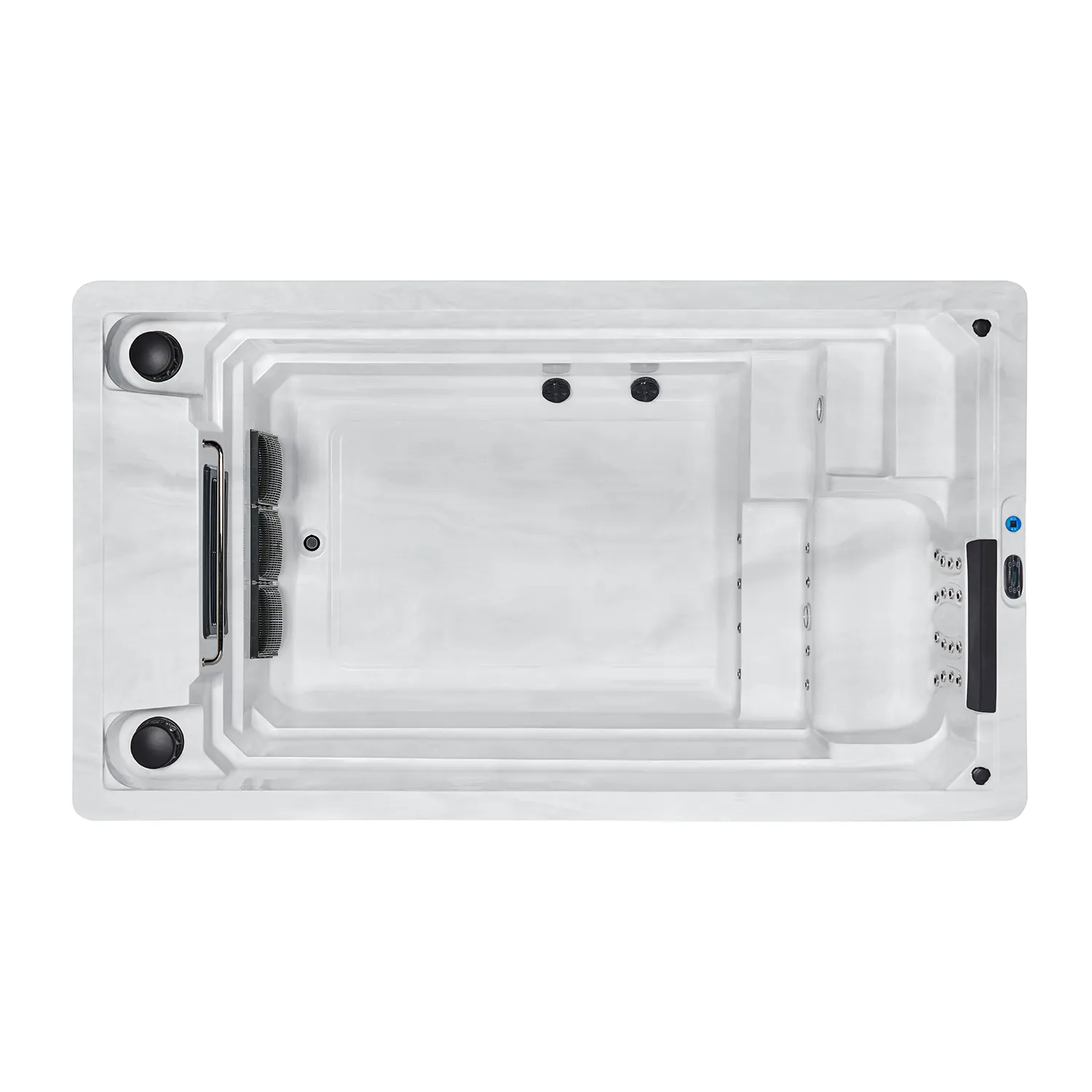
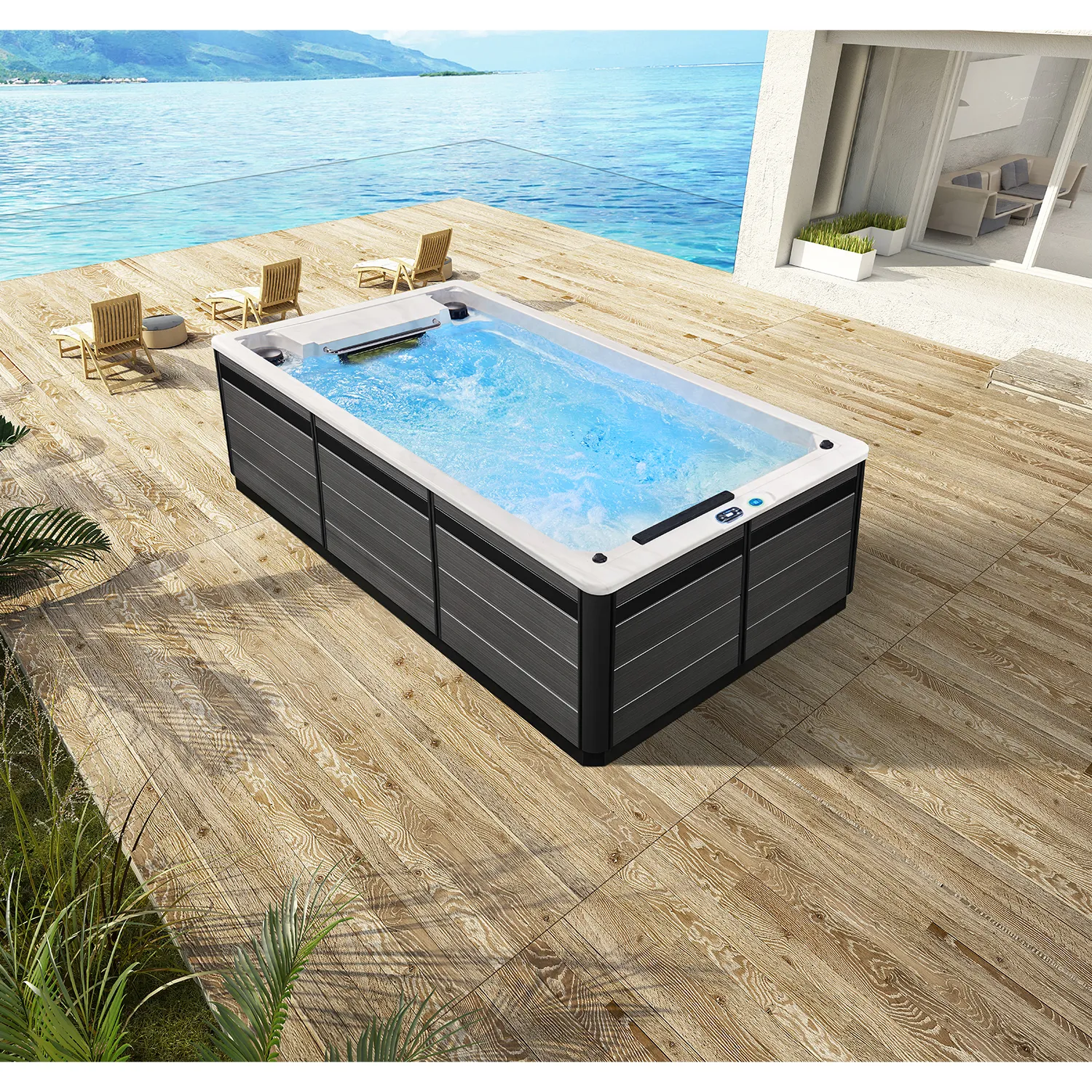
A swim spa hot tub is a medium-sized spa device that combines the functions of a swimming pool and a hot tub.
It uses a powerful water jet system to create counter-currents, allowing users to "swim in place" in a confined space while enjoying the muscle relaxation and massage experience of hot water.
Key features include:
• Controllable water temperature (usually maintained between 32–38℃);
• Independent filtration and circulation system;
• Equipped with a jet pump, filter, ozone or UV system;
• Large water volume (usually between 2000–8000 liters).
Due to its high water temperature and circulating characteristics, the water quality and hygiene management of a swim spa hot tub is more complex and meticulous than that of a regular swimming pool.
The choice and application of disinfectants directly determine whether the water is safe, comfortable, and sterile.
What exactly is bleach? Can it really be used as a disinfectant?
1. Definition and Chemical Composition of Bleach
Chemically, "bleach" is not a single substance, but a class of compounds with strong oxidizing properties.
The most common household bleach is sodium hypochlorite (NaOCl) solution, typically at a concentration of 5%–6%.
Its main functions are:
• Removing color (bleaching textiles or surface stains);
• Killing bacteria, viruses, and mold;
• Oxidizing and decomposing organic matter.
In other words, bleach does indeed have disinfecting and sterilizing properties.
However—this does not mean that all bleach is suitable for use on a swim spa hot tub.
2. Bleach vs. Disinfectant: Chemical Differences
Project | Bleach | Spa-specific disinfectant |
| Main Components | Sodium hypochlorite (NaOCl) | Stabilized chlorine compounds (such as sodium dichloroisocyanurate, bromides, non-chlorine oxidants) |
| Available Chlorine Concentration | Typically 5%–6% | Dilute to 1–3 ppm before use |
| Stability | Volatile, sensitive to sunlight and high temperatures | High stability, suitable for long-term water quality maintenance |
| pH Effect | Raises water pH (strongly alkaline) | Minimally impactful on pH, easier to control balance |
Corrosivity | High pH, can damage metal and rubber parts | Low pH, equipment-friendly |
| Applicable Scenarios | Use for household surface cleaning and clothing bleaching | Designed specifically for pool and spa systems |
Although both bleach and swim spa hot tub disinfectants contain chlorine, they differ fundamentally in their chemical properties, stability, and applicable environments.
Why can't bleach be used directly on a swim spa hot tub?
On the surface, bleach does indeed appear to "kill bacteria."
However, pouring household bleach directly into a swim spa hot tub can cause the following serious problems:
1. High Concentration, Causing Chemical Burns
Bleach contains extremely high concentrations of effective chlorine. Adding it to the bathtub undiluted will cause the chlorine level to instantly exceed safe levels (above 10 ppm).
• This concentration may cause:
• Skin and eye irritation;
• Respiratory discomfort;
• Strong bleaching effect on the water.
2. Disruption of Water Balance
Bleach is highly alkaline, which will raise the pH level of the spa hot tub to above 9.0.
In a high pH environment, the bactericidal effect of chlorine is significantly reduced, making water quality more difficult to control.
3. Corrosion of Equipment and Seals
Sodium hypochlorite will oxidize metal nozzles, corrode pump bodies, and damage rubber seals, shortening the lifespan of the equipment.
4. Formation of Harmful Byproducts
High concentrations of sodium hypochlorite react with organic matter to produce chloramines and trihalomethanes (THMs), which are irritating to the respiratory system and skin.
In summary:
❌ Household bleach is not suitable for daily disinfection of swim spa hot tubs.
It may make the water appear clear temporarily, but in the long run, it causes water quality deterioration and equipment damage.
So what type of disinfectant should be used for swim spa hot tubs?
To maintain the healthy operation of a swim spa hot tub, a professional disinfectant specifically designed for hot water circulation systems is required.
Common types include the following:
1. Chlorine-Based Sanitizers
The most commonly used and most effective method of water disinfection.
Main ingredients:
• Sodium dichloroisocyanurate (Dichlor)
• Trichloroisocyanuric acid (Trichlor)
Features:
• Strong bactericidal power, quickly eliminates bacteria and algae;
• High stability, not easily decomposed by sunlight;
• Minimal pH change after dissolution;
• Suitable for daily maintenance and shock treatment.
✅ Recommended concentration: 1.5–3 ppm.
2. Bromine-Based Sanitizers
Bromine is more stable than chlorine at high temperatures, making it ideal for swim spa hot tubs.
Advantages:
• Less volatile in hot water;
• Milder odor, less skin irritation;
• Effectively kills a variety of bacteria and algae.
✅ Recommended concentration: 3–5 ppm.
3. Non-Chlorine Shock
Typically, Potassium Peroxymonosulfate (MPS) is the main ingredient.
It's not a disinfectant, but a strong oxidant that breaks down organic matter and chloramines in water.
Suitable Scenarios:
• Regularly "shock" the water;
• Use in conjunction with bromine systems;
• Quickly purify water without long waiting times.
4. Auxiliary Disinfection Systems
In addition to chemical agents, many swim spa hot tubs are equipped with auxiliary systems such as:
• Ozone generator
• Ultraviolet (UV) disinfection system
These systems reduce the amount of chemical agents used and keep the water fresh, but they cannot replace chemical disinfectants alone.
What is the chemical relationship between swim spa hot tub disinfectants and bleach?
This question is often misunderstood. In fact, the active ingredient in bleach does share the same chemical basis as some chlorine-based disinfectants.
Both rely on the bactericidal effect of hypochlorous acid (HOCl).
The differences are:
• Bleach directly contains sodium hypochlorite solution (highly alkaline, unstable);
• The disinfectant in a swim spa hot tub produces hypochlorous acid through a slow-release or stabilizing chemical reaction (stable, controllable).
In other words:
• From a chemical mechanism perspective, the two are "similar in principle";
• However, from an application perspective, the two are "completely different in nature".
Professional disinfectants use slow release, stabilization, and pH adjustment to ensure that hypochlorous acid continues to work at a safe concentration.
Bleach lacks this control mechanism, easily leading to water quality imbalance.
What should I do if I accidentally use bleach?
If you accidentally add bleach to your swim spa hot tub, take the following steps immediately:
• Immediately stop the system;
• Drain all water;
• Thoroughly rinse the inner walls and nozzles;
• Replace the filter and refill with water;
• Check the pH and chlorine residue levels to ensure they are back to normal.
This will minimize the corrosive and chemical residue effects of bleach on system components.
Common Misconceptions: Don't Treat Bleach as a Panacea for Spa Cleaning
❌ "Bleach can replace chlorine tablets."
In reality, bleach concentrations and stability vary greatly, disrupting the water balance.
❌ "Bleach is cheaper, so it's more cost-effective."
Long-term use will corrode equipment, leading to higher maintenance costs.
❌ "As long as bleach is diluted, it's safe."
Even diluted, it's difficult to control pH and chlorine release rate, making it unsuitable for dynamic circulation systems.
The correct approach is:
Always use a professional disinfectant specifically designed for swim spa hot tubs and strictly follow the manufacturer's instructions.
Do You Offer Energy-Saving Options for Outdoor Spa or Steam Bathroom Products?
Yes. Yuehua integrates energy-efficient pumps, insulated shells, advanced heating systems, and reduced-consumption steam generators into many of our outdoor spa and steam bathroom designs. Customers looking to buy eco-friendly models can request performance test data and energy usage comparisons. These models are ideal for high-end sales channels or large commercial projects aiming for sustainability certification.