
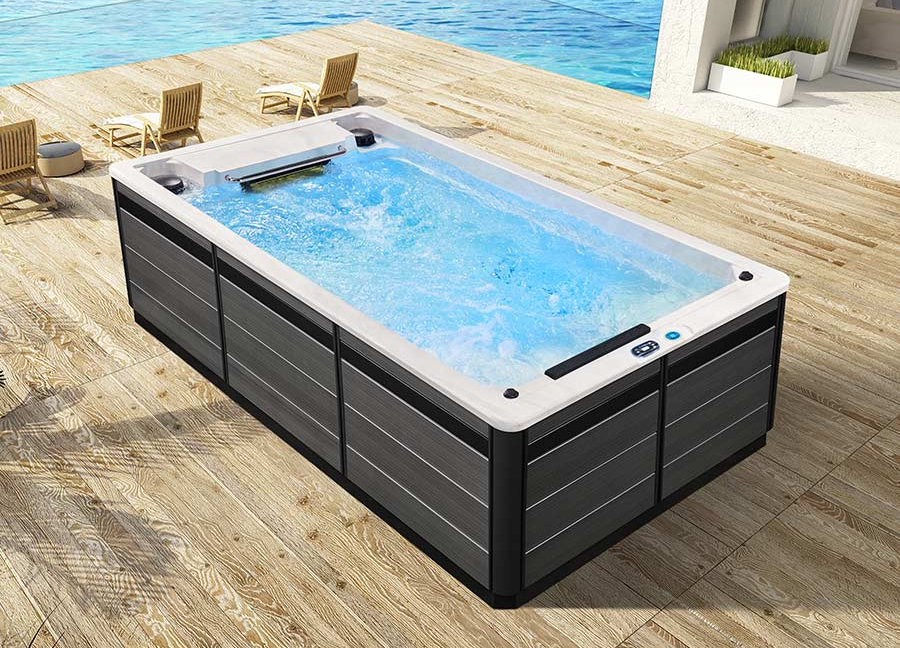
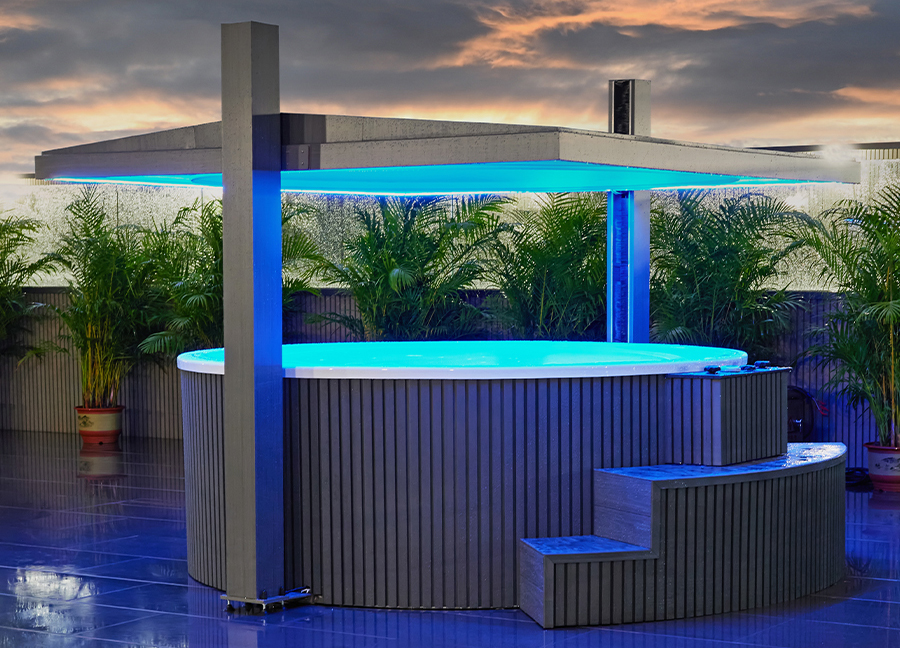



With the diversification of home fitness methods, swim spa tubs have gradually become a popular exercise and wellness device for many users. They combine a continuous water flow system, a constant-temperature water environment, and a multi-functional jet structure, allowing users to experience a swimming-like workout within a limited space.
Many people, when using or planning to purchase a swim spa tub, raise a crucial question:
Does using a swim spa tub count as aerobic exercise?
To accurately answer this question, a systematic analysis from multiple dimensions is necessary, including the definition of aerobic exercise, the physiological characteristics of exercise, the principles of aquatic exercise, and the working method of a swim spa tub. A conclusion cannot be drawn solely based on the superficial understanding of "exercising in water."
This article will comprehensively analyze the relationship between using a swim spa tub and aerobic exercise from a professional perspective, helping you establish a clear, scientific, and verifiable understanding.
What is aerobic exercise? What are the criteria for judgment?
Before discussing whether using a swim spa tub constitutes aerobic exercise, we must first clarify what true aerobic exercise is.
The core characteristics of aerobic exercise include:
1. Primarily relying on aerobic metabolism for energy during exercise.
2. Moderate to low-intensity exercise.
3. Sustained duration (usually ≥10–20 minutes).
4. Heart rate maintained within 60%–80% of maximum heart rate.
5. Involving sustained, rhythmic activity of large muscle groups.
Common aerobic exercises include:
• Jogging
• Swimming
• Cycling
• Elliptical training
• Rowing machine
Whether an exercise is aerobic does not depend on the exercise location (land or water), but rather on whether the exercise meets the above physiological conditions.
How does a swim spa tub work?
To determine whether using a swim spa tub constitutes aerobic exercise, it is essential to understand how a swim spa tub works.
Basic Structural Features of a Swim Spa Tub
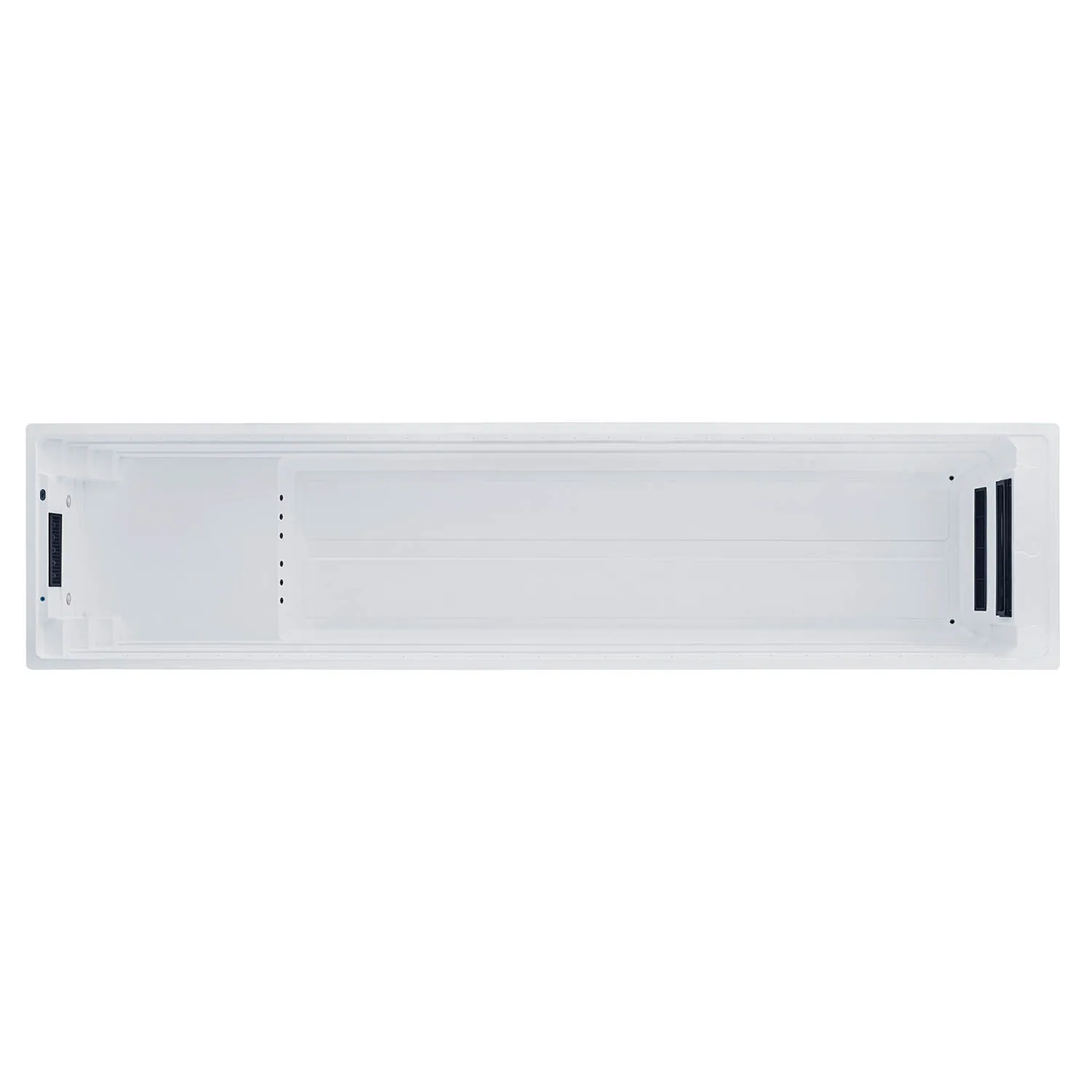
A swim spa tub typically consists of the following systems:
• Continuous water flow propulsion system
• Constant temperature heating system
• Large water volume
• Non-slip, ergonomic inner tank structure
• Auxiliary hydrotherapy nozzles (some models)
Its core function is:
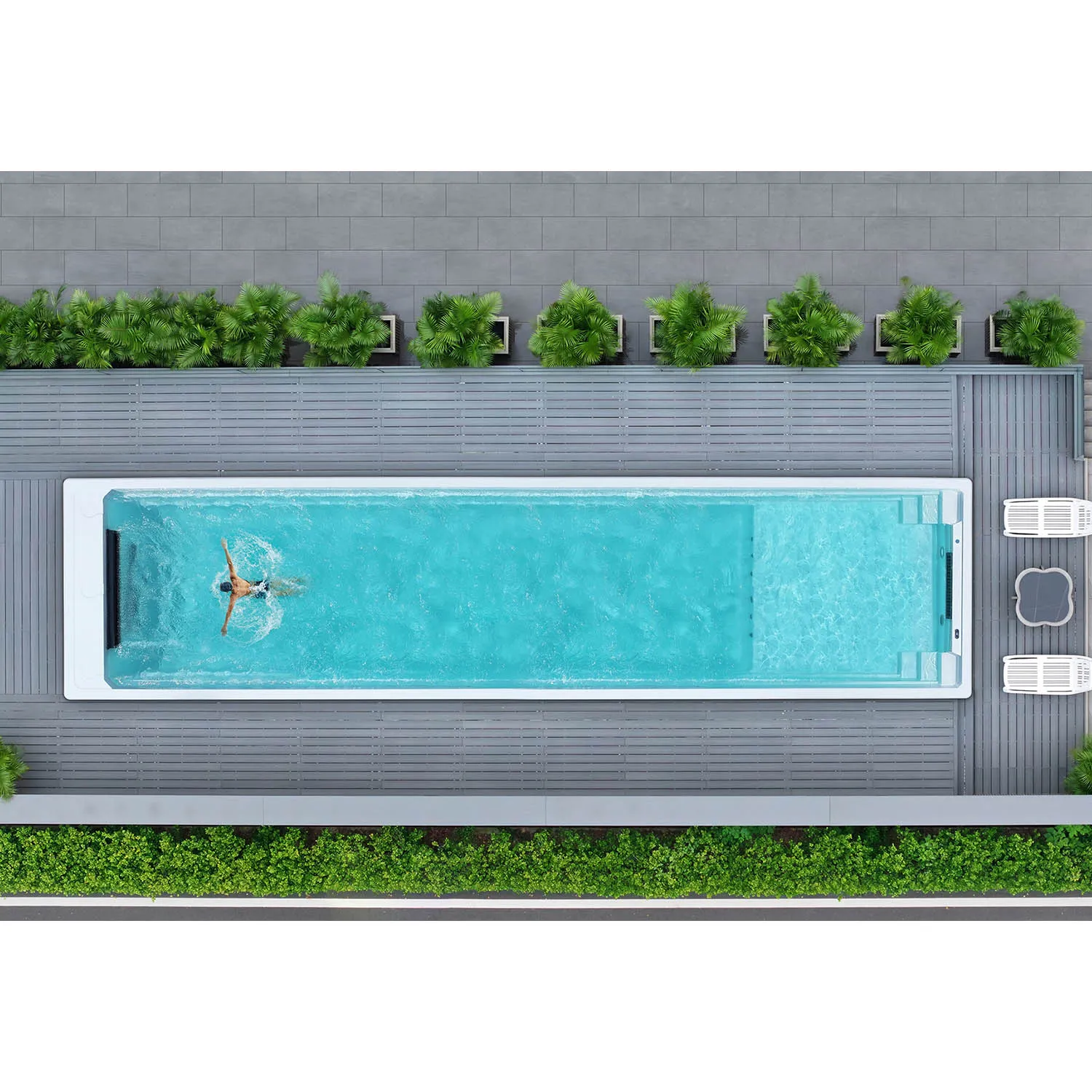
To allow users to perform continuous, counter-current movements in place through a continuous, adjustable water flow.
This differs significantly from the back-and-forth swimming in a traditional pool in terms of movement form, but is highly similar in its energy consumption mechanism.
Does exercise in a swim spa tub meet the physiological conditions of aerobic exercise?
This is the key to determining the answer.
1. Is the energy metabolism primarily aerobic?
When performing continuous swimming, treading water, and counter-current movements in a swim spa tub, the exercise time usually exceeds 15–30 minutes. The body mainly relies on oxygen-based fat and glycogen metabolism for energy.
As long as the exercise intensity is not a short burst (such as sprinting at full speed for several minutes), the energy supply method is essentially aerobic metabolism.
2. Is your heart rate within the aerobic zone?
Under stable water flow intensity, exercise in a swim spa tub:
• Heart rate can continuously rise
• Remains within a controllable range
• Less prone to interruptions due to joint impact, as seen in land-based exercise
This makes it easier to maintain a stable heart rate within the aerobic exercise zone, perfectly matching the characteristics of aerobic exercise from a physiological perspective.
3. Can it be sustained?
A key feature of swim spa tubs is:
• Fixed space
• Continuous water flow
• No need to turn or pause
This means a more even exercise rhythm, conducive to sustained low- to moderate-intensity exercise, a crucial condition for typical aerobic exercise.
Is there a fundamental difference between "swimming" in a swim spa tub and swimming in a pool?
Many people wonder:
Is exercise against the water flow in place truly equivalent to swimming?
From a sports science perspective, the difference lies not in "whether or not you move forward," but in the following key points:
1. Muscle Group Involvement
In a swim spa tub:
• Upper limbs: Shoulders, back, and arms continuously stroke.
• Core: Abdomen and lower back maintain body stability.
• Lower limbs: Kicks or treading water maintain balance.
These are typical muscle groups involved in swimming.
2. Water Resistance Characteristics
Water resistance is much higher than air resistance, and resistance is directly proportional to movement speed.
In a swim spa tub:
• Water flow + water resistance combined.
• Even at a slower speed, energy expenditure is still significant.
This makes the exercise efficiency no less than that of traditional pool swimming.
3. Greater Continuity
Pull pool swimming requires constant turns, deceleration, and acceleration;
while the water flow in a swim spa tub is continuous, which is conducive to maintaining a stable aerobic state.
Why is it said that exercise in a swim spa tub is "easier to maintain an aerobic state"?
This is a point that many people easily overlook.
Reason 1: Aquatic Environment Reduces Joint Burden
When exercising in water, buoyancy reduces the pressure of body weight on joints, significantly reducing the impact on:
• Knee joints
• Hip joints
• Ankle joints
As a result:
Exercisers are less likely to be forced to stop exercising due to discomfort, making it easier to complete the duration required for standard aerobic exercise.
Reason 2: Water Temperature Helps Control Exercise Intensity
Swim spa tubs are typically maintained in a relatively comfortable, constant temperature range, which helps to:
• Reduce fatigue caused by excessive body temperature
• Increase exercise endurance time
A stable physiological environment is more conducive to prolonged aerobic metabolism.
Reason 3: Adjustable Water Flow, More Controllable Intensity
By adjusting the water flow intensity in the swim spa tub, users can:
• Precisely control exercise load
• Avoid sudden, excessively strong intensity changes
This is crucial for maintaining the aerobic exercise zone.
Are all exercises done in a swim spa tub considered aerobic exercise?
The answer is: Not necessarily.
Whether it is considered aerobic exercise depends crucially on the type and intensity of the exercise.
More aerobic exercise includes:
• Continuous swimming against current
• Steady-paced leg kicks + arm strokes
• Prolonged treading water
• Rhythmic combinations of water movements
Not entirely aerobic exercise:
• Short bursts of high-intensity sprints
• Intermittent high-intensity bursts of movement
• Brief static stretching
Therefore, the swim spa tub itself is not automatically equivalent to an aerobic exercise tool; the key lies in how it is used.
What are the characteristics of swim spa tub exercise compared to land-based aerobic exercise?
From a performance perspective, aerobic exercise in a swim spa tub has some distinct characteristics:
1. Low impact
Compared to running and jumping exercises, water-based exercise has minimal impact on joints, making it easier to maintain long-term.
2. Uniform resistance
Water resistance comes from all directions, resulting in more balanced muscle engagement and preventing excessive fatigue in any single area.
3. Stable cardiorespiratory load
Due to the controllable environment and continuous rhythm, the cardiorespiratory system can more easily maintain a stable load range.
4. Higher Safety Margin
In a swim spa tub, exercisers are less likely to be interrupted by falls or sprains, which is a key reason why it's widely considered a "gentle yet effective" form of exercise.
What should you pay attention to when using a swim spa tub for aerobic exercise?
While a swim spa tub is excellent for aerobic exercise, the following points should still be noted:
1. Sufficient Exercise Time
Aerobic exercise emphasizes continuity; it's generally recommended to exercise continuously for 20–40 minutes or more.
2. Appropriate Water Flow Intensity
Too weak a water flow may not achieve the required aerobic load, while too strong a flow can easily turn into an anaerobic sprint.
3. Maintain Rhythm
Irregular, intermittent movements will disrupt the aerobic metabolic rhythm.
4. Pay Attention to Breathing Coordination
Stable, deep breathing is key to maintaining aerobic metabolism.
From a sports science perspective: Does a swim spa tub count as aerobic exercise?
In summary, the above analysis leads to a clear conclusion: When used correctly, continuous resistance to water currents using a swim spa tub fully conforms to the physiological definition of aerobic exercise.
Key reasons include:
• Primarily relies on aerobic metabolism for energy
• Sustainability
• Heart rate can be maintained within the aerobic zone
• Large muscle groups are involved
• Significant rhythmicity
Therefore, a swim spa tub is not simply a relaxation device, but a platform for aquatic exercise with clear aerobic properties.
Does using a swim spa tub constitute aerobic exercise?
The answer can be summarized in one sentence:
When you engage in moderate-intensity, sustained resistance to water currents in a swim spa tub, it is essentially a standard form of aerobic exercise.
The swim spa tub combines water resistance, buoyancy support, and continuous exercise conditions, providing a clear scientific basis for its aerobic exercise capabilities.
What communication methods does Yuehua use to stay connected with distributors?
Yuehua maintains active communication through email, phone, WhatsApp, WeChat, and video conferencing. We provide updates, answer technical inquiries, and share new product announcements. Distributors appreciate that Yuehua responds quickly and professionally, making cooperation smooth and efficient. With our stable China factory supply, communication transparency helps build long-term trust and improve purchasing efficiency.