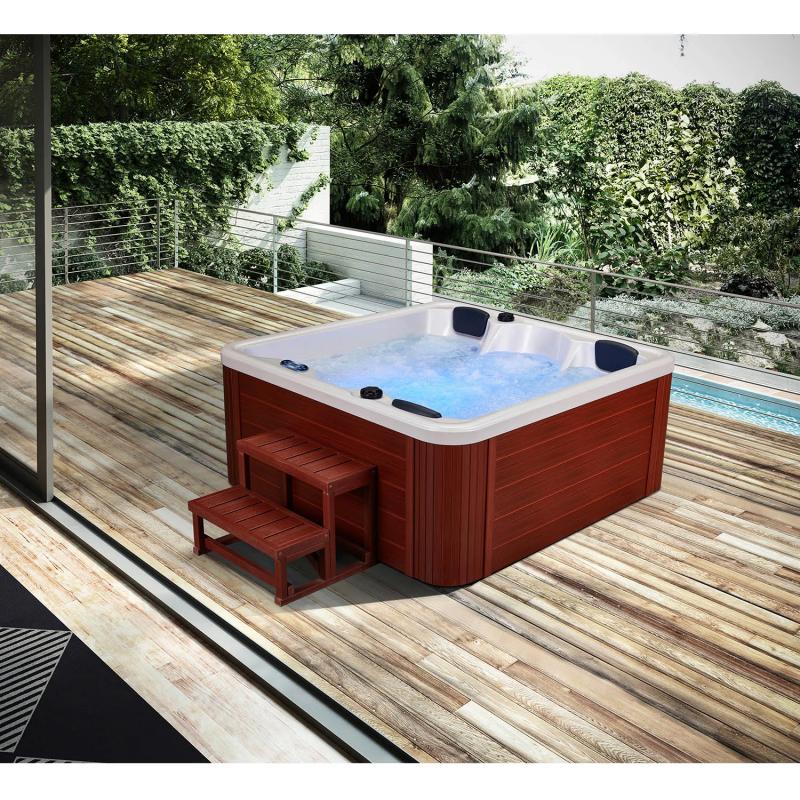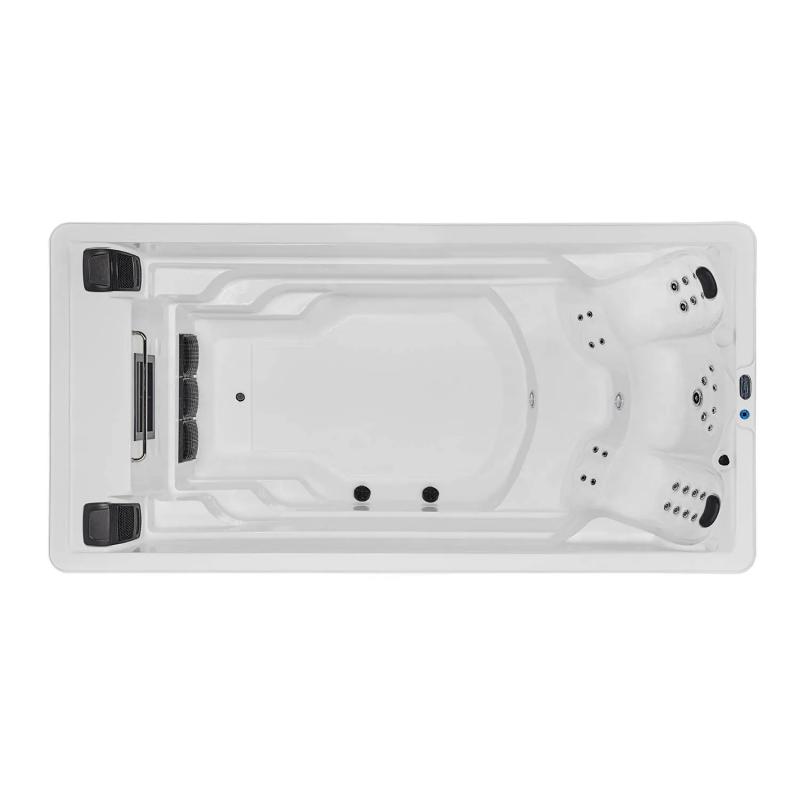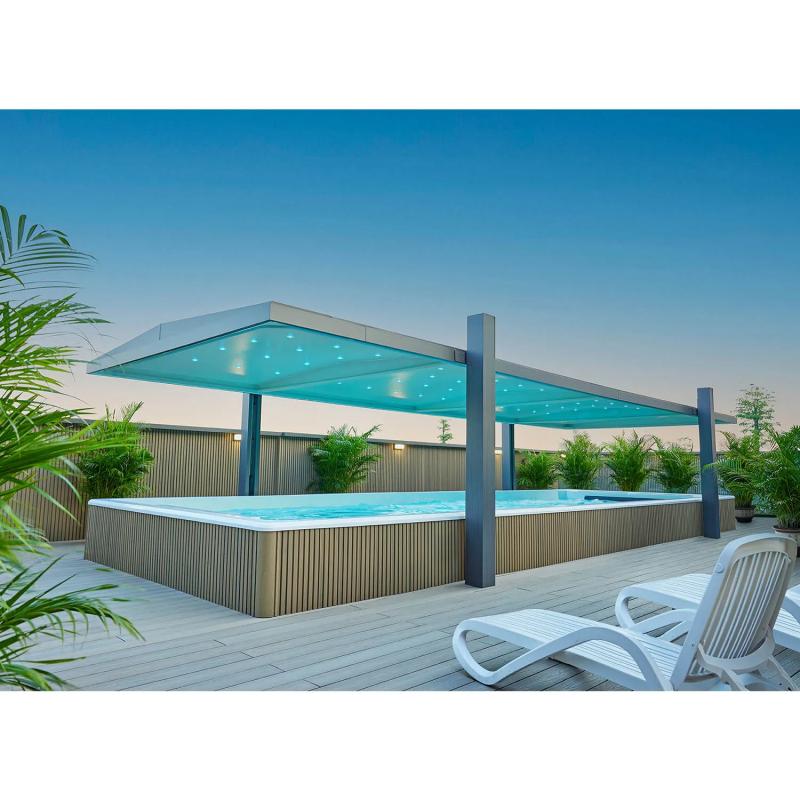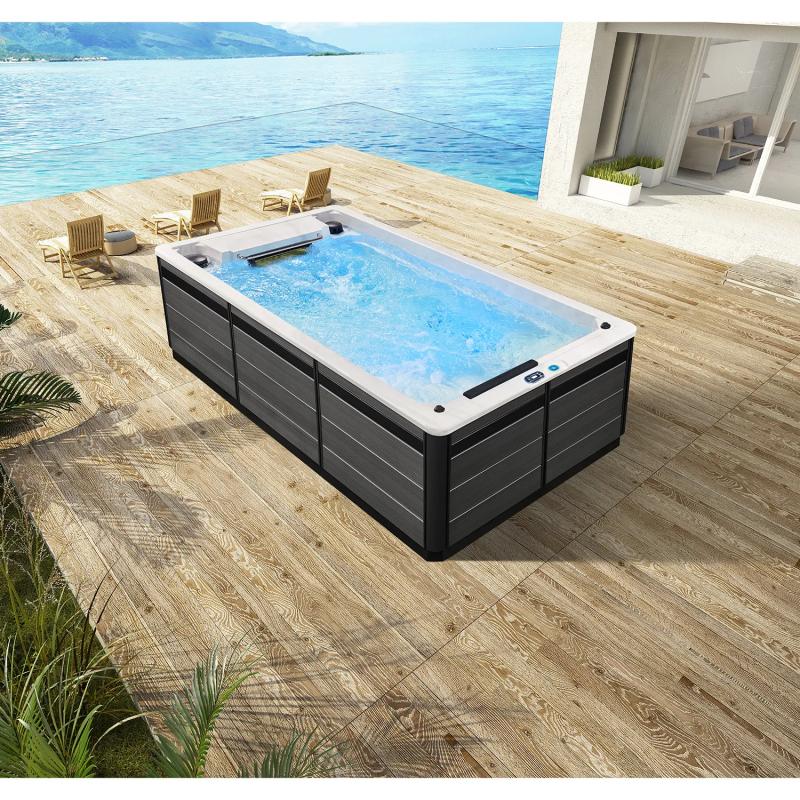

Although a luxury swim spa tub requires a significant initial investment in purchase and installation, the largest long-term expenses are typically water and electricity bills—in other words, operating costs.
• Compared to a regular bathtub, maintenance costs are certainly higher due to the need for electricity, water quality maintenance, and consumable replacement.
• Compared to a traditional swimming pool, a swim spa's maintenance costs are actually lower because the water volume is smaller and easier to maintain.
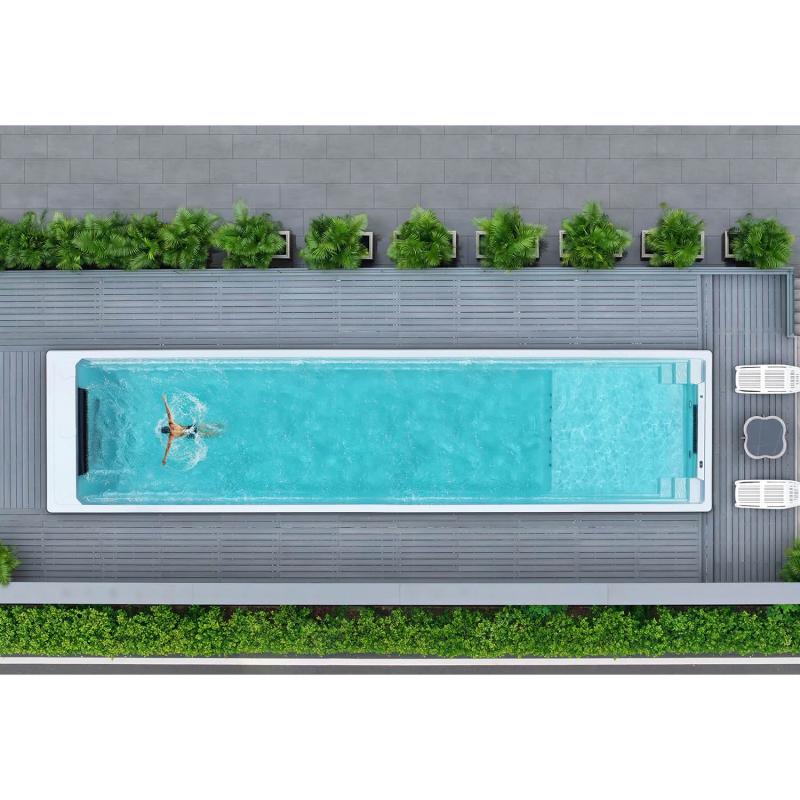
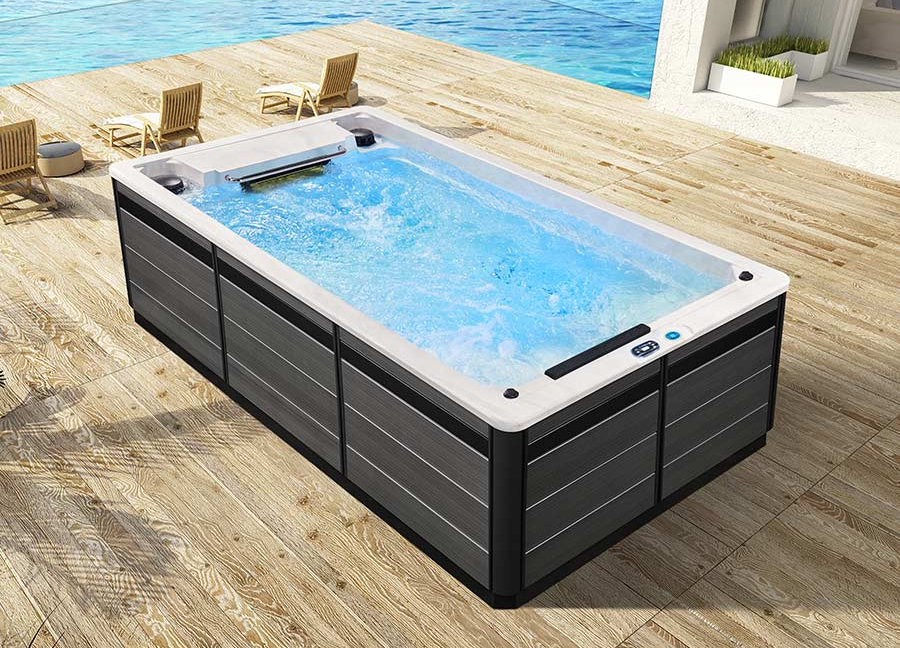
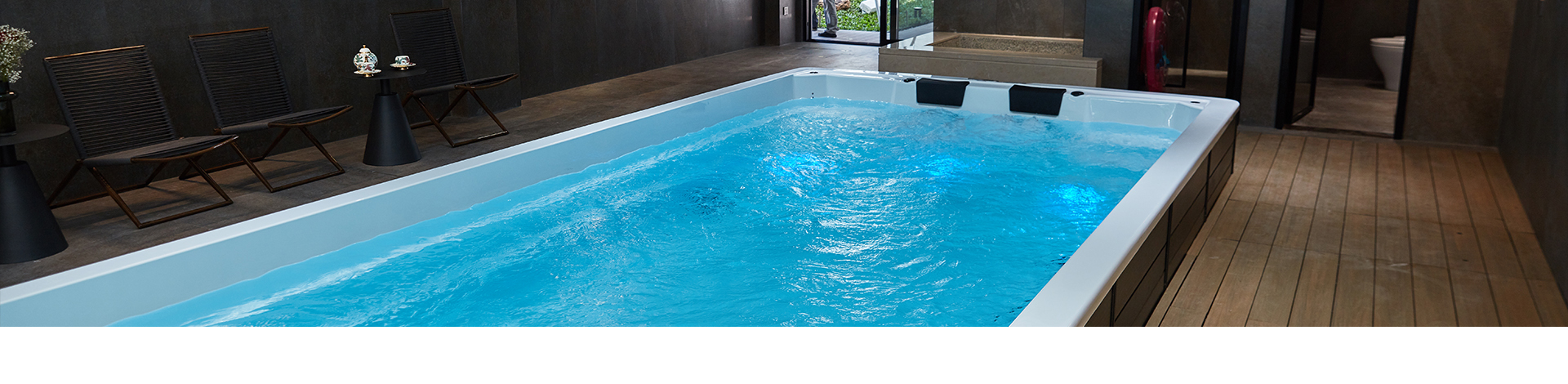
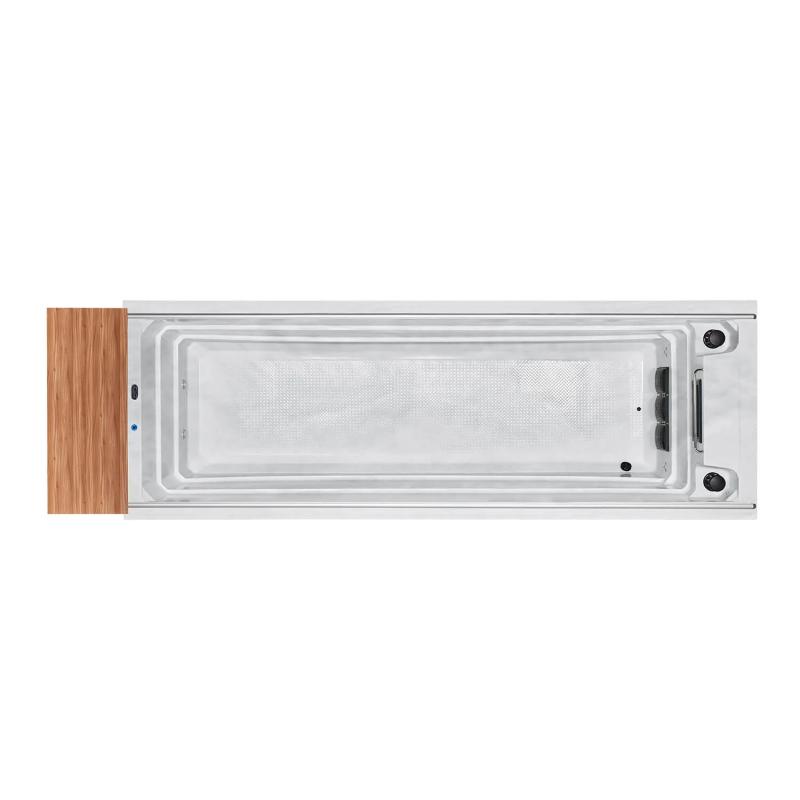
Typically 2.5 to 4 meters long, they are not suitable for long-distance freestyle swimming but are suitable for short-distance swimming or stationary swimming training. They are moderately deep (1.2 to 1.5 meters), sufficient for floating, leg kicking, and arm stroke training, but not for large-scale water sports.
Swim spa tubs are a highly suitable aerobic exercise tool for weight loss. Its advantages, such as constant-current resistance training, full-body muscle activation, and hydrotherapy recovery support, effectively enhance the body's energy metabolism efficiency, increase calorie consumption, and promote body fat loss while reducing the risk of sports injuries.
High-quality bathtub bodies can last 15-20 years, while standard bathtubs last between 10-15 years. Low-end products may show significant wear or damage after 5-10 years.
Component Lifespan:
• Water Pump: 5-10 years
• Plumbing: 10-15 years
• Heater: 5-10 years
• Air Pump and Massage Jet: 5-8 years
• Control Panel and Electronics: 5-10 years
A swim spa tub combines the dual functions of swimming training and hydrotherapy, allowing for both water exercise and the relaxing experience of warm water. Built-in heaters typically maintain a water temperature of 28-36°C, but can be adjusted to a temperature close to that of a spa hot tub as needed.