


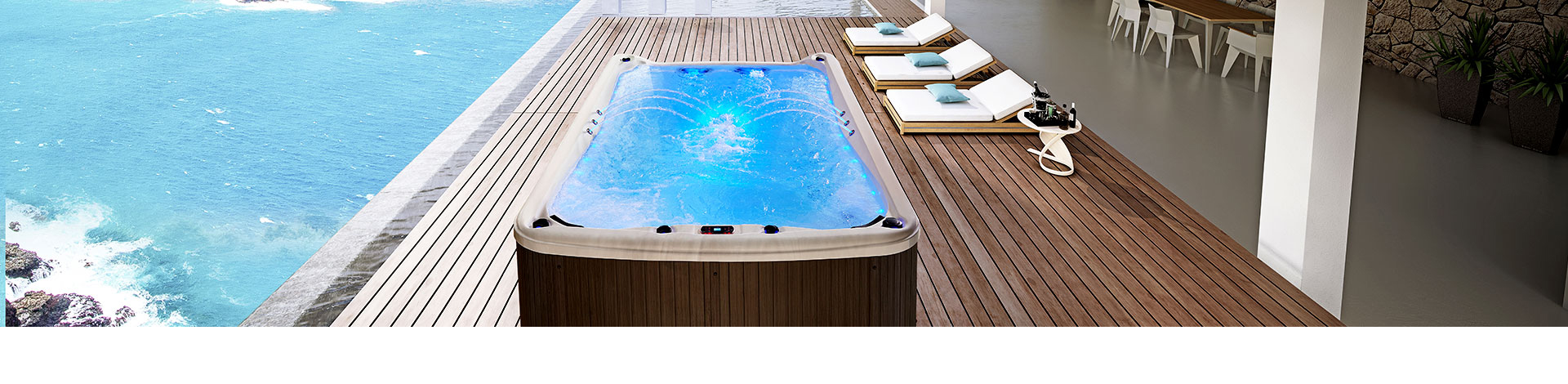
What is the difference between an outdoor swim spa and an outdoor hot tub? Which one is right for me?
As backyard lifestyles evolve and the concept of home wellness gains popularity, more consumers are turning their attention to spa equipment that enhances their quality of life. Among these options, outdoor swim spas and outdoor hot tubs have undoubtedly become the most discussed products in recent years. Whether in villa courtyards, terrace gardens, high-end guesthouses, hot spring hotels, or wellness centers, the presence of both types of equipment is rapidly increasing.
Many people face the same question when shopping: outdoor swim spas and outdoor hot tubs both offer hot water soaking and body massage, so what exactly distinguishes them? Which one is truly the better fit for me?
While the question may seem simple, the answer involves multiple factors, including usage needs, budget, installation space, maintenance costs, fitness goals, and long-term habits. Consumers new to these products often conflate the two, assuming the only difference is size or that an outdoor swim spa tub is merely a "larger hot tub."
In reality, this understanding is inaccurate. Although outdoor swim spas and outdoor spa hot tubs share certain visual similarities—such as heating systems, filtration systems, and massage jets—they differ significantly in their core design philosophies.
According to global market research on spa equipment, the global home spa market is projected to exceed $5.2 billion by 2025. Outdoor spa hot tubs account for over 60% of this market; while outdoor swim spa tubs hold a smaller share, they are growing faster, with an annual growth rate approaching 11%. This indicates a shift in consumer demand from simple relaxation toward comprehensive wellness, fitness, and therapeutic needs. Therefore, understanding the differences between outdoor swim spas and outdoor hot tubs not only helps you avoid choosing the wrong product but also enables you to make an investment decision that offers greater long-term value.
How are outdoor swim spas and outdoor hot tubs defined?
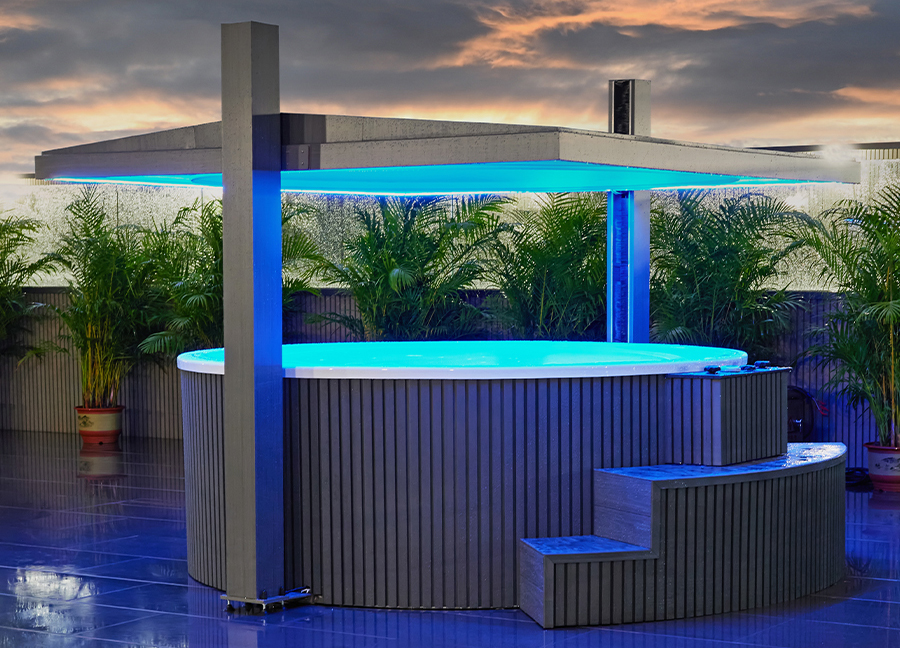
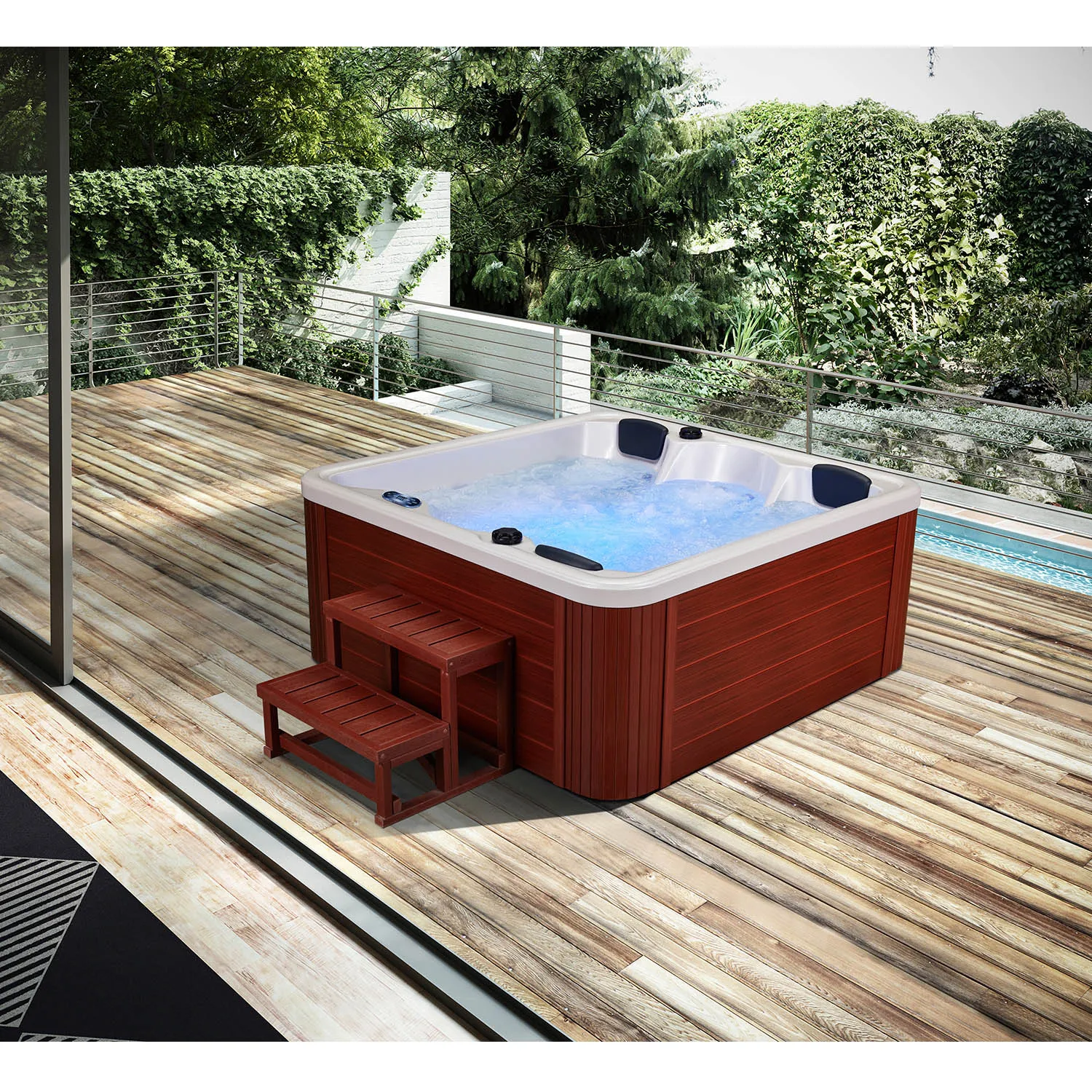
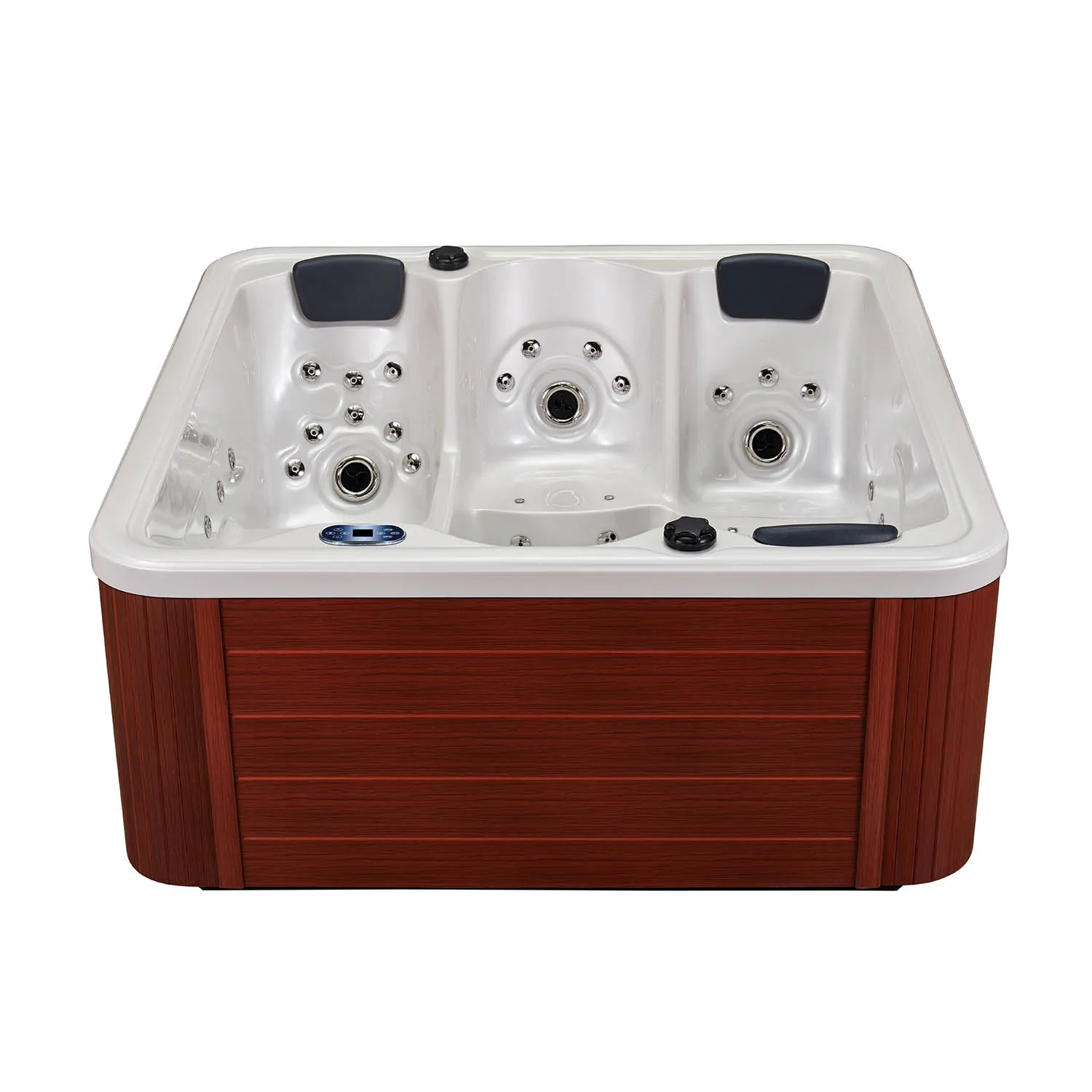
An outdoor hot tub is essentially a heated water unit designed primarily for soaking and relaxation. They typically feature a constant-temperature heating system that maintains water between 37°C and 40°C, allowing users to relax muscles and relieve stress in warm water while enjoying targeted massage via built-in jets. Designed with a focus on comfort, socializing, and leisure, these hot tubs usually feature multiple ergonomic seats, accommodating 2 to 8 people simultaneously.
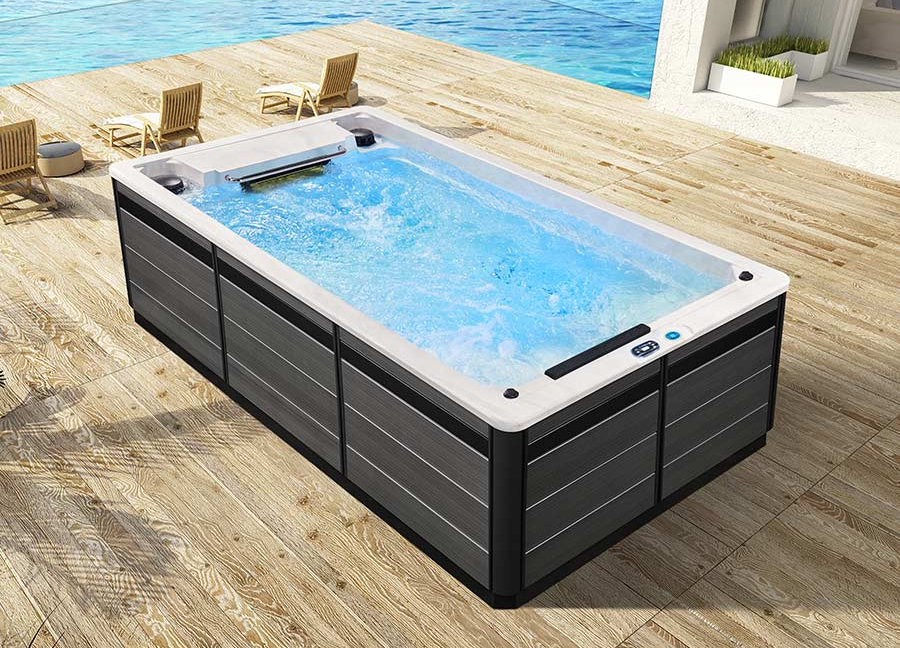
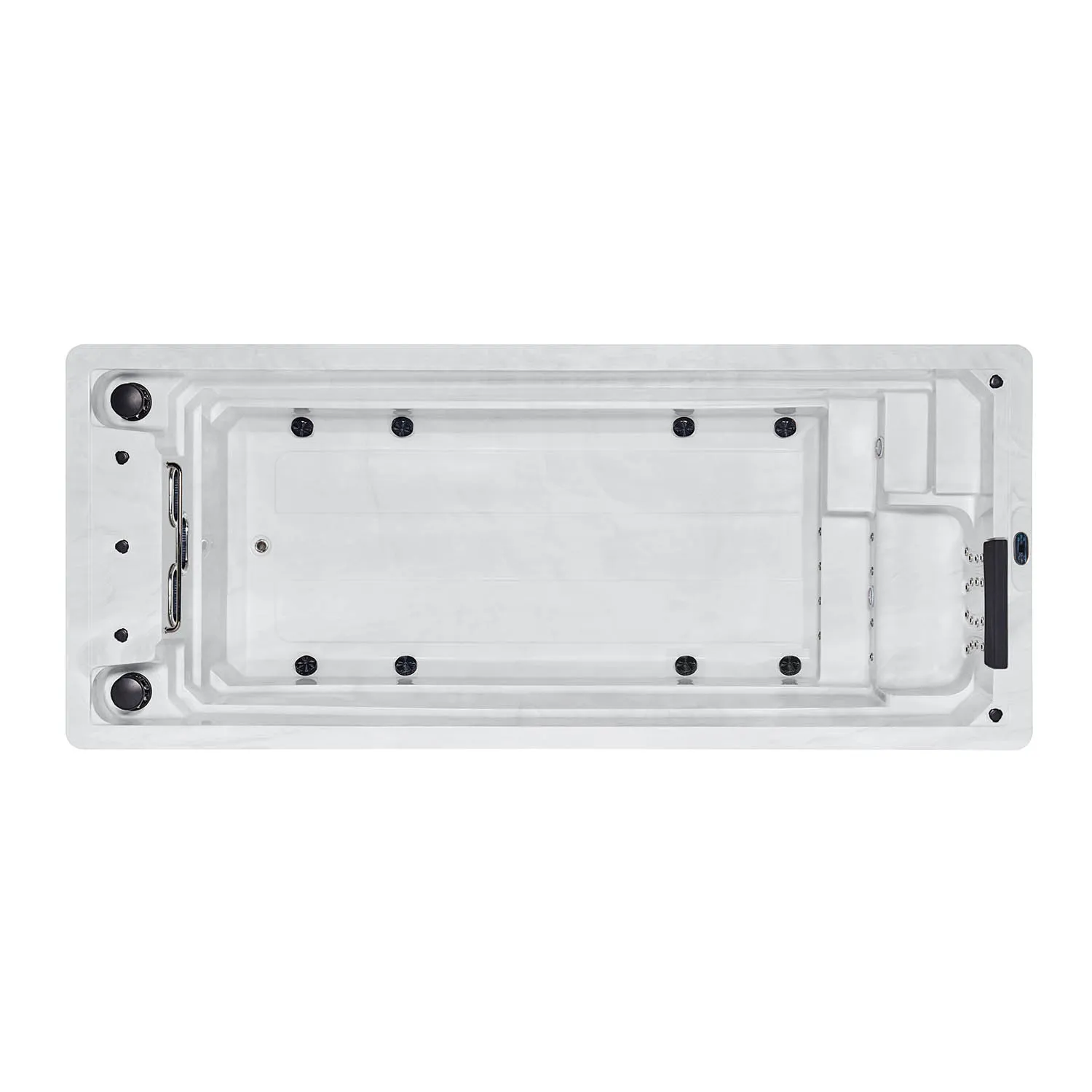
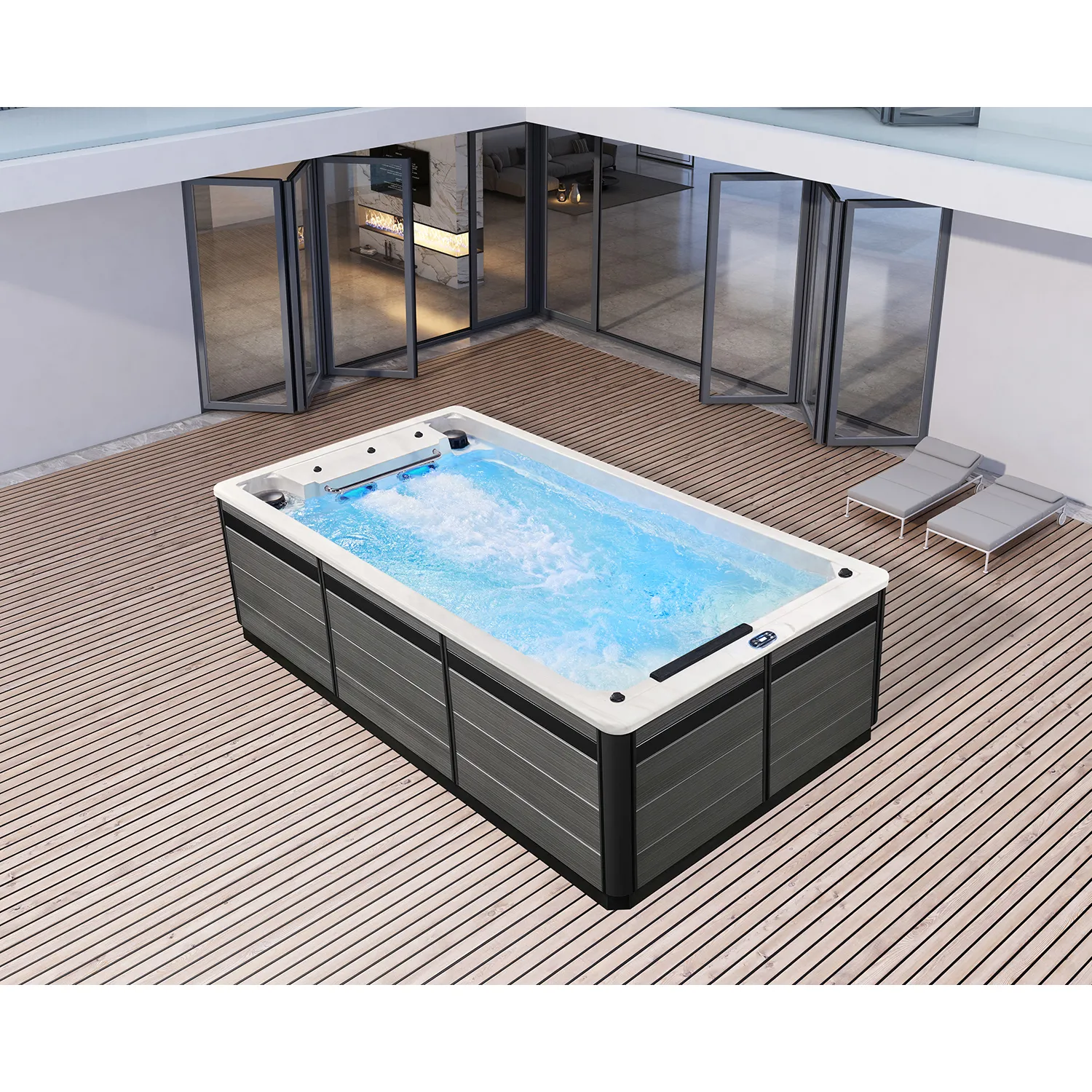
In contrast, an outdoor swim spa tub is a large, multifunctional hydrotherapy unit. It combines the features of a swimming pool, a spa, and a rehabilitation pool; beyond standard heating and massage functions, it incorporates a counter-current system. This allows users to swim in place, walk in water, and perform resistance training or rehabilitation exercises within a compact footprint. Consequently, a swim spa tub serves not only as a leisure amenity but also as a tool for fitness and physical therapy.
Simply put, while a standard outdoor hot tub is primarily designed for soaking, a swim spa accommodates soaking, swimming, exercising, and therapy all in one.
Size Differences: Why Are Swim Spas Usually Much Larger?
One of the most obvious differences is size.
Standard outdoor spa hot tubs typically measure 1.8 to 2.5 meters in length and 1.8 to 2.3 meters in width; their interior layout centers on seating, resulting in a relatively compact overall volume.
Common capacities include:
•2-person model: 700–1,000 liters
•4-person model: 1,000–1,500 liters
•6-person model: 1,500–2,200 liters
•8-person model: 2,200–3,000 liters
Outdoor swim spa tubs, on the other hand, are generally much larger. To provide space for swimming or exercise, they typically range from 4 to 7 meters in length and 2.2 to 2.8 meters in width, with capacities often reaching:
•Small models: 4,000–7,000 liters
•Medium models: 8,000–12,000 liters
•Large models: 12,000–20,000+ liters
This means the water volume of a medium-to-large outdoor swim spa can be equivalent to that of 4 to 8 standard outdoor spa hot tubs.
Differences in size directly impact installation requirements. If you have limited yard space—such as a patio of only around 10 square meters—installing an outdoor swim spa can be challenging, whereas an outdoor spa hot tub is much easier to accommodate.
Core Functional Differences: Leisure & Relaxation vs. Fitness & Rehabilitation
From a functional perspective, this is the fundamental difference between an outdoor swim spa and an outdoor hot tub.
The primary functions of an outdoor hot tub focus on:
•Hot water immersion
•Hydrotherapy massage
•Socializing and entertainment
•Fatigue relief
•Nervous system relaxation
Studies show that soaking in water at approximately 38°C for 15 to 30 minutes helps relax muscles and improve blood circulation, reducing subjective feelings of fatigue by 20% to 40% for some users. Consequently, outdoor spa hot tubs are ideal for high-stress professionals, family leisure, and evening relaxation.
In contrast, outdoor swim spa tubs offer a more comprehensive range of functions; in addition to all the features mentioned above, they incorporate capabilities for exercise and rehabilitation, such as:
•Counter-current swimming training
•Water running
•Resistance training
•Water yoga
•Rehabilitation therapy
•Low-impact aerobics
This is made possible by high-flow propulsion systems that generate a steady current, allowing users to swim in place without needing the length of a traditional swimming pool.
Data shows that moderate-intensity aquatic workouts can burn approximately the following amounts per hour:
•Water walking: 250–400 kcal
•Water jogging: 400–550 kcal
•Swimming against a current: 500–900 kcal
This makes swim spa tubs a top choice for many fitness enthusiasts and individuals undergoing rehabilitation.
Differences in internal structure: Why do the seating experience and available space differ so much?
The internal structure of an outdoor hot tub is typically designed around seating. Manufacturers optimize the following based on ergonomics:
•Backrest angle
•Leg support
•Lumbar fit
•Jet placement
•Shoulder and neck massage zones
Consequently, the most natural posture when entering an outdoor spa hot tub is sitting or reclining.
In contrast, the internal layout of a swim spa is completely different. To provide space for movement, the central area is usually an open, flat zone dedicated to swimming or exercise, while seating is typically located at the ends or along the sides.
This means that if your primary use case is socializing at home—such as gathering with friends or relaxing and chatting—an outdoor spa hot tub generally offers superior comfort. However, if you require space for exercise, a swim spa tub is clearly the better choice.
Differences in energy consumption: Which is more energy-efficient?
This is one of the questions consumers care about most.
Due to their larger size and greater water capacity, swim spa tubs generally have higher overall energy consumption than outdoor spa hot tubs. Typical power configurations for outdoor hot tubs are:
•Heater: 3–6 kW
•Circulation pump: 0.5–2 kW
•Jet pumps: 2–5 kW
Average daily power consumption is usually:
5–15 kWh/day
In contrast, outdoor swim spas require higher power configurations to drive their counter-current systems:
•Heater: 5–12 kW
•Circulation system: 1–3 kW
•Counter-current propulsion system: 5–15 kW
Average daily power consumption can reach:
10–35 kWh/day
Of course, actual energy consumption is influenced by factors such as:
•Frequency of use
•Insulation performance
•Ambient temperature
•Set water temperature
•Equipment efficiency
If you are highly cost-conscious regarding long-term electricity bills, an outdoor spa hot tub is generally more economical.
Outdoor Swim Spa vs. Outdoor Hot Tub: Is there a significant difference in maintenance costs?
The answer is: Yes, usually a significant one.
Maintenance costs primarily include:
•Electricity
•Water
•Filtration consumables
•Cleaning supplies
•Sanitizing chemicals
•Repair costs
Because outdoor swim spas hold a much larger volume of water, the costs associated with water replacement and treatment are higher.
For example, a single water change involves:
An outdoor hot tub might require draining 1,500 liters.
An outdoor swim spa tub might require draining over 10,000 liters.
Additionally, outdoor swim spa tubs typically feature more complex systems:
•More pumps
•More powerful control systems
•More complex plumbing
•A higher number of jets
Greater system complexity usually translates to higher long-term maintenance costs.
Who is best suited for an outdoor spa hot tub?
An outdoor spa hot tub is likely the better choice for you if your needs align with the following:
First, you prioritize relaxation over exercise. You want to soak in hot water and relieve shoulder and neck tension after a long day, rather than engage in fitness training.
Second, you value the social experience. Outdoor spa hot tubs are naturally suited for family gatherings, chatting with friends, and leisure time for couples.
Third, you have limited yard space. Standard outdoor hot tubs have lower space requirements. Fourth, you want to keep the budget under control. Outdoor hot tubs are generally more cost-effective in terms of both purchase price and long-term maintenance.
Therefore, for most families focused primarily on leisure, an outdoor spa hot tub is sufficient.
Who is better suited for an outdoor swim spa?
If your needs are more multifaceted, an outdoor swim spa might be the better choice.
First, you have specific fitness goals. You want to perform swim training, cardio, or resistance exercises at home.
Second, you require rehabilitation therapy. Aquatic exercise is highly beneficial for those dealing with knee issues, athletic recovery, or post-operative rehabilitation.
Third, you want a multi-purpose unit. An outdoor swim spa tub allows for both exercise and relaxation.
Fourth, you have sufficient installation space and budget. These units are large, expensive, and require complex maintenance.
For fitness enthusiasts, the value of an outdoor swim spa tub often far exceeds that of a standard outdoor spa hot tub.
Outdoor Swim Spa vs. Outdoor Hot Tub: How big is the price difference?
Price is often a key factor in the final decision.
The price ranges for standard outdoor hot tubs are typically:
•Entry-level: $3,000–$8,000
•Mid-range: $8,000–$15,000
•High-end: $15,000–$30,000+
Outdoor swim spas are significantly more expensive:
•Entry-level: $15,000–$30,000
•Mid-to-high range: $30,000–$60,000
•High-end: $60,000+
Installation costs differ as well. Outdoor swim spa tubs typically require:
•A foundation capable of supporting greater weight
•More complex electrical wiring
•Higher transportation costs
•More complex hoisting and installation procedures
Consequently, the difference in total budget can be several-fold.
Outdoor Swim Spa vs. Outdoor Hot Tub: Which is right for me? It depends on your actual needs
Many buyers fall into the trap of thinking that "bigger means better value." In reality, the best choice is simply the one that best suits your specific needs.
If your answers to the following questions lean towards the left, an outdoor hot tub is likely a better fit for you:
•I primarily want to relax
•I don't exercise often
•I have a limited budget
•I have limited space
•I enjoy socializing with others
If your answers lean towards the following, an outdoor swim spa tub might be more suitable:
•I need exercise functionality
•I want to train for swimming
•I want rehabilitation therapy
•I have a generous budget
•I want a long-term fitness solution
Essentially, an outdoor spa hot tub is a leisure product, whereas an outdoor swim spa tub is more of an investment in health and wellness.
FAQ
Can an outdoor swim spa replace a swimming pool?
For most home fitness scenarios, yes. The counter-current swimming feature, in particular, can meet training needs.
Can you swim in an outdoor hot tub?
Generally, no. The space is too small; they are primarily designed for soaking and relaxation.
Outdoor swim spa vs. outdoor hot tub: Which is more cost-effective?
Outdoor hot tubs generally have lower purchase and maintenance costs.
Outdoor swim spa vs. outdoor hot tub: Which is better for seniors?
If the goal is relaxation and joint relief, an outdoor hot tub is more suitable; if rehabilitation training is required, an outdoor swim spa tub offers greater advantages.
Outdoor swim spa vs. outdoor hot tub: Which holds its value better?
High-quality outdoor swim spas typically offer greater long-term value, though the initial investment is higher.