
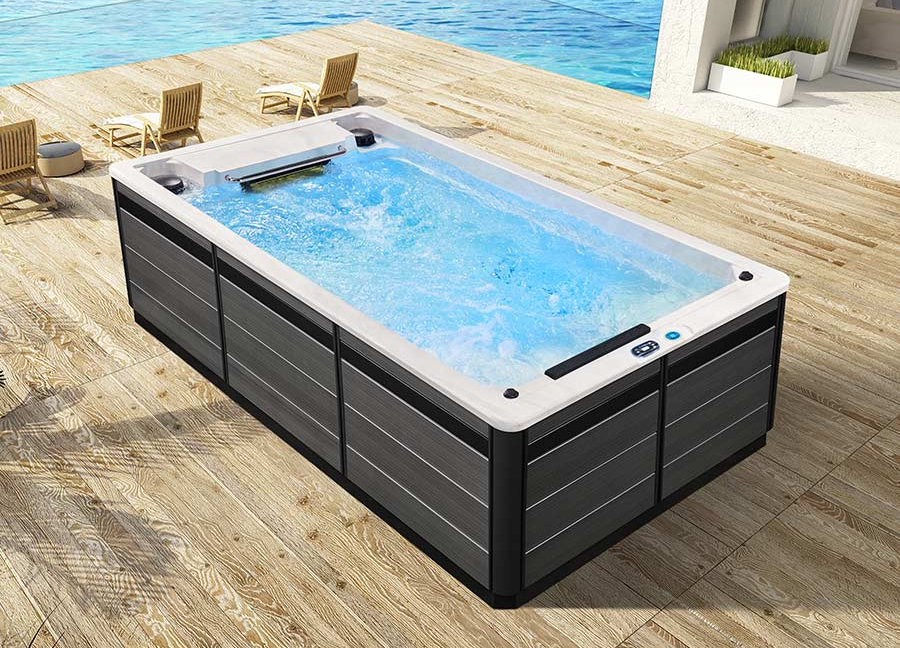


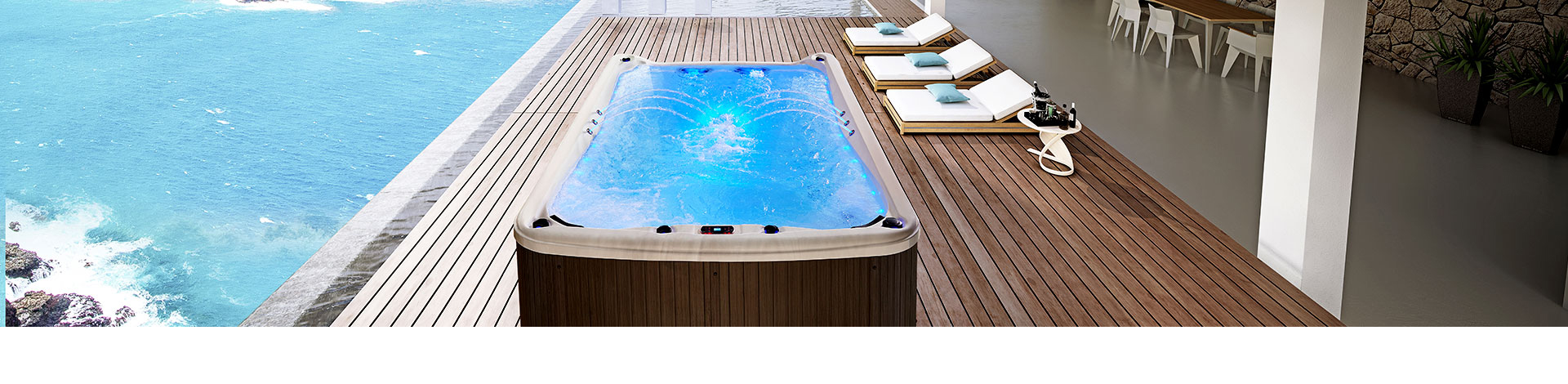
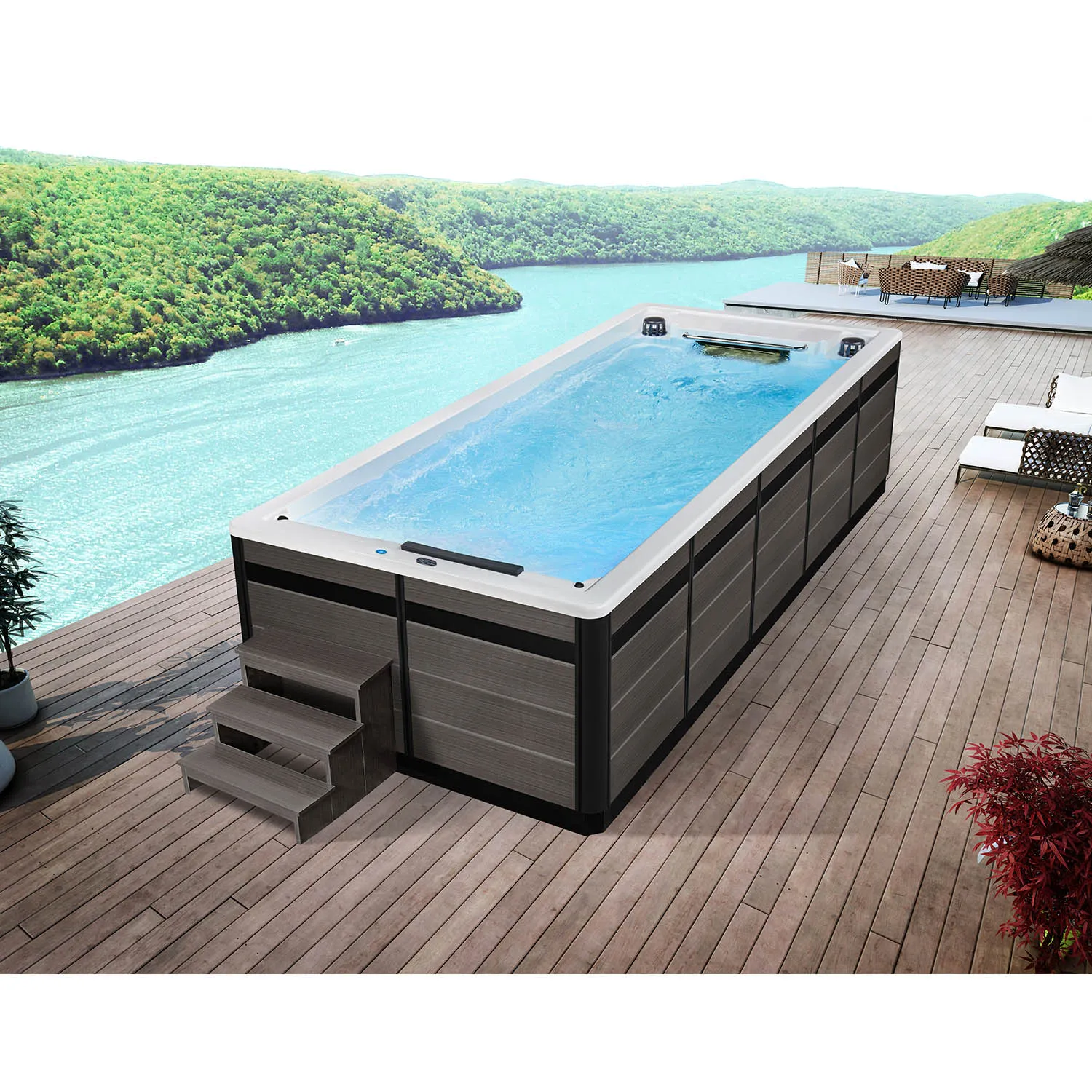
In modern homes and upscale villas, swim spa tubs are increasingly becoming an ideal choice for health, fitness, and relaxation. Compared to traditional swimming pools, they take up less space and are more versatile, serving both swimming and spa massage purposes. However, many users ask this question when preparing for installation: Is a concrete slab necessary for installing a swim spa tub?
This question seems simple, but the answer involves multiple aspects, including equipment weight, ground load-bearing capacity, long-term safety, and ease of maintenance.
This article will provide an in-depth analysis of the concrete slab requirements for installing a swim spa tub from a professional perspective, offering detailed considerations and scientific installation advice.
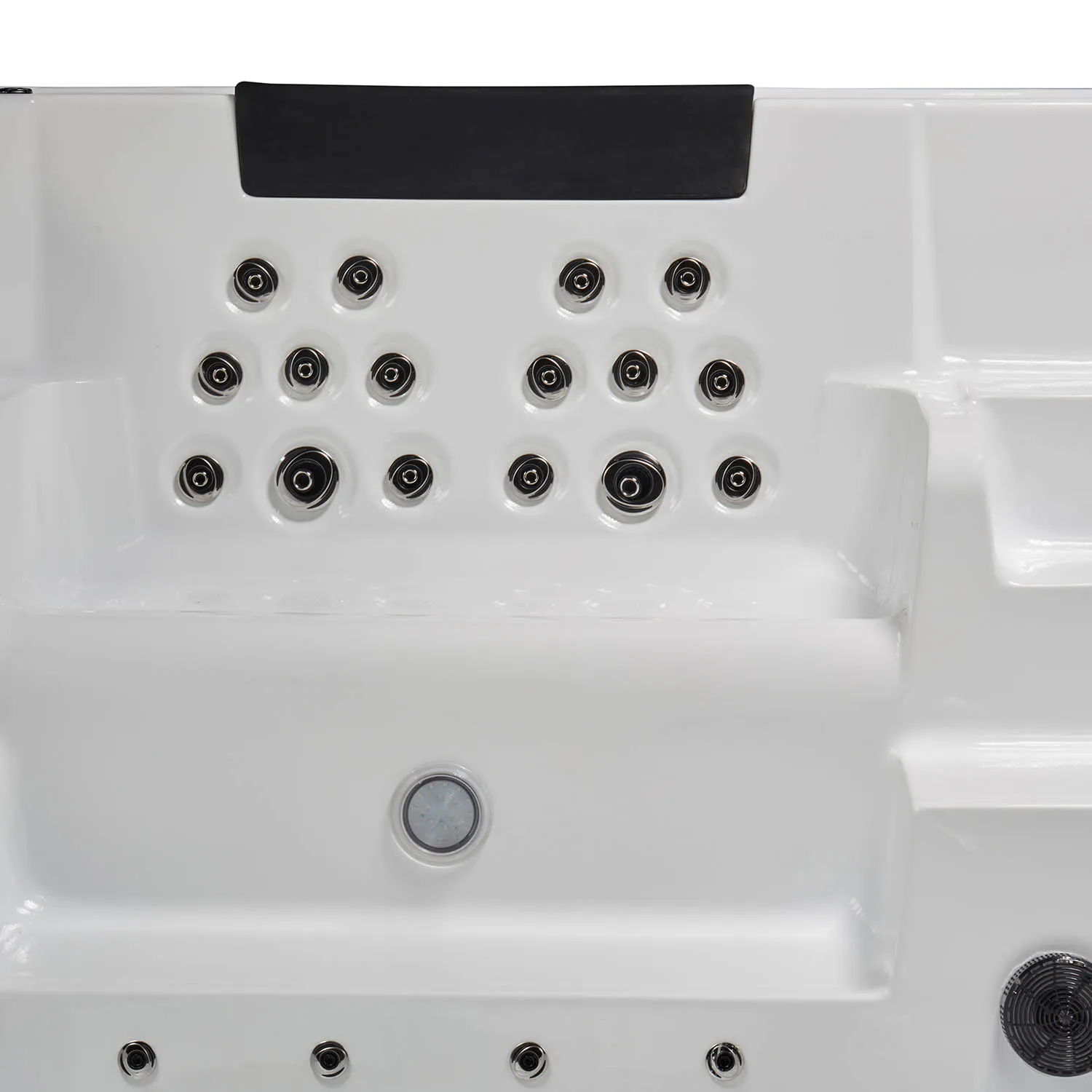
How Heavy is a Swim Spa Tub?
Before considering the installation foundation, it's essential to understand the weight characteristics of a swim spa tub.
1. Empty Tub Weight
Small swim spa tubs typically weigh between 300 and 500 kg when empty, while large, deluxe models may reach 1000 kg or more.
2. Weight When Full of Water
Swim spa tubs typically have a water capacity between 2000 and 5000 liters, with each liter of water weighing approximately 1 kg. For example, a 3000-liter tub would weigh 3000 kg with just the water, and with the weight of the tub itself, the total weight can exceed 3500 kg.
3. User Weight
If multiple people use the tub simultaneously, each person's weight will be added together. For example, if three people each weigh 70 kg, the total weight will increase by 210 kg.
4. Dynamic Load During Long-Term Operation
When the water pump and massage nozzles are running, the swim spa tub generates dynamic loads and vibrations from the water flow, placing higher demands on the stability of the foundation.
✅ Conclusion:
The total weight of a swim spa tub is extremely high, and the load distribution is uneven. Therefore, it is essential to ensure that the installation surface can withstand both static and dynamic pressures; otherwise, it can easily lead to ground settlement, cracks, or tilting of the tub.
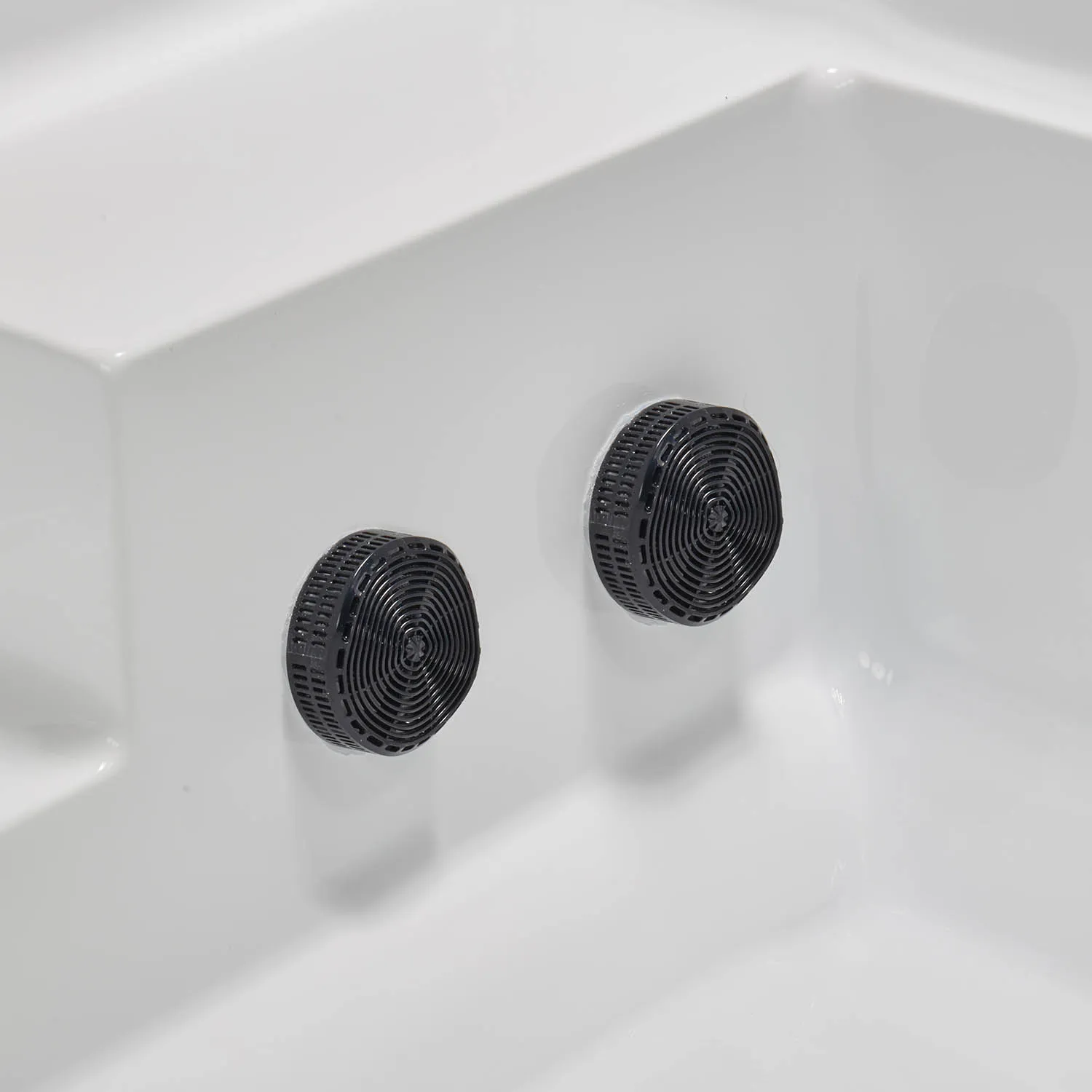
What type of floor is suitable for installing a swim spa tub?
Choosing a suitable foundation is crucial for ensuring the safe use of the swim spa tub. Common flooring types include:
1. Concrete Slab
• High load-bearing capacity; thickness and reinforcement can be designed according to equipment weight.
• High flatness, facilitating drainage and horizontal equipment installation.
• Long service life and durability, suitable for long-term fixed installation.
2. Compacted Crushed Stone or Sand Base
• Provides some support, but load-bearing capacity is limited.
• Settlement or unevenness may occur with long-term use.
• Not suitable for large or heavy-duty swim spa tubs.
3. Wooden Platform
• Aesthetically pleasing, facilitates lifting height, and allows for waterproofing.
• Load-bearing capacity depends on the thickness of the timber and the supporting structure; load calculations must be rigorous.
• Prone to deformation when exposed to moisture; relatively short lifespan.
4. Indoor Tiles or Plain Flooring
• Insufficient load-bearing capacity when laid directly on plain tiles, prone to cracking.
• Requires an additional load-bearing structure underneath; otherwise, not recommended.
✅ Conclusion:
From a safety and durability perspective, a concrete slab is the most reliable foundation choice, especially for heavy or long-term swim spa tubs.
How thick of a concrete slab is needed for a swim spa tub?
The thickness of the concrete slab and the reinforcement design need to be determined based on the weight of the bathtub, the usage environment, and the type of foundation. General recommendations are as follows:
1. Small family-sized swim spa tub (total weight < 1500 kg)
• Concrete slab thickness: 10-12 cm
• Reinforcement: Two-way steel mesh, spacing approximately 20-25 cm
2. Medium or large swim spa tub (total weight 1500-3500 kg)
• Concrete slab thickness: 15-20 cm
• Reinforcement: Two-way steel mesh or thickened steel bars, spacing 15-20 cm
3. Deluxe large model (total weight > 3500 kg)
• Concrete slab thickness: 20 cm or more
• Increased steel mesh density; add load-bearing beams or support piers if necessary
4. Foundation treatment
• The ground must be compacted and uniform, free of loose soil or voids.
• If the soil bearing capacity is insufficient, a gravel cushion layer can be added under the concrete slab.
✅ Note:
The concrete slab must withstand not only static weight but also the dynamic load generated by water flow impact during use. Insufficient thickness and reinforcement can lead to surface cracking or settlement.
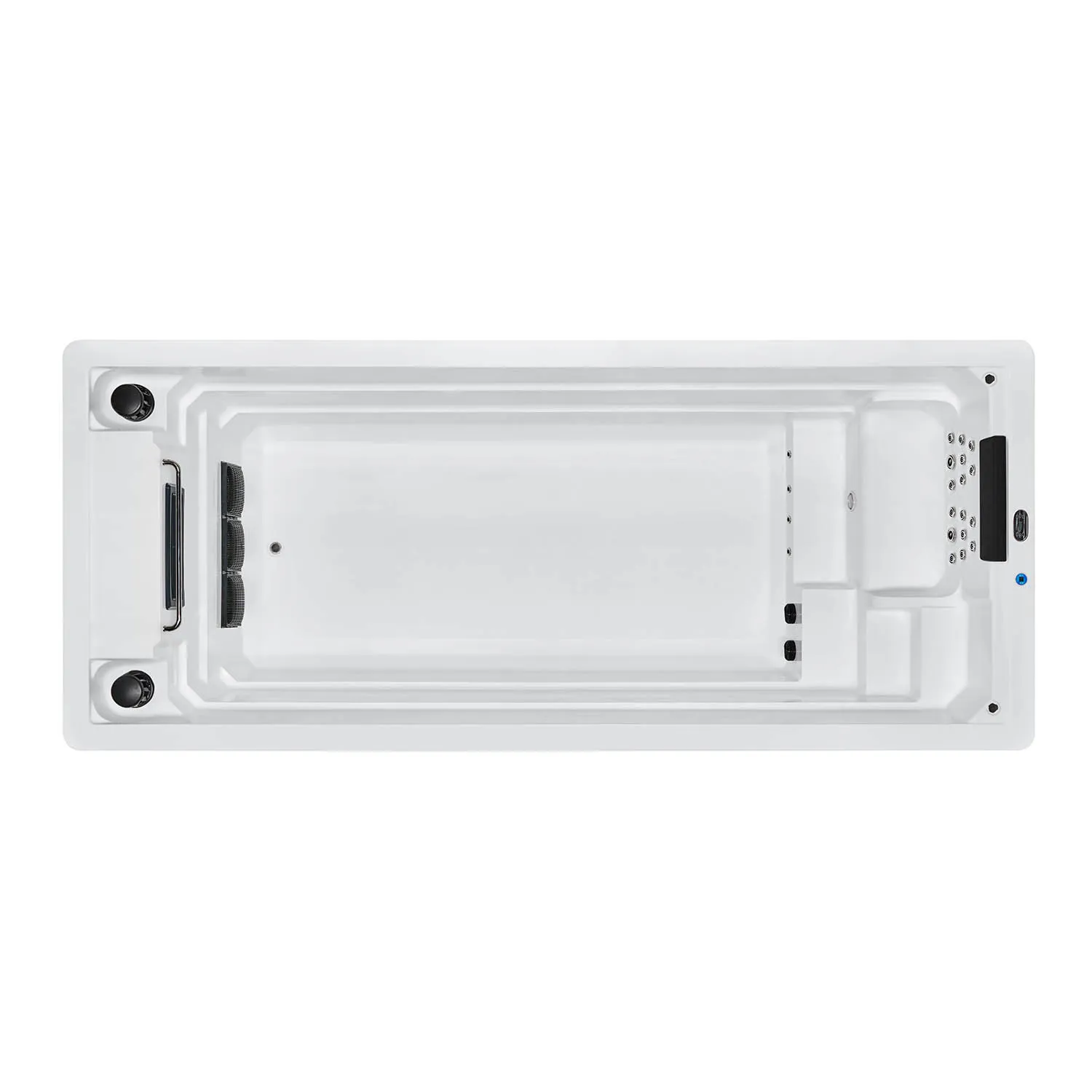
Why is direct installation on ordinary ground potentially risky?
Some users, for convenience, consider placing the swim spa tub directly on indoor tile or granite countertops. This poses the following risks:
1. Insufficient ground load-bearing capacity
Ordinary tile, wood flooring, or ceramic tile floors typically bear 200-300 kg/m², while a swim spa tub filled with water far exceeds this standard.
2. Localized settlement and tilting
Uneven pressure distribution on the ground can cause localized settlement or edge sinking, affecting the equipment's level.
3. Risk of tile cracking
Concentrating heavy weight on a limited area can easily cause tile cracking or loosening of the mortar.
4. Difficult maintenance and drainage
If the equipment is laid directly on the ground, repairs will be difficult if water seepage or drainage problems occur, potentially causing secondary damage to the indoor floor.
✅ Conclusion:
For safety and ease of maintenance, even for indoor installations, it is recommended to use a concrete slab as the foundation.
What are the additional benefits of installing a swim spa tub on a concrete slab?
Besides load-bearing capacity, concrete slabs offer other significant advantages:
1. More precise leveling
Spa equipment requires a high degree of levelness; otherwise, uneven water levels or pump imbalances will occur.
2. Prevents tilting or wobbling
The impact of water flow and the massage function during use can cause slight vibrations; the concrete slab stabilizes the equipment.
3. Easy drainage and waterproofing
A slight slope can be created on the surface of the concrete slab to ensure smooth drainage and prevent water accumulation.
4. Extended equipment lifespan
A robust foundation reduces mechanical and structural stress, helping the swim spa tub to last longer without deformation or cracking.
✅ Summary:
Concrete slabs not only provide load-bearing protection but also offer a stable and safe environment for equipment use and maintenance.
If you don't want to pour a concrete slab, what are some viable alternatives?
While concrete slabs are the safest option, some users may seek alternatives for ease of renovation or construction:
1. Professional Wooden Load-Bearing Platform
Uses thickened solid wood or anti-corrosion planks, with multiple load-bearing beams at the bottom.
Structural calculations are essential to ensure the load-bearing capacity exceeds the total weight of the equipment.
2. Steel Structure Support Frame
Uses a steel frame combined with a waterproof slab as the load-bearing foundation.
High stability, but complex construction and higher cost.
3. Hybrid Solution (Gravel + Plank Board + Reinforced Steel Support)
Compacted gravel at the bottom, topped with planks or a waterproof slab, reinforced with steel bars.
Suitable for small, family-sized swim spa tubs, but not recommended for large or luxury models.
✅ Note:
Any alternative must undergo professional structural calculations to ensure long-term safety and prevent settlement, cracking, or equipment damage due to insufficient load-bearing capacity.
Construction Precautions for Installing Concrete Slabs in Swim Spa Tubs
To ensure safety and long-term use, the following precautions should be taken when installing concrete slabs:
1. Slab Foundation Preparation
Remove debris and plant roots, and compact the soil.
If the soil is loose, a gravel layer can be added.
2. Reinforcement Arrangement
Arrange a two-way steel mesh according to the design drawings, and securely tie the intersections.
For large equipment, load-bearing beams can be added.
3. Concrete Pouring
Select high-strength concrete with good compressive strength.
Vibrate and compact promptly after pouring to prevent voids or air bubbles.
4. Curing and Drying
Keep the concrete moist for 7-14 days after pouring to ensure the concrete strength reaches the design requirements.
5. Ground Leveling and Waterproofing
Consider a slight slope during pouring to ensure smooth drainage.
The surface can be waterproofed to prevent rainwater from seeping into the underground structure.
✅ Summary:
A professional construction process is a key step in ensuring that the concrete slab achieves maximum load-bearing capacity and durability.
Do I need a concrete slab?
For most home and luxury swim spa tubs, a concrete slab is the safest and most reliable foundation. A concrete slab prevents damage from tilting, settlement, and vibration, extending the lifespan of the equipment.
While wooden platforms or steel structures are feasible, they require rigorous design and calculation, and their long-term safety and stability are inferior to a concrete slab.
✅ Final Recommendation: If conditions permit, casting a concrete slab that meets the load-bearing requirements for your swim spa tub is the most scientific, safe, and durable installation method.
What Is Your Experience with International OEM Projects?
Yuehua has extensive experience supporting OEM projects for overseas brands. Clients choose us to manufacture swim spa, outdoor spa, and sauna room products under private labels. Our factory handles design confidentiality, mold development, and production consistency. OEM buyers benefit from competitive quotes, stable quality, and reliable export processes from China, making long-term cooperation efficient and secure.