
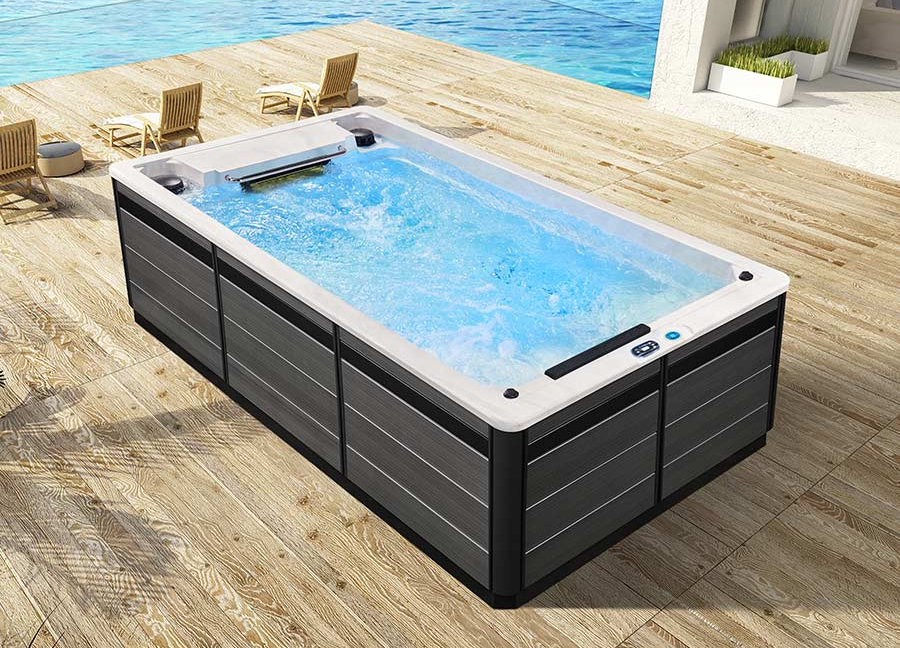
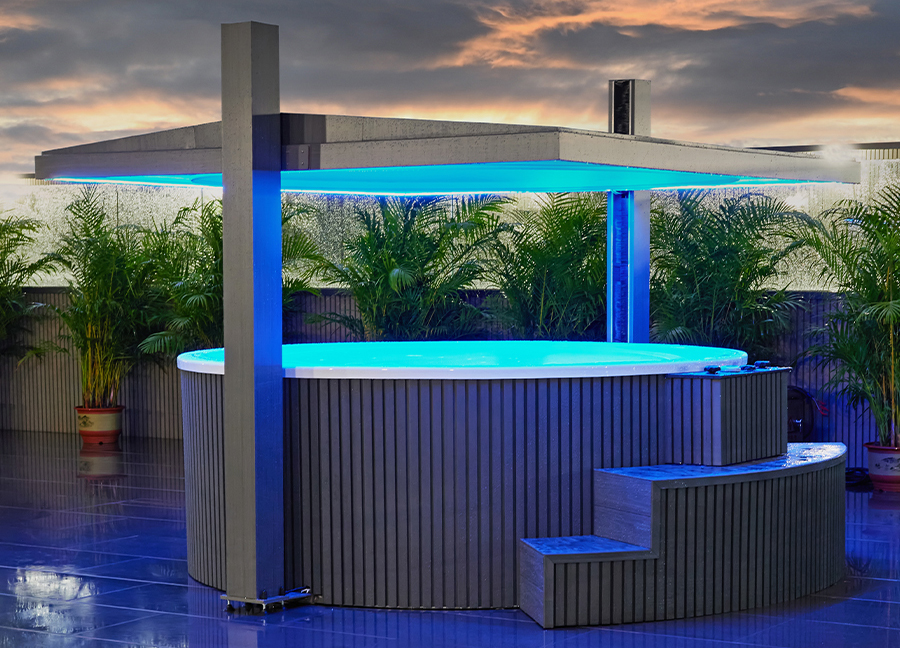

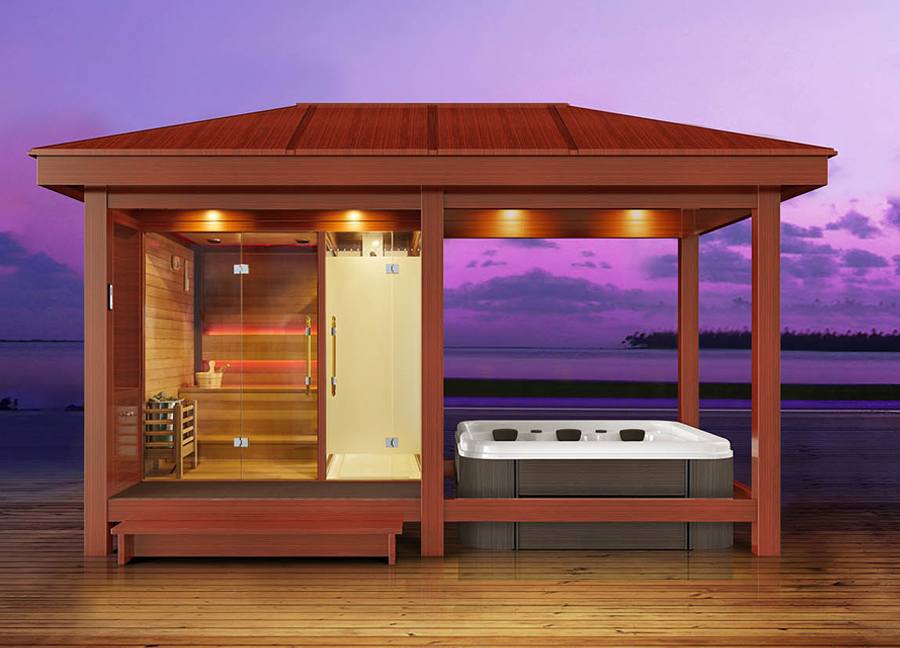



For many homeowners, owning an outdoor whirlpool spa tub signifies the start of a lifestyle defined by comfort, relaxation, and quality. Whether it is unwinding with heat therapy on a cold winter night or enjoying a hydro-massage after a busy day, the jacuzzi outdoor tub has evolved from a high-end luxury item into an increasingly common home leisure facility. However, after long-term use, many owners discover that the user experience is determined not merely by heating speed, jet pressure, or massage functions, but by a factor that seems basic yet is critically important: water quality.
Among all water quality issues, one of the phenomena that most readily alarms users is the water suddenly turning cloudy. Water that was once crystal clear can, within a single day, turn whitish, grayish, or even milky. When this happens, the first question that springs to mind for most users is: Does cloudy water mean bacteria are proliferating in the hot tub?
This is a question that appears simple but is actually quite complex. From a microbiological perspective, while there is indeed a link between water turbidity and bacteria, it is not an absolute one-to-one relationship. In other words, cloudy water does not necessarily indicate a massive bacterial bloom, yet a massive bacterial bloom often results in cloudy water. Therefore, assessing whether a hot tub poses a bacterial risk requires more than just a visual check; it demands a comprehensive analysis involving water chemistry, filtration systems, sources of contamination, and microbial ecology.
To truly answer this question, we must first understand why the water in outdoor spa hot tubs is more prone to cloudiness than the water in standard bathtubs or even large swimming pools.
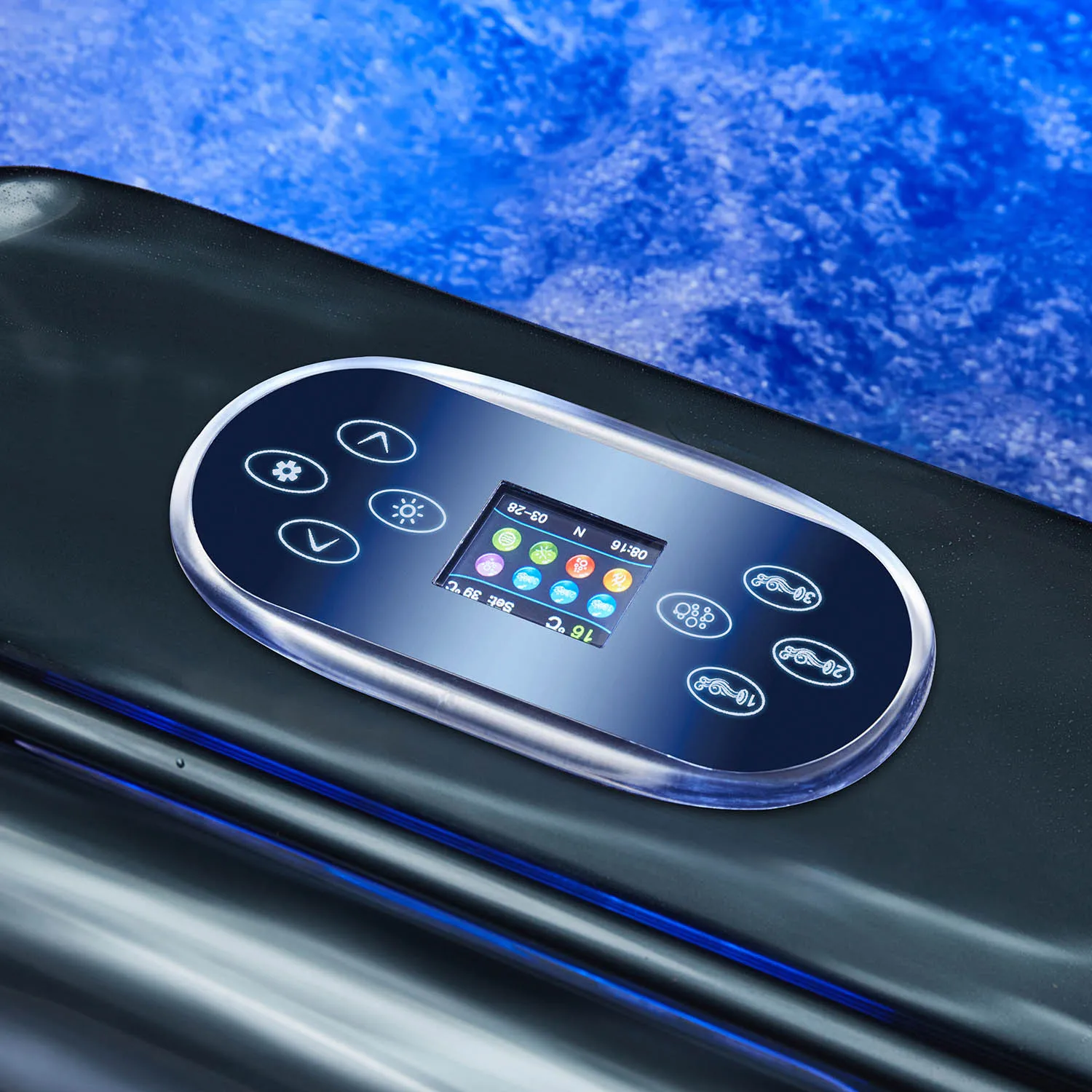
Why are jacuzzi outdoor tubs more prone to cloudy water?
Many first-time hot tub owners operate under the intuitive assumption that because the water volume is much smaller than that of a swimming pool, maintenance should be simpler. In reality, however, the very characteristics of "small volume, high temperature, and high load" make the outdoor spa hot tub environment one where water quality is most easily destabilized.
First, high temperature is a key factor affecting water stability. Most outdoor spa hot tubs operate at temperatures between 37°C and 40°C, with some deep-massage modes reaching as high as 42°C. While this temperature feels very comfortable to the human body, it also creates a highly active environment for bacteria, fungi, and organic contaminants. Numerous studies indicate that the metabolic rates of many environmental bacteria accelerate significantly within the 35°C to 40°C range; consequently, if the disinfection system is even slightly inadequate, the rate of microbial growth can far exceed that found in standard cold-water environments.
Secondly, outdoor whirlpool hot tubs typically hold only 800 to 1,800 liters of water—a stark contrast to the tens of thousands of liters found in swimming pools—meaning there is virtually no room for contaminants to be "diluted." A single adult soaking for 20 to 30 minutes can release significant amounts of sweat, sebum, urea, skincare product residues, and dead skin cells. Research shows that one adult can introduce hundreds of milligrams of organic contaminants into the water during a single soak; in such a small volume of water, these substances can rapidly alter the water's overall chemical balance.
Furthermore, the outdoor setting adds another layer of complexity. Dust, pollen, leaf fragments, insect debris, and impurities from rainwater can all find their way into the hot tub. This means that even in the absence of significant human contamination, mere exposure to the outdoors continuously increases the load of suspended particles. As a result, water turbidity is more common in outdoor spa hot tubs than in indoor systems.
But the key question remains: where exactly does this turbidity come from?
Turbidity is not solely caused by bacterial proliferation in outdoor whirlpool hot tubs.
This is a common misconception among users. Upon seeing the water turn cloudy, many immediately assume a bacterial outbreak. In reality, the causes of turbidity in outdoor whirlpool hot tubs fall into at least three categories: physical, chemical, and biological.
Physical turbidity usually stems from suspended particles—such as airborne dust, pollen, textile fibers, dead skin cells, or fine debris. When filtration is insufficient, these particles remain suspended in the water, giving it a slightly hazy or grayish-white appearance. This type of turbidity is often odorless and does not necessarily indicate a bacterial problem. If the water clears up after the filtration system has run for a few hours, the issue likely lies with filtration efficiency rather than microbial contamination.
Chemical turbidity, on the other hand, is linked to an imbalance in water chemistry. For outdoor spa hot tubs, the most common chemical issues stem from pH imbalances and excessive calcium hardness. When the pH exceeds 7.8—combined with high calcium hardness and elevated water temperatures—minerals in the water, particularly calcium carbonate, are more likely to precipitate out. These microscopic crystals appear to the naked eye as a milky-white haze and are often mistaken for bacterial contamination. In reality, this cloudiness has nothing to do with bacteria; it is a classic case of mineral precipitation.
The third type—and the one that warrants the most concern—is biological cloudiness. This type of turbidity usually indicates an excessive accumulation of organic contaminants and a failure of the hot tub's sanitization system to keep microbial growth in check. In this scenario, a mixture of bacteria, microbial metabolic byproducts, and complex organic compounds reduces water clarity.
This is the type of cloudiness that truly worries users.
What is the relationship between cloudy water and bacterial growth in jacuzzi outdoor tubs?
The answer can be summarized in a single sentence:
Cloudiness is not a definitive indicator of bacterial growth, but it can be a significant warning sign.
This implies two things. First, cloudy water does not necessarily mean bacteria are present. Second, the presence of bacteria does not necessarily cause the water to turn cloudy immediately.
Many people overlook the second point. In the early stages of bacterial proliferation, the water in an outdoor spa hot tub may remain perfectly clear. Although the bacterial population is rising, it has not yet reached a level that affects optical clarity. Therefore, visual "clarity" is not synonymous with hygienic "safety."
As the bacterial population grows, the bacteria gradually combine with organic contaminants to form complex microbial communities. Only then does water clarity begin to decline.
1. The Real Danger: Hot Tub Biofilm
If free-floating bacteria are a cause for concern, biofilms are an even greater challenge.
Biofilms are protective structures formed when bacteria adhere to surfaces; they commonly develop in internal piping, jets, filter cartridges, and "dead zones" within the circulation system. Because water flow in these areas is complex and sanitizers may not reach every nook and cranny, they provide an ideal environment for bacterial colonization.
Once a biofilm forms, the problem escalates rapidly. Research shows that bacteria within a biofilm can be 10 to 1,000 times more resistant to sanitizers than their free-floating counterparts. This means that even if your outdoor whirlpool hot tub tests show normal chlorine levels, significant amounts of bacteria may still exist inside the plumbing.
To make matters worse, when biofilm breaks loose and enters the main body of water, it significantly increases the level of suspended organic matter, causing the water to suddenly turn cloudy. At this point, there is a direct link between the cloudiness and the presence of bacteria.
Which bacteria are most likely to thrive in jacuzzi outdoor tubs?
The high-temperature environment makes outdoor spa hot tubs particularly hospitable to certain microorganisms.
Pseudomonas aeruginosa is the most frequently discussed among them. This bacterium favors warm, moist environments and can multiply rapidly if disinfection is inadequate. It is commonly associated with "hot tub folliculitis," with typical symptoms including red rashes, itching, and small pustules around hair follicles.
Another bacterium of concern is Legionella. Unlike skin-infecting bacteria, Legionella poses a greater danger because it is primarily transmitted through inhalation. Outdoor whirlpool hot tubs are often equipped with powerful jet systems that generate large amounts of fine aerosol mist. If Legionella is present in the water, users may inhale contaminated mist, thereby increasing the risk of respiratory infections.
Additionally, bacteria such as E. coli and Staphylococcus aureus can appear if the hot tub is poorly maintained. While large-scale outbreaks are uncommon in home settings, long-term neglect of water quality management undoubtedly increases the risk.
How can you tell if hot tub cloudiness is related to bacteria?
You cannot determine this with 100% certainty by sight alone, but considering several factors can improve the accuracy of your assessment.
First, look at the color of the cloudiness. If the water appears white, milky white, or grayish-white, the issue is usually caused by mineral deposits or suspended physical particles. If the water takes on a yellowish-green or light green hue, or appears murky and viscous, biological contamination is more likely.
Second, check for odors. A well-maintained hot tub generally does not have a strong, unpleasant smell. If you detect a fishy, musty, or foul odor—or a sharp, pungent smell of chloramines—it usually indicates a high organic contamination load, which often implies an increased risk of bacterial growth.
The Most Reliable Method Remains Water Quality Testing
Ultimately, the only truly reliable way to assess the situation is to test the water quality.
At a minimum, the following parameters should be tested:
•Free chlorine
•pH level
•Total alkalinity
•Total Dissolved Solids (TDS)
For most residential outdoor spa hot tubs, it is recommended to maintain free chlorine levels between 2 and 5 ppm and keep the pH within the 7.2–7.8 range. If the water appears cloudy while chlorine levels are near 0 ppm, the risk of bacterial contamination typically rises significantly.
Does clear water guarantee safety?
The answer is no.
This is another common misconception. Many users equate "clarity" with safety, but there is often a lag between microbial contamination and visible signs. An outdoor whirlpool hot tub might look crystal clear, yet early-stage biofilm could already be forming inside the plumbing.
In other words, clear water indicates high optical transparency but does not necessarily mean microbial levels are safe.
Therefore, a truly reliable maintenance approach is not to ignore the hot tub simply because the water looks fine, but rather to establish a routine testing and maintenance schedule.
How can bacterial growth in outdoor whirlpool spa tubs be prevented?
Prevention is always better than cure. For jacuzzi outdoor tubs, the key to preventing bacterial growth lies in maintaining system stability, rather than resorting to emergency treatment after the water has already become cloudy.
First, ensure sanitizer concentrations remain stable. If chlorine or bromine levels are insufficient, bacteria can multiply rapidly in a very short time. Under ideal conditions, certain environmental bacteria can theoretically double every 20 to 30 minutes; thus, even a brief lapse in control can pose significant risks.
Second, ensure the filtration system is highly efficient. For most residential jacuzzi outdoor tubs, running the filtration cycle for 8 to 12 hours daily is recommended to ensure suspended contaminants are removed promptly.
Additionally, regular "shock treatment" is crucial. The goal of shock treatment is not merely to add more chlorine, but to rapidly oxidize accumulated organic contaminants and eliminate the conditions that foster bacterial growth. Finally, no matter how thorough the maintenance is, using the same water indefinitely is not recommended. Industry standards generally suggest that the average household completely change the water in their outdoor whirlpool hot tub every 3 to 4 months, with more frequent changes required for heavy-use scenarios.
FAQ
Can I still use the outdoor spa hot tub if the water is cloudy?
It is not recommended. Before using it again, you should suspend use and test the water quality to determine the cause of the cloudiness.
Does cloudy water in an outdoor spa hot tub necessarily mean there is bacteria?
Not necessarily. Mineral deposits and calcium precipitation are more common causes.
Can there still be bacteria in an outdoor whirlpool hot tub if the water looks clear?
Yes. Clarity refers only to visual transparency; it does not mean the water is completely free of bacteria.
How often should the water in an outdoor whirlpool hot tub be changed?
For typical household use, it is recommended to completely change the water every 3 to 4 months; the interval should be shorter for high-frequency use.