


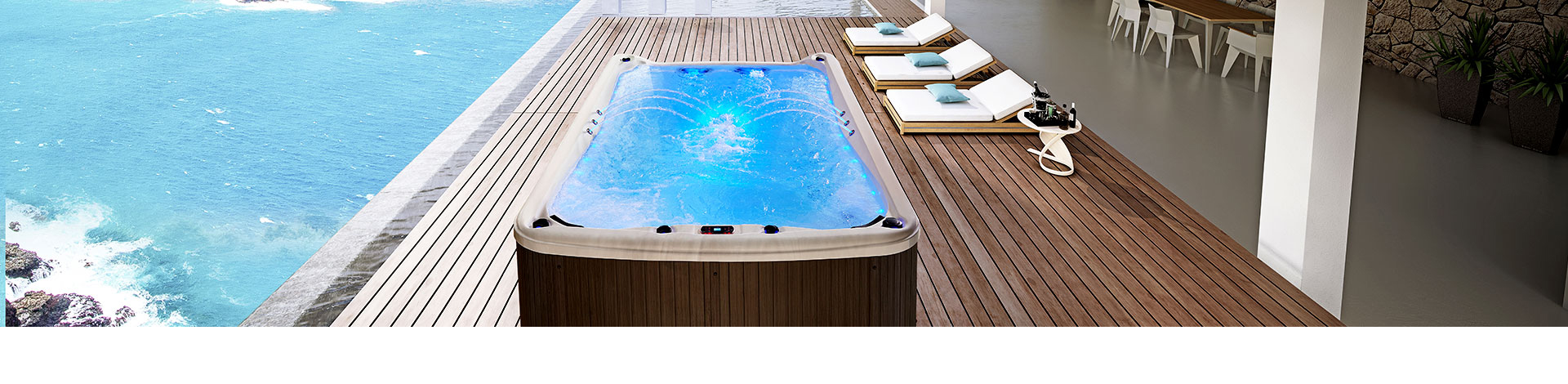
Should you adjust the pH level or the chlorine content first when maintaining a jacuzzi hot tub outdoor?
For many households new to outdoor spa hot tubs, water maintenance is often the most critical yet underestimated aspect. When purchasing a unit, people typically focus on the number of jets, heating speed, insulation performance, and aesthetics; however, after long-term use, they discover that the core factor determining the quality of the experience isn't the hardware itself, but the water quality. Once the water chemistry becomes unbalanced, even an expensive jacuzzi hot tub can suffer from cloudy water, unpleasant odors, excessive foaming, scale buildup on equipment, and even skin irritation.
Among the various water maintenance issues, one extremely common yet frequently misunderstood question is: should you adjust the pH level or the chlorine content first?
On the surface, this might seem like a simple matter of the order in which chemicals are added—as if the sequence doesn't matter much, provided the final readings are within the normal range. From the perspective of water chemistry, however, this understanding is inaccurate. In reality, there is a close interplay between pH and chlorine levels; they are not independent parameters. Adjusting one often directly impacts the effectiveness of the other. Consequently, the correct maintenance sequence determines not only whether the chemicals work at peak efficiency but also whether you are wasting time, money, and effort.
For the vast majority of routine maintenance scenarios, the standard answer is clear: adjust the pH level first, then the chlorine content. However, simply memorizing this conclusion is far from sufficient.
It is far more important to understand the underlying logic—why must the pH be adjusted first? Why does the wrong sequence reduce disinfection efficiency? Why do some users add large amounts of chlorine yet fail to resolve water quality issues? To truly master jacuzzi hot tub maintenance, one must understand the principles of water chemistry.
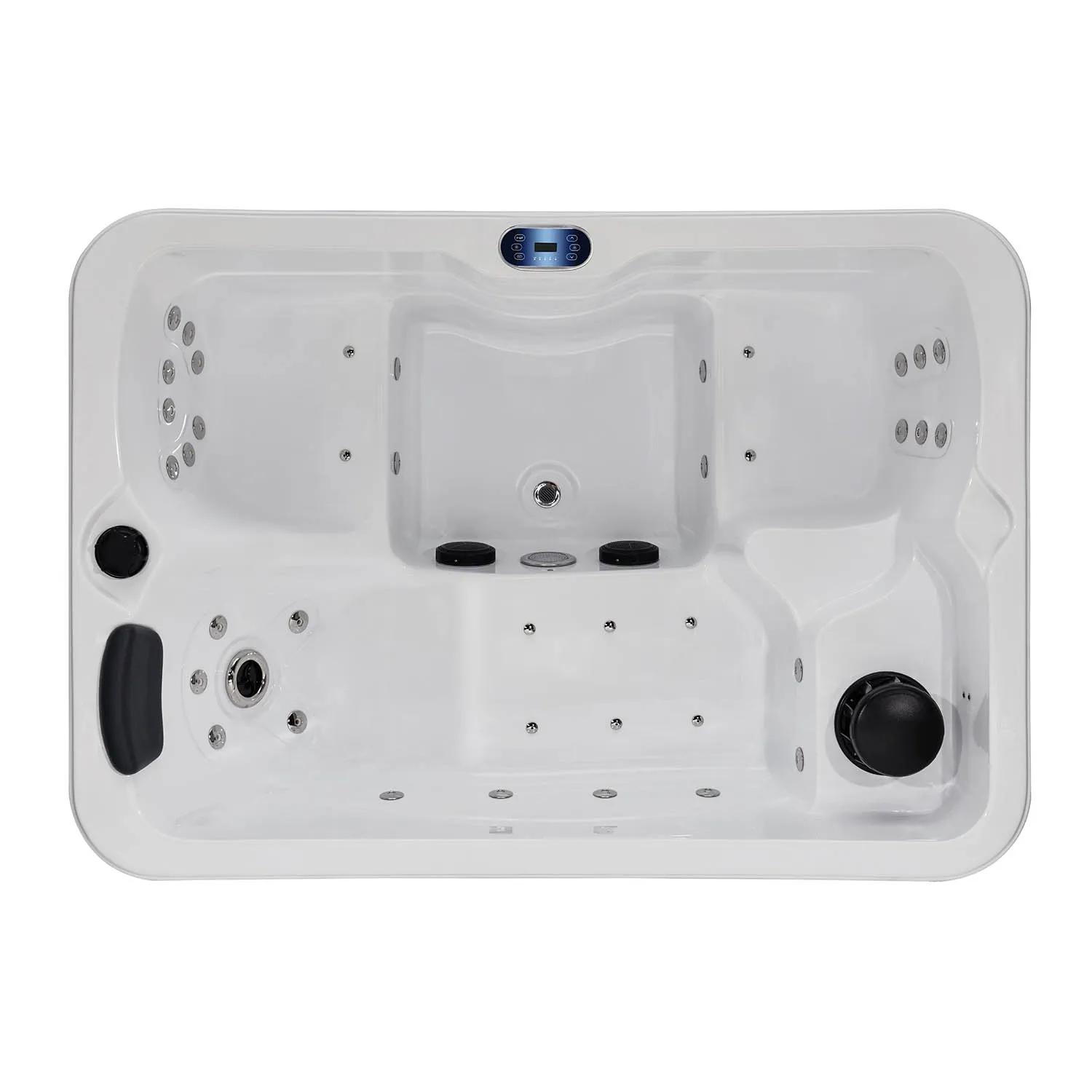
Why is maintaining water quality in a jacuzzi outdoor tub more challenging than in a standard swimming pool?
Many new users intuitively assume that because an outdoor spa hot tub holds far less water than a swimming pool, maintenance should be simpler. The reality, however, is quite the opposite. Many professional maintenance technicians even consider residential outdoor spa hot tubs more difficult to manage in certain respects than large swimming pools.
The primary reason lies in the temperature. Standard swimming pool temperatures are typically maintained between 26°C and 30°C, whereas outdoor whirlpool hot tubs generally operate between 37°C and 40°C, with some deep-therapy modes reaching as high as 42°C. While higher temperatures enhance comfort, they also create an environment that fosters greater activity among bacteria, algae, and organic contaminants. Extensive research indicates that microbial metabolic efficiency increases significantly in environments exceeding 35°C, meaning that hot water environments require more robust and consistent disinfection capabilities.
A second factor is water volume. Most residential outdoor spa hot tubs have a capacity of only 800 to 1,800 liters; consequently, the concentration of any introduced contaminants rises rapidly. Substances released by an adult during a 20-minute soak—such as sweat, sebum, skincare residues, urea, and dead skin cells—have a far more pronounced impact in a small volume of water than in a large swimming pool. In other words, the water chemistry balance in a jacuzzi outdoor tub is more fragile, and any parameter can fluctuate significantly within a short period.
Furthermore, the outdoor environment itself adds complexity. Dust, pollen, fallen leaves, rainwater, and ultraviolet (UV) rays from the sun all continuously affect water quality. UV rays, in particular, accelerate the decomposition of certain disinfectants during the summer, causing chlorine levels to drop much faster. Therefore, maintaining a jacuzzi hot tub outdoor requires more than just "adding a little chemical now and then"; it demands a systematic understanding of the relationships between various parameters.
Why is pH the core parameter for managing outdoor whirlpool hot tub water quality?
Among all water quality indicators, many outdoor whirlpool spa tub users focus first on chlorine levels because chlorine is directly linked to disinfection. However, the pH level is often the decisive factor in whether chlorine functions effectively.
pH essentially measures the acidity or alkalinity of water on a scale of 0 to 14. A value of 7 is neutral; values below 7 indicate acidity, while values above 7 indicate alkalinity. For jacuzzi hot tub outdoor, the industry-recognized ideal range is typically 7.2 to 7.8. This range is widely adopted because it balances three key factors: human comfort, equipment protection, and disinfection efficiency.
When the pH is too low, the water becomes acidic; while this may result in higher chlorine disinfection efficiency, the acidic environment brings significant side effects. For instance, components such as heaters, pump housings, and metal piping are more prone to corrosion, and seals tend to age more rapidly. Users may also experience discomfort—such as stinging eyes, nasal irritation, or skin redness—when using the spa hot tub. Prolonged exposure to low-pH water can also shorten the equipment's overall lifespan.
Conversely, the issues are entirely different when the pH level is too high. Alkaline water reduces the effectiveness of chlorine as a sanitizer and accelerates the precipitation of calcium and magnesium ions, leading to scale formation. This poses a significant risk for outdoor spa hot tubs, as jet systems, heating elements, and filters are highly sensitive to scale buildup. Severe scaling not only increases energy consumption but also reduces water circulation efficiency.
Therefore, pH is fundamentally the cornerstone parameter of the entire water chemistry system; it determines not merely the acidity or alkalinity of the water, but the operational efficiency of the spa hot tub's entire sanitization system.
Why must you adjust the pH level of an outdoor whirlpool spa tub before adjusting the chlorine content?
The reason lies in the chemical transformation of chlorine within the water.
Once chlorine enters the jacuzzi hot tub water, it does not remain in a single state; instead, it forms two primary species: hypochlorous acid (HOCl) and the hypochlorite ion (OCl⁻). Although both belong to the chlorine family, their sanitizing capabilities differ vastly. The truly effective sanitizing agent is hypochlorous acid (HOCl), which rapidly penetrates bacterial cell membranes and destroys their internal structures. In contrast, the sanitizing efficiency of OCl⁻ is far lower.
Crucially, the ratio between these two forms is determined almost entirely by the pH level.
How does pH affect chlorine effectiveness?
Looking at the data makes this impact much clearer. When the jacuzzi hot tub water has a pH of 6.5, approximately 90% of the chlorine exists in the highly effective HOCl form; when the pH rises to 7.5, this effective proportion drops to about 50%; and when the pH reaches 8.0, the proportion of highly effective chlorine may fall to around 22%. If the pH climbs further to 8.5, the effective chlorine level can drop below 10%.
What does this mean? It means that even if your jacuzzi hot tub test results show a free chlorine level of 3 ppm, if the pH is too high, the portion of chlorine actually capable of effective sanitization might be less than 0.5 ppm. The chlorine level may appear normal on paper, yet the actual sanitizing power is far from sufficient.
This is why industry experts consistently emphasize: adjust the pH first, then add chlorine. If the water's pH balance is incorrect, the chlorine you add subsequently may not work effectively.
What problems arise if you add chlorine first?
This is a common misconception among many outdoor spa hot tub owners. When test strips indicate low chlorine levels, the immediate reaction is often to add more chlorine. However, if the pH is excessively high at the time, this approach is usually highly inefficient.
Consider a typical scenario: an outdoor spa hot tub tests at a pH of 8.3 and a free chlorine level of 1 ppm. Seeing the low chlorine reading, the user adds more, hoping to reach 3 ppm. On the surface, this seems to solve the problem; in reality, however, the high pH environment causes most of the newly added chlorine to rapidly convert into a less effective form. The result is increased chlorine consumption, higher costs, and potentially increased irritation, yet the actual sanitizing performance improves very little.
This is precisely the source of confusion for many users: why does the water remain cloudy, odorous, and foamy despite adding plenty of chlorine? Often, the issue isn't a lack of chlorine itself, but rather a pH imbalance preventing the chlorine from functioning as intended.
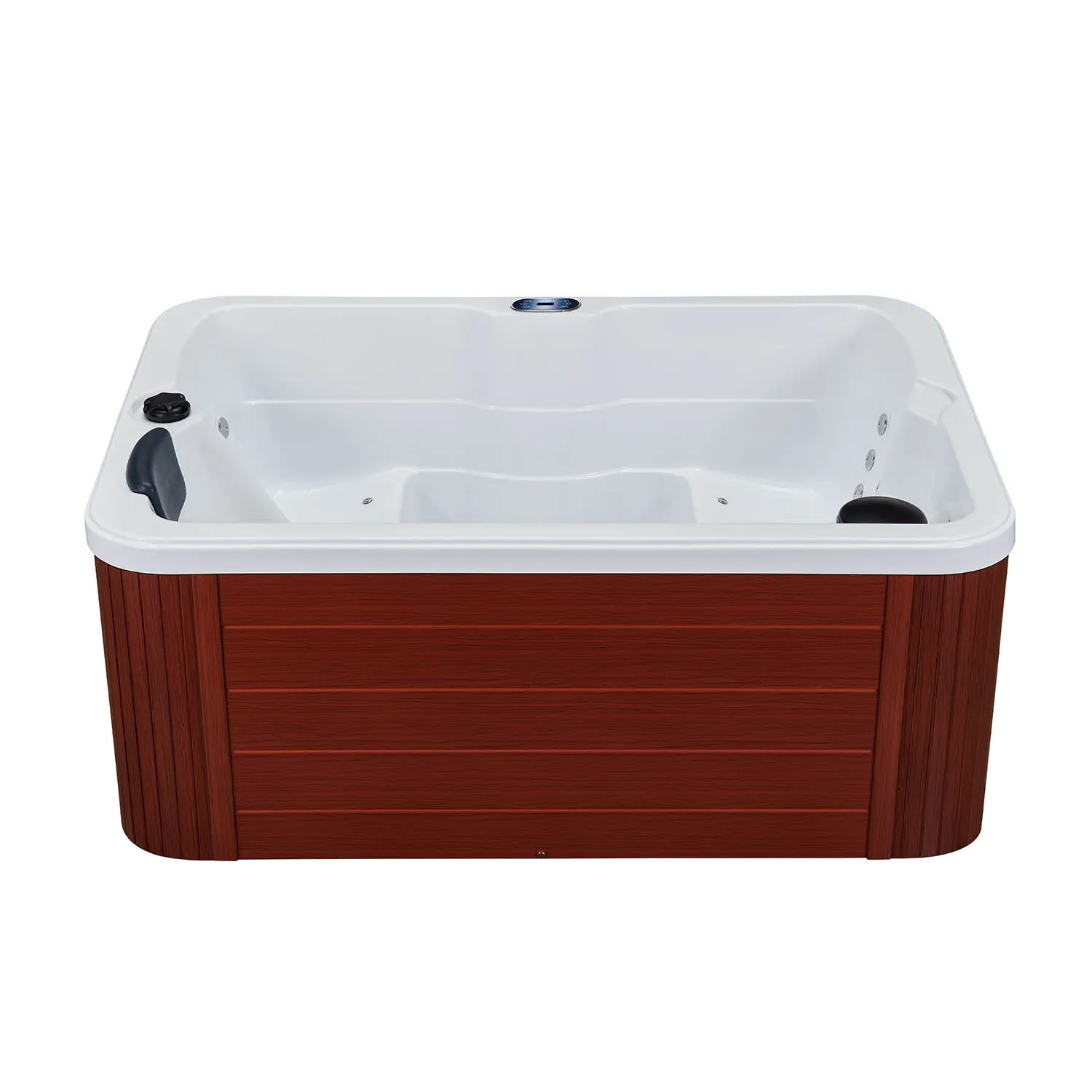
What is the correct maintenance procedure for an outdoor spa hot tub?
For the vast majority of residential users, the safest and most effective way to maintain an outdoor spa hot tub is to establish a consistent routine rather than adding chemicals based on guesswork.
First, perform a comprehensive water quality test, covering at least pH, free chlorine, total alkalinity, and calcium hardness. Many people test only for chlorine, which is far from sufficient; chlorine is merely a resultant parameter, not a fundamental one. Water stability is determined by the entire chemical balance system.
If total alkalinity is significantly off-balance, it should be corrected first. Total alkalinity acts as a pH buffer; if this buffering system is unbalanced, the pH will quickly drift back away from the ideal range even after a temporary adjustment. For most outdoor spa hot tubs, total alkalinity should ideally be maintained between 80 and 120 ppm.
Once total alkalinity is stabilized, proceed to adjust the pH level. Use a pH-lowering agent if the pH is too high, or a pH-raising agent if it is too low. After adding any chemicals, allow the outdoor whirlpool hot tub's circulation system to run for 15 to 30 minutes to ensure thorough mixing before re-testing the water.
Adjust the chlorine level only after the pH has stabilized between 7.2 and 7.8. For outdoor whirlpool hot tubs operating at high temperatures, it is generally recommended to maintain free chlorine levels between 2 and 5 ppm to ensure continuous sanitizing effectiveness.
Are there exceptions?
Yes, though they fall outside the scope of routine maintenance.
For instance, if the water is heavily contaminated—showing visible cloudiness, strong odors, or signs of a potential bacterial outbreak—an immediate "shock treatment" with chlorine may be necessary. In such cases, the goal is rapid sanitization rather than the precise balancing of water chemistry parameters.
However, even then, the pH level must be re-tested and corrected after the shock treatment is complete. Thus, from a long-term maintenance perspective, the core principle remains unchanged: stabilize the chemical environment first, then optimize sanitization.
Why is the pH level in outdoor whirlpool spa tubs prone to drifting?
This is a common issue for long-term owners: the pH is adjusted one day, only to shift again the next.
The reason lies in the nature of the jacuzzi hot tub outdoor environment, which naturally drives the pH upward. First, high temperatures accelerate the escape of carbon dioxide from the water; a reduction in carbon dioxide typically causes the pH to rise. Second, the jet massage system generates a large volume of bubbles, accelerating gas exchange and further driving up the pH.
Additionally, human sweat, skincare products, and the tap water used for refilling can alter the water's mineral balance. Tap water hardness varies significantly by region, meaning the difficulty of maintaining a jacuzzi hot tub outdoor can differ greatly depending on location.
This is why experienced owners often view pH as the parameter requiring the most frequent monitoring; it changes the most rapidly and has the greatest impact on the jacuzzi hot tub's overall water quality.
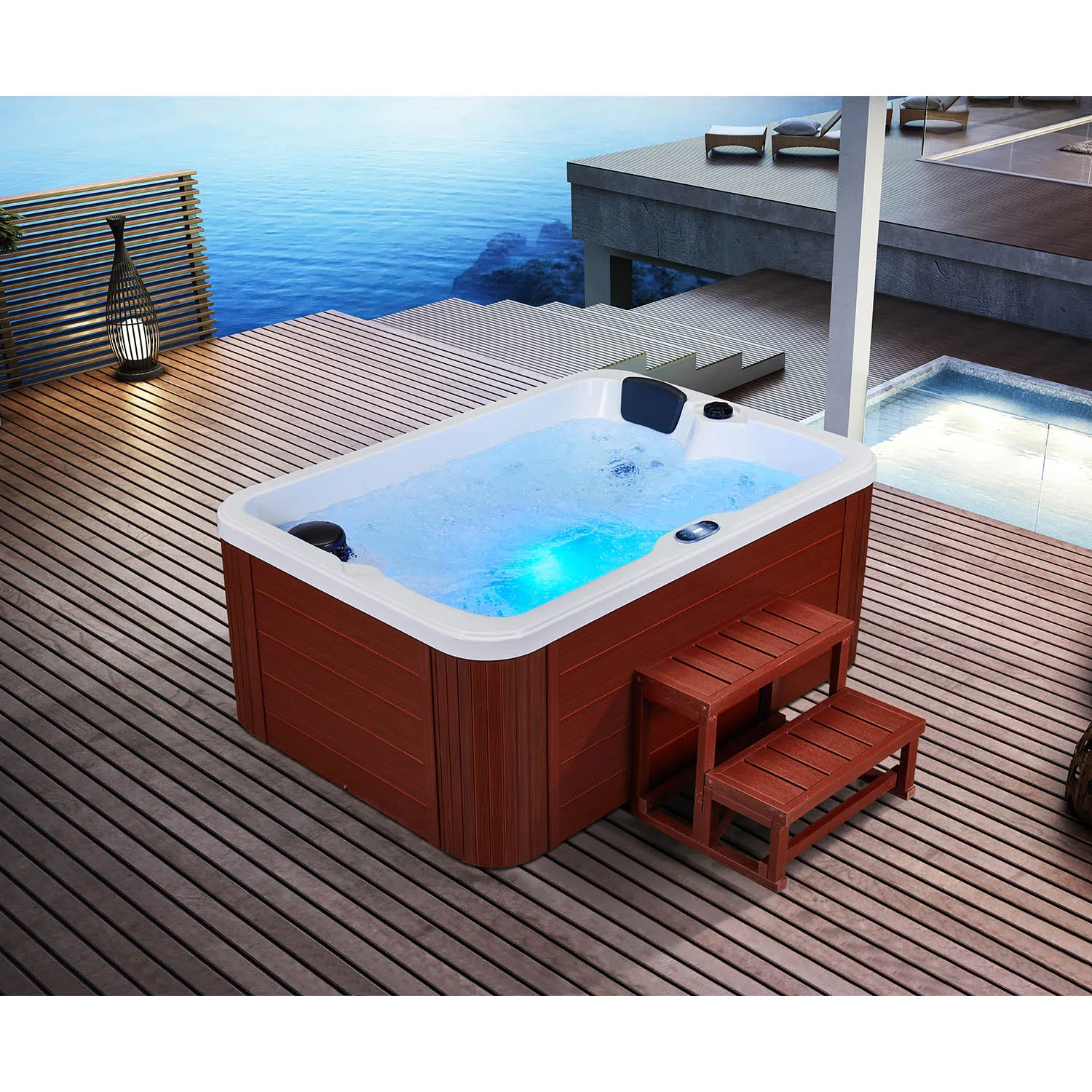
Should I adjust the pH or the chlorine level first?
In the vast majority of cases, you should prioritize adjusting the pH level of your outdoor spa hot tub water before adjusting the chlorine content. The reason is straightforward: pH determines the chemical form of the chlorine, and that chemical form directly dictates disinfection efficiency. If the pH falls outside the optimal range, adding more chlorine to the hot tub may fail to achieve the desired sanitizing results.
FAQ
What is the ideal pH level for an outdoor spa hot tub?
It is recommended to keep it between 7.2 and 7.8.
What is the appropriate chlorine level for an outdoor whirlpool hot tub?
It is generally recommended to maintain a level of 2 to 5 ppm.
Why are the chlorine levels in my outdoor spa hot tub always unstable?
High temperatures, UV rays, heavy usage, and organic contaminants all accelerate chlorine depletion.
Do I need to test the water quality of my outdoor whirlpool spa tub every day?
Daily testing is recommended for high-frequency use, while 2 to 4 times a week is sufficient for typical household use.