
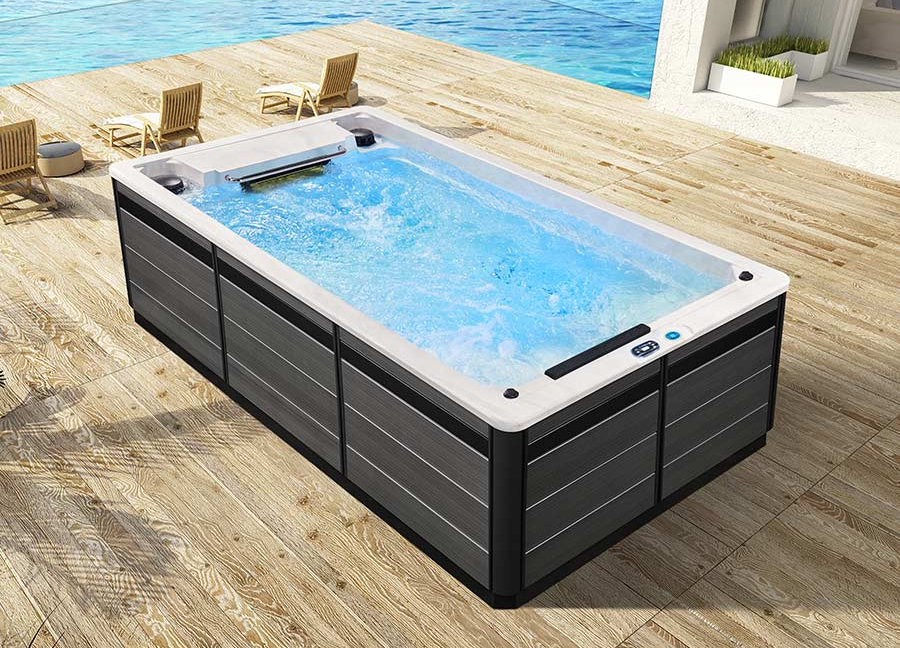
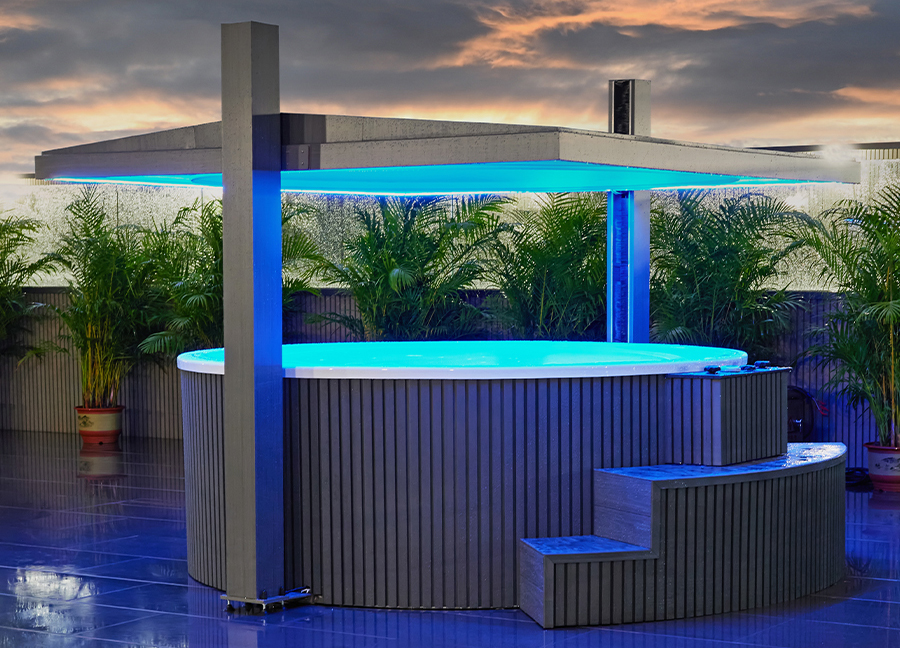

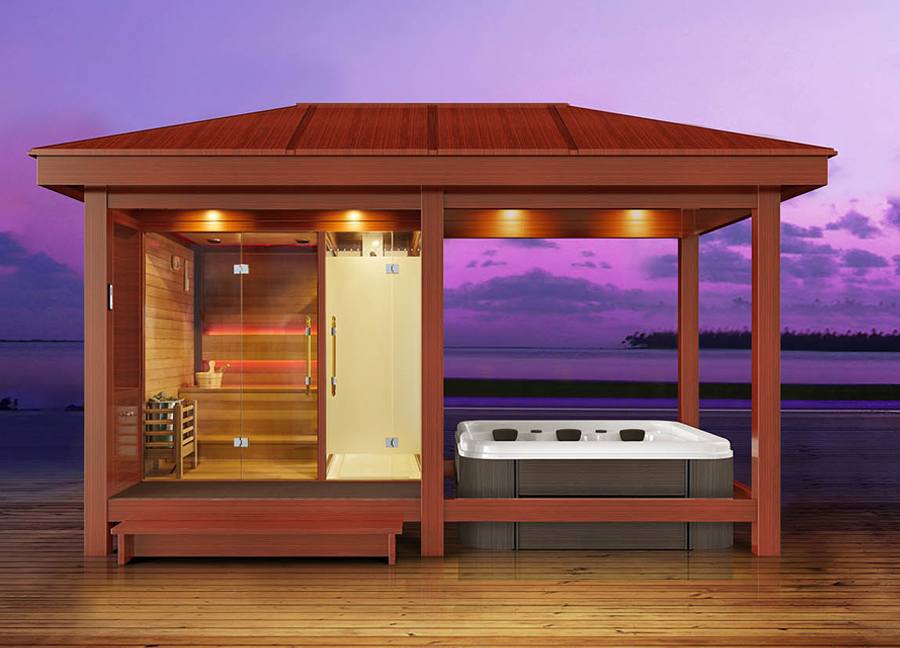


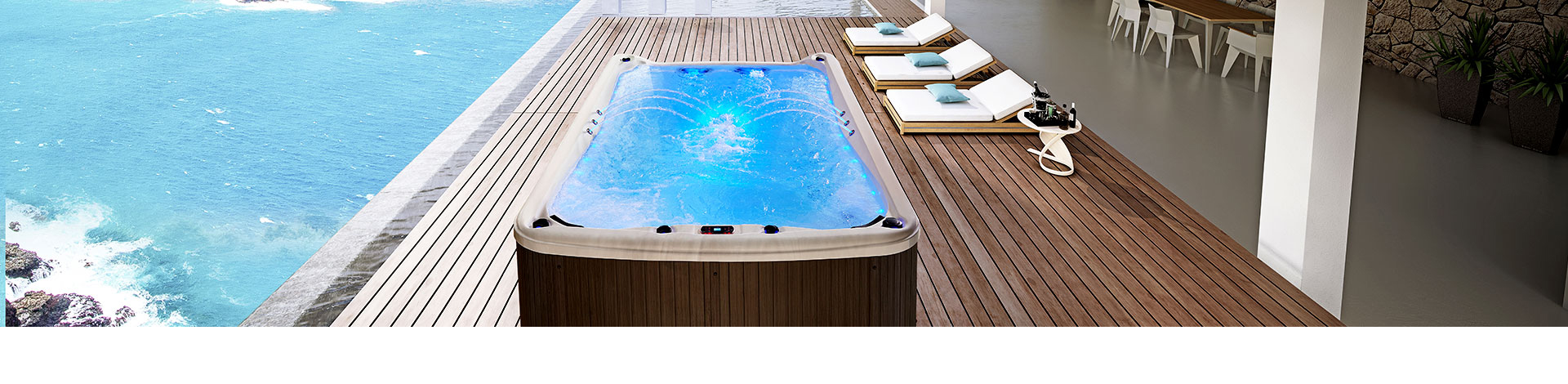
As the lifestyle of backyard leisure evolves, more and more households are installing outdoor swim spa hot tubs. These units combine swimming training, hydrotherapy massage, heat therapy recovery, and family entertainment, becoming increasingly common in high-end residences, vacation villas, and boutique guesthouses. After enjoying an outdoor swim spa, many users overlook a seemingly minor question: should one shower afterward? Does skipping the shower have any real consequences?
On the surface, this appears to be merely a matter of personal habit. Some argue that having soaked in the water for twenty or thirty minutes, their bodies have already been "washed"; others feel that as long as the water is well-maintained—clear, transparent, and odorless—an extra rinse is unnecessary. However, from the perspectives of dermatology, water treatment engineering, and public health, the issue is not so simple.
Even in a well-maintained outdoor jacuzzi swim spa, the water may still contain residual disinfectants, chemical by-products, and contaminants derived from human metabolism. While these substances might not cause immediate, obvious problems, consistently neglecting to rinse off after a soak can indeed have lasting effects on the skin, hair, and even the respiratory tract.
So, what actually happens to the body if you don't shower after using an outdoor swim spa hot tub? This article provides a detailed analysis from multiple perspectives.

Is the water in an outdoor swim spa really as clean as it looks?
Many people judge water quality primarily by sight. If the water is clear, free of floating debris, and lacks a pungent odor, it is often deemed "very clean." However, professional water quality management involves far more than just visual assessment.
A properly functioning outdoor swim spa typically regulates several key parameters, including free chlorine concentration, pH level, total alkalinity, and total dissolved solids (TDS). For residential units, free chlorine is generally maintained between 1 and 3 ppm, while the pH level is usually kept within the 7.2 to 7.8 range. These levels help inhibit bacterial growth, but the issue is that disinfectants themselves are not entirely free of potential irritation. Every time a person enters an outdoor swim spa hot tub, they release a significant amount of invisible contaminants into the water, including sweat, sebum, dead skin cells, sunscreen, skincare products, perfume residues, and urea. Studies show that an adult can release an average of 20 to 80 milligrams of organic contaminants during a 30-minute soak. If multiple people use the spa, the contamination load rises rapidly.
More importantly, these human metabolites react chemically with the disinfectants in the water to form new by-products, such as chloramines, trihalomethanes, and haloacetic acids.
Often, it is not the original disinfectant that irritates the skin and respiratory tract, but rather these reaction by-products. Therefore, even if your outdoor swim spa looks spotless, physical contact with the water still carries a risk of residual exposure.
The most immediate consequence of not showering after use is that chemical substances remain on the skin's surface.
After leaving the outdoor swim spa hot tub, many people simply dry off, change clothes, or even continue with outdoor activities. However, a layer of invisible chemical residue often remains on the skin.
Chlorine is the most common example. Whether using traditional chlorine disinfection or a saltwater electrolysis system, the process essentially generates hypochlorous acid, which acts as a disinfectant. Hypochlorous acid is a strong oxidizing agent that destroys the cellular structures of bacteria and microorganisms. However, this oxidizing power does not vanish the moment you leave the water; as long as chlorine remains on the skin, it continues to react with the lipids on the skin's surface.
Human skin has a natural sebum film that serves as a vital barrier against external irritants. Residual chlorine continuously oxidizes this protective layer, compromising the skin's barrier function and leading to sensations of tightness, dryness, and mild itching. This effect is usually more pronounced in individuals with sensitive or dry skin, or those prone to eczema.
Why do some people experience itchy skin after using an outdoor swim spa?
This is often linked to chloramines.
Many people mistakenly believe that the pungent odor associated with outdoor jacuzzi swim spas comes from chlorine itself; in reality, that smell is primarily caused by chloramines. Chloramines are byproducts formed when sweat and urea react with chlorine; they are generally more irritating than free chlorine.
1. Chloramines cause more pronounced skin irritation
Chloramines tend to adhere to skin folds—such as the neck, underarms, the backs of the knees, and the hairline. If one does not shower after using an outdoor jacuzzi swim spa, these substances can remain on the skin's surface for hours.
This can lead to several common reactions: initially mild itching, followed by localized redness, and in severe cases, an allergy-like burning sensation. This is particularly true after soaking in the high temperatures of an outdoor swim spa hot tub; with pores open and the skin's absorption capacity temporarily heightened, the discomfort caused by these residues is often more intense.
2. Hot water environments further compromise the skin barrier
Compared to standard swimming pools, outdoor swim spa hot tubs have a key distinguishing feature: higher water temperatures.
Most outdoor swim spa hot tubs are set between 36°C and 40°C, with deep-massage modes reaching up to 42°C. While the relaxation provided by the heat is a major draw for many users, from a dermatological perspective, high temperatures also increase the risk of damage to the skin barrier.
The lipid structure of the stratum corneum (the skin's outermost layer) consists primarily of ceramides, fatty acids, and cholesterol; together, these substances form the skin barrier. Prolonged exposure to hot water causes this lipid structure to loosen, thereby reducing the barrier's stability.
3. Transepidermal water loss increases significantly
In medicine, there is a concept known as "transepidermal water loss" (TEWL), which refers to the rate at which water naturally evaporates through the skin.
Studies show that after soaking in 40°C water for 20 minutes, TEWL can increase by 25% to 300%. What does this mean? It means that although your skin feels hydrated and soft while in the jacuzzi swim spa, the rate of water evaporation accelerates significantly once you step out.
This explains why many people feel their skin becoming increasingly dry after a soak, sometimes even noticing fine flaking the following day. If you fail to shower, remove chemical residues, and apply moisturizer after using the spa, skin discomfort is likely to persist for a longer period.
The Impact on Hair is Often Underestimated
Beyond the skin, hair is another area significantly affected. Many people focus solely on drying their bodies after using an outdoor spa, forgetting that their hair has also been exposed to large amounts of treated water.
The hair shaft is covered by cuticles. When healthy, these cuticles lie flat and tightly packed, giving the hair a smooth, glossy appearance. However, chlorine and high temperatures cause the cuticles to lift, weakening the hair's structure.
Failure to rinse promptly after using the spa allows residual chemicals to continue affecting the hair, leading to roughness, tangling, dryness, and split ends. This effect is even more pronounced on bleached or dyed hair.
1. Those with dyed hair need to be especially careful
Hair cuticles are already in a vulnerable state after dyeing. Prolonged exposure to a chlorine-rich environment significantly accelerates color loss. Common issues include cool-toned shades fading to warm yellow, ash-brown tones losing their matte finish, and increased frizziness in bleached hair.
This is why professional swimmers, who are frequently exposed to pool water, often use specialized de-chlorinating shampoos to minimize damage.
2. Neglecting to shower can lead to hair follicle issues over time
Frequent use of an outdoor spa without proper cleansing after each session can eventually compromise the health of your hair follicles.
This is because soaking in hot water increases sebum production and causes pores to dilate. If chemical residues, sebum, and sweat accumulate on the skin's surface, they can easily clog the hair follicle openings.
Consequences may include increased back acne, closed comedones (whiteheads) on the chest, folliculitis, and small red rashes. People with oily skin are more prone to these issues, which become particularly noticeable during the hot summer months.
Does using an outdoor spa affect the respiratory tract?
Many people focus only on their skin while overlooking their respiratory health. In fact, the jet massage systems in outdoor jacuzzi swim spas increase water turbulence; the stronger the turbulence, the more by-products are released into the air. Chloramines, in particular, evaporate more readily in hot water.
When inhaled, these volatile substances can irritate the mucous membranes of the nasal passages and respiratory tract, causing discomfort such as an itchy throat, dry nasal passages, or a mild cough. These effects may be more pronounced in children, the elderly, and individuals with asthma.
While showering cannot directly cleanse the respiratory tract, promptly washing your face, the area around your nose, and your hair helps reduce prolonged exposure to residual irritants.
Are saltwater outdoor swim spas an exception?
Many users believe that because their outdoor swim spa hot tub uses a saltwater system, it is gentler than traditional chlorine systems and does not require showering afterward.
This is a common misconception.
A saltwater system is not inherently "chlorine-free"; it simply generates hypochlorous acid through salt electrolysis to sanitize the water. Chemically speaking, it still falls under the category of chlorine-based disinfection systems.
While saltwater systems do offer the advantages of being less irritating and having a milder odor, they can still produce chlorine by-products. Additionally, salt residue left on the skin can cause a sticky or dry sensation. Therefore, showering after use is still recommended, even with a saltwater swim spa hot tub.
Will skipping a shower after using an outdoor swim spa necessarily cause problems?
Not necessarily.
If you skip showering only occasionally—and provided the spa water is well-maintained, the session is short, and you haven't sweated much—you likely won't experience immediate, noticeable issues.
However, it is best to shower every time if any of the following apply: the session lasts longer than 20 minutes, the water temperature exceeds 39°C, the spa is shared by multiple people, the jet massage runs continuously, or you have sensitive skin. These factors significantly increase the risk of irritation from chemical residues.
What is the proper way to clean up after using an outdoor swim spa?
Cleaning up after using an outdoor swim spa hot tub isn't complicated, but the order of steps matters. Optimal Cleaning Routine
First, it is recommended to rinse off within 5 to 15 minutes of leaving the water; do not delay, as prolonged exposure to chemical residues increases the risk of irritation. Second, use warm water (34°C to 37°C) for your shower rather than excessively hot water to avoid further compromising the skin barrier.
If you have had a long soak or shared the swim spa hot tub with others, you may use a mild body wash to cleanse your skin. Finally, apply a moisturizing lotion within 10 minutes of showering to help restore the skin barrier and reduce transepidermal water loss.
FAQ
How soon after using an outdoor swim spa should I shower?
It is recommended to rinse off within 5 to 15 minutes—the sooner, the better.
Is rinsing with plain water sufficient?
In most cases, yes. However, if the swim spa hot tub was shared with others or used for an extended period, using a mild cleansing product is recommended.
Is it safe to use the outdoor swim spa hot tub every day?
It is generally safe, provided the equipment is properly maintained and you cleanse and moisturize after each use.
Do children require special care after using the outdoor jacuzzi swim spa?
Yes. Children have thinner skin barriers, so it is recommended that they shower immediately and apply moisturizer afterward.