







During the routine maintenance of spa hot tubs, many users encounter a practice that seems simple yet puzzling: adding baking soda to the water. Some users believe this method helps adjust water quality, while others are unclear about the specific role baking soda plays in the water.
In fact, baking soda (sodium bicarbonate) is a common, fundamental regulating agent in water treatment. When used in appropriate amounts, it can influence the water's pH level and alkalinity balance. Consequently, people sometimes use baking soda when maintaining the water quality of their spa jacuzzi hot tubs.
However, to understand this practice, one must first grasp the basic principles of water quality management for spa hot tubs. Water stability generally relies on a balance between several key indicators, such as pH, alkalinity, mineral content, and circulation/filtration efficiency. Changes in these parameters directly affect the state of the water quality.
This article provides a systematic explanation of why baking soda is added to spa jacuzzi hot tubs and how this practice relates to maintaining water quality balance.
What is baking soda, and why is it used in spa hot tubs?
The chemical name for baking soda is sodium bicarbonate (NaHCO₃). It is a mildly alkaline substance that alters the chemical balance of the water when dissolved.
In various water treatment contexts, baking soda is commonly used to:
•Adjust water alkalinity
•Stabilize water pH levels
•Minimize drastic fluctuations in pH
For spa jacuzzi hot tubs, these effects can help maintain water stability under certain conditions. Therefore, some users employ baking soda as a supplementary adjustment agent during maintenance.
Why must the water quality in spa hot tubs remain balanced?
When a spa hot tub is in use, the water is constantly affected by external factors, such as:
•Sweat and skin oils introduced by bathers
•Airborne dust and particulates
•Residue from skincare or bath products
•Chemical changes resulting from water circulation
These factors gradually alter the water quality. If the chemical parameters fall out of balance, the overall stability of the water can be compromised. In such situations, some users attempt to restore the balance of their spa jacuzzi hot tub by adding specific substances; baking soda is one of them.
Why does baking soda affect the alkalinity of a spa hot tub?
In the field of water treatment, alkalinity is a crucial concept. It can be understood as the water's ability to resist changes in pH.
When the alkalinity of a spa hot tub is low, the pH level may fluctuate frequently. This can lead to:
•Reduced water quality stability
•Rapid pH fluctuations
•Increased maintenance difficulty
When baking soda dissolves, it releases bicarbonate ions. These ions increase the water's alkalinity, thereby helping to stabilize the chemical balance of the spa hot tub.
Why do pH levels in some spa hot tubs fluctuate frequently?
Many users encounter a common issue when maintaining their spa jacuzzi hot tubs: the pH level changes again shortly after being adjusted.
This situation is often linked to insufficient alkalinity. When alkalinity is low, the water lacks buffering capacity, making the pH level susceptible to various factors, such as:
•Substances introduced by bathers entering the water
•Chemical changes resulting from the sanitization process
•Environmental impurities entering the water
Improving alkalinity generally leads to a more stable pH level in the spa jacuzzi hot tub.
What happens when baking soda is added to a spa hot tub?
Once added to the spa hot tub, baking soda dissolves rapidly and participates in the water's chemical reactions.
Its primary effects include:
1. Increasing water alkalinity
Dissolving sodium bicarbonate (baking soda) increases the concentration of bicarbonate ions in the water, thereby raising alkalinity.
2. Stabilizing pH levels
With increased alkalinity, the pH level of the spa jacuzzi hot tub typically becomes more stable and less prone to rapid fluctuations.
3. Improving water buffering capacity
Enhanced buffering capacity reduces the impact that substances introduced during daily use have on water quality.
It is important to note that baking soda is not a cure-all solution; it serves merely as an aid in adjusting spa hot tub water quality.
Why do some people choose baking soda over other adjustment products?
A variety of water treatment products are available for maintaining spa hot tub water quality. Users often choose baking soda for the following reasons:
1. Simple composition
The primary ingredient in baking soda is sodium bicarbonate, which is chemically stable.
2. Rapid dissolution
Baking soda dissolves quickly in warm water, allowing it to disperse rapidly throughout the spa jacuzzi hot tub.
3. Primary function: Alkalinity adjustment
Compared to complex water treatment products, baking soda has a relatively specific function, primarily affecting alkalinity. Consequently, users may consider it for basic water quality adjustments.
What should be considered when using baking soda in a spa hot tub?
Although baking soda affects water balance, caution is required during use.
1. Avoid adding too much at once
Excessive addition can cause alkalinity or pH levels to rise too rapidly, leading to new water quality imbalances.
2. Combine with water testing
Before adjusting water quality, test the water parameters and make adjustments based on the results.
3. Consider overall water balance
pH, alkalinity, and other indicators are interrelated; therefore, adjustments require a comprehensive approach. Baking soda is effective for water quality management only when used under controlled conditions.
Why is ongoing water quality management necessary for spa hot tubs?
Many people mistakenly believe that spa jacuzzi hot tubs require only occasional maintenance; however, the water is an environment that is constantly changing.
Factors affecting spa jacuzzi hot tub water quality include:
•Number of users
•Frequency of use
•Environmental conditions
•Water circulation efficiency
Therefore, water quality management is an ongoing process rather than a one-time task. During this process, users may utilize baking soda as needed to help maintain balance in response to changing water conditions.
Why is maintaining stable water quality in a spa hot tub so important?
When the water quality in a swim spa is stable, it typically exhibits the following characteristics:
•High water clarity
•A fresh scent
•Minimal fluctuation in chemical parameters
•Reduced maintenance frequency
Stable water quality not only enhances the user experience but also alleviates the burden of equipment maintenance.
Therefore, understanding the relationships between water quality parameters is a crucial aspect of managing a swim spa.
What Makes Your Swim Spa Models Attractive to Buyers?
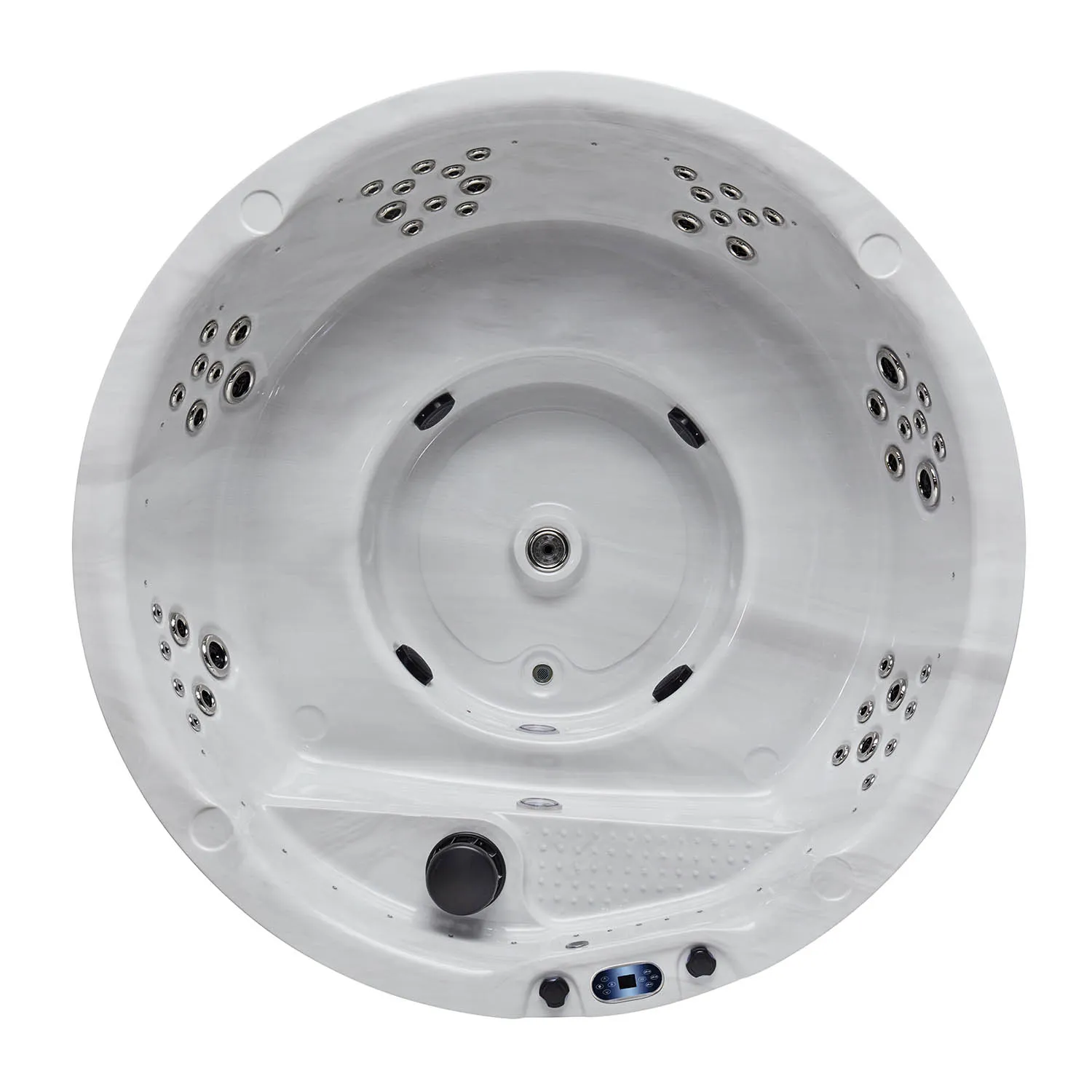
Yuehua's swim spa collection combines fitness, relaxation, and hydrotherapy into a single solution. Designed for both residential and commercial settings, these products feature efficient water circulation systems, durable construction, and modern styling. Many buyers choose our swim spas because they can market them as multi-functional wellness investments.
As a direct manufacturer based in China, we offer competitive pricing and reliable supply capacity to distributors and project developers. Customers can also request customization options to suit local market preferences.