



With their warm temperatures, soothing hydro-massage jets, and relaxing atmosphere, spa hot tubs have become an essential tool for many people seeking to relieve stress and unwind. However, during routine use, some users encounter a perplexing issue: the water in their hot tub occasionally turns cloudy or even develops a noticeable layer of foam.
When the water becomes cloudy or foamy, it not only detracts from the user experience but may also raise concerns about the water quality itself. In reality, cloudy or foamy water in a spa hot tub is not an uncommon occurrence; rather, it is the result of the interplay of various contributing factors.
To understand this issue, we must analyze it from several perspectives, including the unique characteristics of the hot tub's water environment, the sources of substances introduced into the water, the filtration system, and the chemical balance of the water itself.
Only by grasping these underlying principles can we clearly understand why the water in a whirlpool spa hot tub is prone to becoming cloudy and foamy.
In the following sections, we will systematically break down these causes.
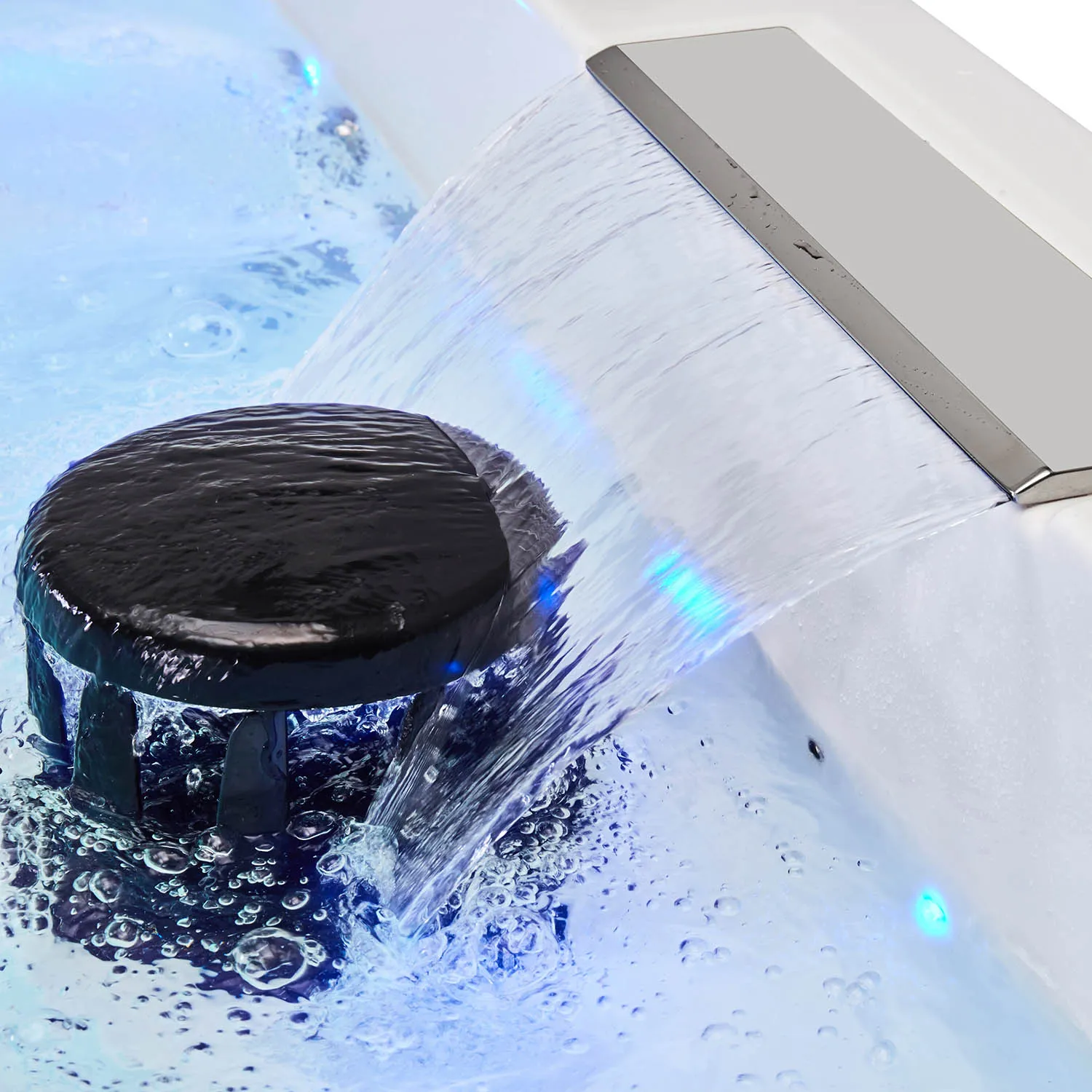
Why Is the Water in a Spa Hot Tub More Prone to Issues Than That of a Regular Bathtub?
First, one crucial point must be clarified: the water environment in a spa hot tub differs fundamentally from that of a standard bathtub.
While a standard bathtub is typically drained and refilled after every use, a spa hot tub typically maintains a circulating body of water for an extended period, relying on filtration systems and water treatment to preserve water quality. This operational method means that the water in a whirlpool spa hot tub is in constant contact with a variety of external substances.
Furthermore, spa hot tubs possess several distinct characteristics:
•Higher water temperatures
•Longer periods of continuous use
•A higher likelihood of being used by multiple people simultaneously
•Continuous water circulation
These factors combine to create a far more complex water environment within a whirlpool spa hot tub. When the accumulation of substances within the water reaches a certain threshold, cloudiness or foaming may occur.
Why Does the Water in a Spa Hot Tub Become Cloudy?
Cloudiness typically indicates the presence of a large quantity of microscopic particles or suspended solids within the water. When these particles are dispersed throughout the water, they interfere with its transparency, causing it to lose its crystal-clear appearance.
In a spa hot tub, the causes of cloudiness may include the following factors:
1. Increase in Suspended Particles
When using a whirlpool spa hot tub, tiny particles that are often imperceptible to the naked eye may appear in the water. Examples include:
•Dust
•Skin cells
•Minute impurities
Once these substances enter the water, they remain suspended within it. If the filtration system fails to remove them promptly, they may gradually accumulate, causing the water to appear cloudy.
2. Changes in Water Balance
The water in a spa hot tub typically requires a specific chemical balance to be maintained. If the proportions of certain substances within the water shift, it can cause some dissolved substances to precipitate and transform into tiny solid particles.
These particles then float within the water, compromising its clarity and causing the whirlpool spa hot tub water to appear cloudy.
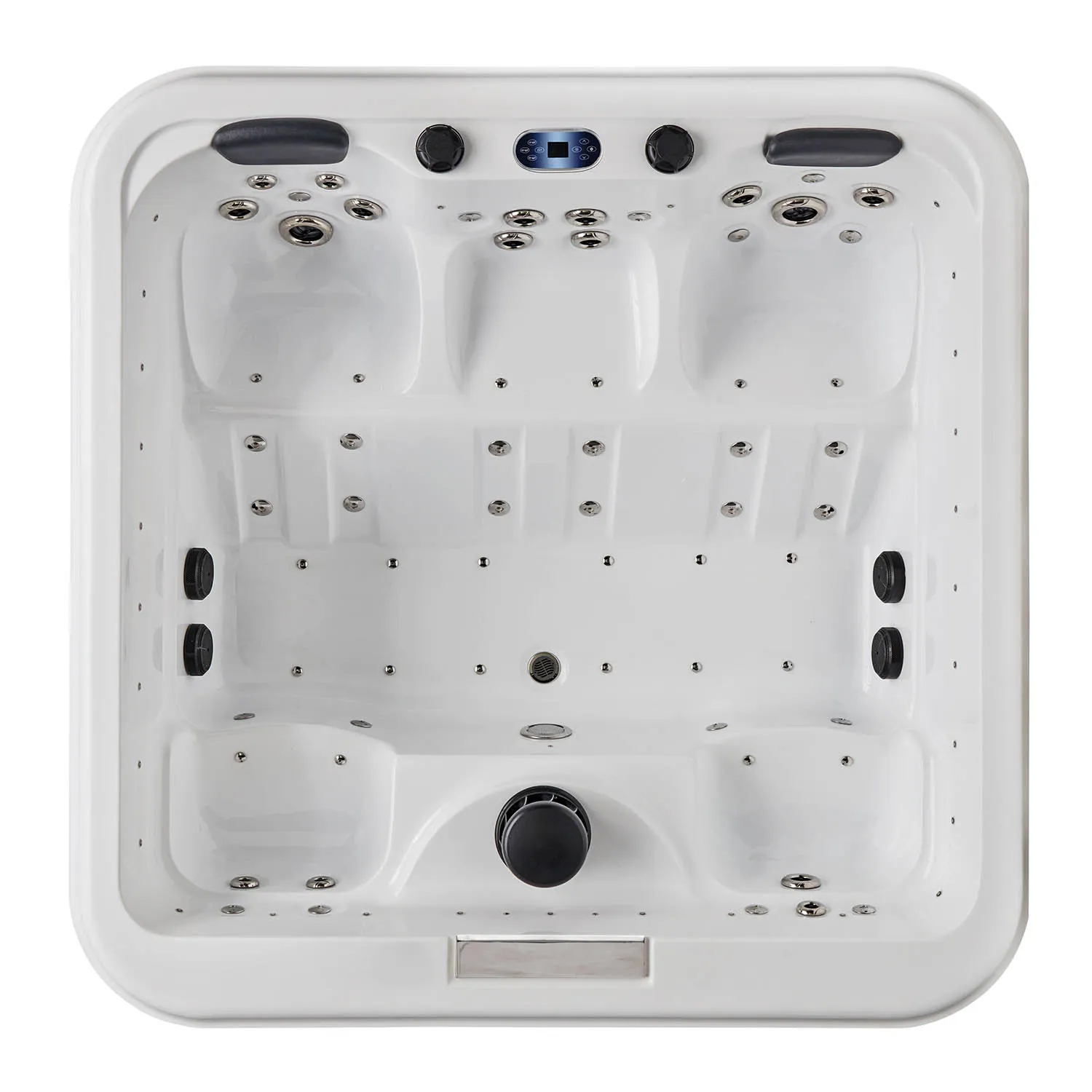
Why Does Excessive Foaming Occur in Spa Hot Tubs?
Foaming is another common phenomenon observed in spa hot tubs. Many users notice a distinct layer of foam forming on the water's surface when they activate the jet system.
The primary cause of foaming is linked to the presence of surface-active substances.
When the water contains substances capable of lowering its surface tension, foam is easily generated when water flow and air are mixed. This phenomenon occurs more readily in spa hot tubs, as the equipment typically utilizes a jet system to blend air and water together.
If the water contains a significant amount of surface-active substances, foam will form as the water is agitated by the flow, and this foam will persist and float on the water's surface.
Do Bodily Residues Affect Spa Hot Tub Water Quality?
The human body is one of the primary sources of substances introduced into whirlpool spa hot tub water. When a person enters a spa hot tub, their body surface may carry various residues, such as:
•Natural skin oils
•Residues from skincare products
•Sunscreen
•Cosmetics
Once these substances enter the water, they gradually dissolve or remain suspended within the water body. If present in large quantities, they can compromise water quality and increase the likelihood of foam formation.
In particular, products containing surface-active ingredients are more prone to generating foam within a spa hot tub environment.
Why Can't a Spa Hot Tub's Filtration System Completely Prevent Cloudiness?
Spa hot tubs are typically equipped with filtration systems designed primarily to remove impurities from the water. However, filtration systems are not infallible; their operational efficiency is influenced by a variety of factors. The filtration system is primarily responsible for trapping larger particles, while some extremely minute particles may remain suspended in the water. If these micro-particles accumulate continuously, they can cause the water in the whirlpool spa hot tub to gradually become cloudy.
Furthermore, if the filtration equipment does not run for a sufficient duration or if its filtration capacity diminishes, the cleanliness of the water may also be compromised.
Therefore, while the filtration system is a vital tool for maintaining water quality, it cannot entirely prevent changes in water conditions.
Why does the high-temperature environment of a spa hot tub tend to generate foam?
Spa hot tubs typically maintain elevated water temperatures; this environment exerts a certain influence on the substances present in the water.
A high-temperature environment can lead to the following changes:
•Accelerated chemical reactions
•Promoted decomposition of substances
•Increased rate of substance dissolution
When certain substances decompose or undergo chemical changes in hot water, they may generate a greater quantity of foam-forming components.
Concurrently, hot water is more prone to forming air bubbles when interacting with the air. When the jet system is activated, these bubbles can coalesce to form a layer of foam.
Consequently, the warm water environment characteristic of a whirlpool spa hot tub also contributes, to some extent, to the generation of foam.
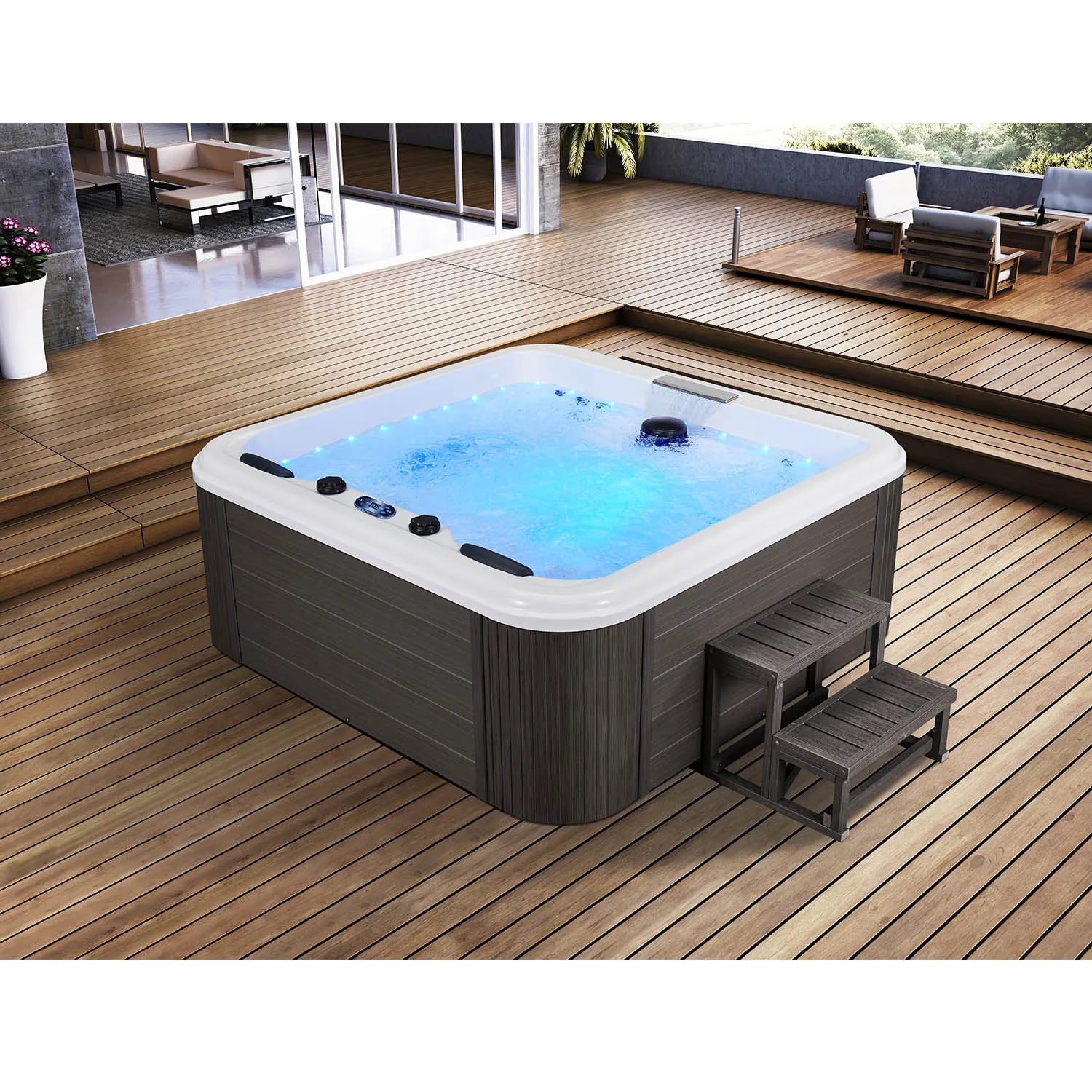
Why does the jet system in a spa hot tub exacerbate the foaming phenomenon?
The jet system is a critical component of a spa hot tub, designed to generate a massaging effect through high-velocity water flow. During this process, air is simultaneously drawn into the water.
When water and air are mixed at high speeds, a vast number of tiny bubbles are created. If surface-active substances are present in the water, these bubbles become stabilized and aggregate to form foam.
Therefore, even if the water contains only a minimal amount of foam-forming substances, their effect can be amplified when the jet system is in operation, making the foam significantly more pronounced.
Why is water quality management so crucial for spa hot tubs?
Since the water in a whirlpool spa hot tub is continuously recirculated, effective water quality management becomes an essential element in maintaining water clarity.
If impurities are allowed to accumulate unchecked within the water, the following issues may arise:
•The water becomes cloudy or turbid
•Foam appears on the water's surface
•Water transparency diminishes
Effective water quality management helps to minimize the occurrence of these problems. By maintaining proper water balance and performing regular maintenance, a whirlpool spa hot tub can typically sustain a high standard of water quality.
Why does foam sometimes appear suddenly and in large quantities?
Many people notice that their spa hot tubs sometimes suddenly develop a large amount of foam, while at other times there is almost none.
This fluctuation is typically linked to the concentration of substances within the water. When surface-active substances accumulate in the water to a certain threshold, the activation of the jet system can trigger the rapid formation of copious foam.
In other words, the foam does not appear out of thin air; rather, it is the result of a gradual accumulation that only becomes visible under specific conditions.
What is the relationship between cloudy water and foaming in a spa hot tub?
Although cloudy water and foaming appear to be two distinct phenomena, they are often interconnected.
When the water in a whirlpool spa hot tub accumulates a significant amount of impurities or chemical residues, it may not only become cloudy but also become more prone to foaming. This is because many of the substances capable of generating foam also tend to compromise the water's clarity.
Therefore, if a whirlpool spa hot tub exhibits both cloudy water and foaming simultaneously, it typically indicates that a substantial amount of impurities has accumulated in the water.
Does Yuehua offer after-sales service for outdoor spa products?
Yuehua provides professional after-sales support for its range of outdoor spas, swim spas, saunas, and massage bathtubs. We offer technical guidance, documentation, and assistance to help buyers with installation and maintenance. As a responsible manufacturer and supplier, our goal is to foster long-term trust and ensure customer satisfaction throughout the entire product lifecycle.