
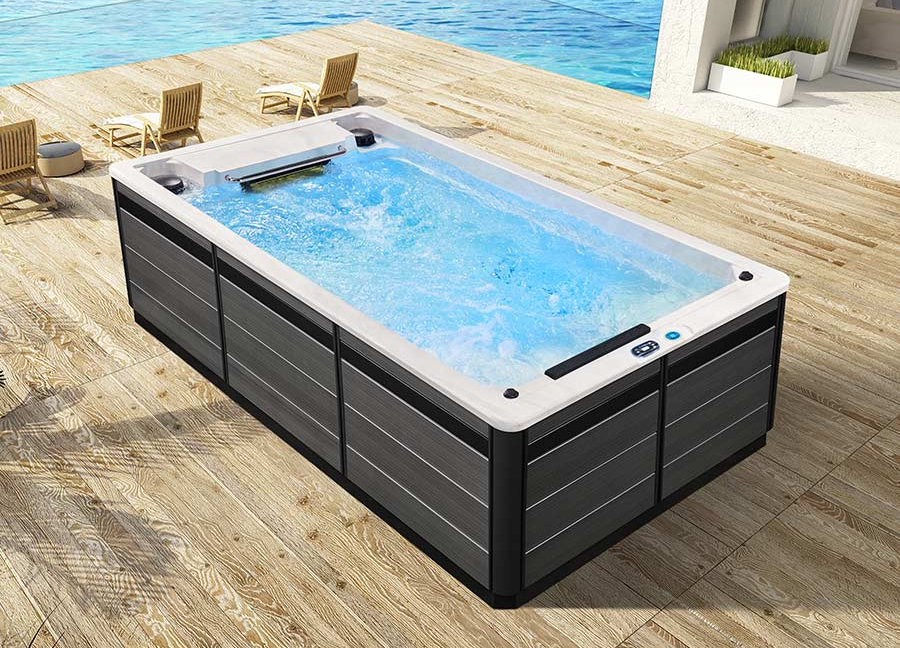
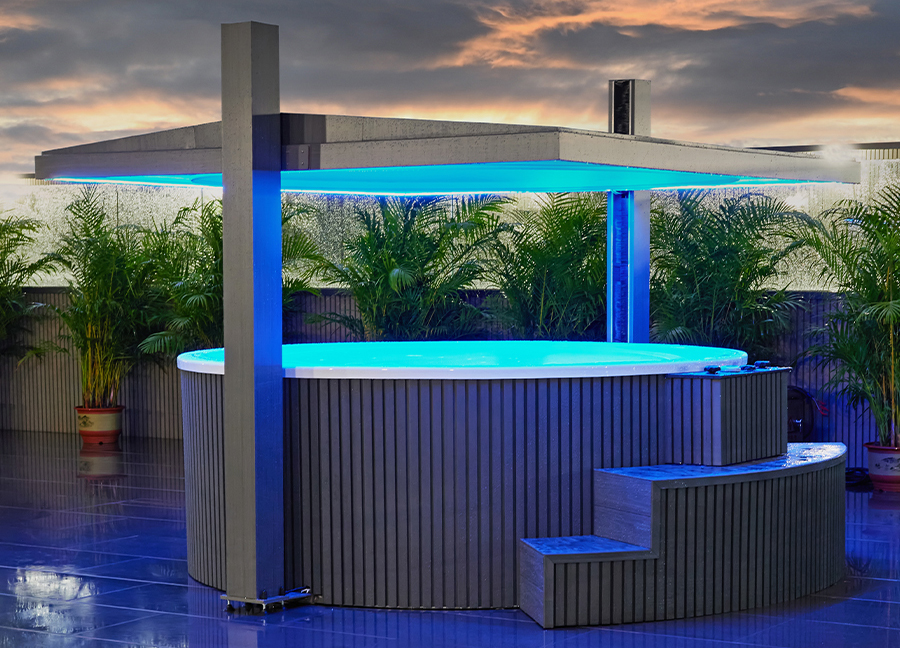



When people think of swim spa tubs, their first reaction is often "constant-temperature hot water," "relaxing spa," and "heating system." However, with the diversification of usage needs, more and more users are starting to focus on a very practical question:
Can swim spa tubs use cold water?
The answer is a definite yes.
Despite its name including "spa" and "bathtub," a swim spa tub is not a device that can only be used under high water temperatures. In fact, in terms of technical structure and functional design, a swim spa tub can fully support normal operation even without heating or at low water temperatures.
This article will address this question systematically from multiple dimensions, including device principles, water temperature control logic, safety, and usage conditions, to systematically answer the common but easily misunderstood topic of "Can swim spa tubs use cold water?"
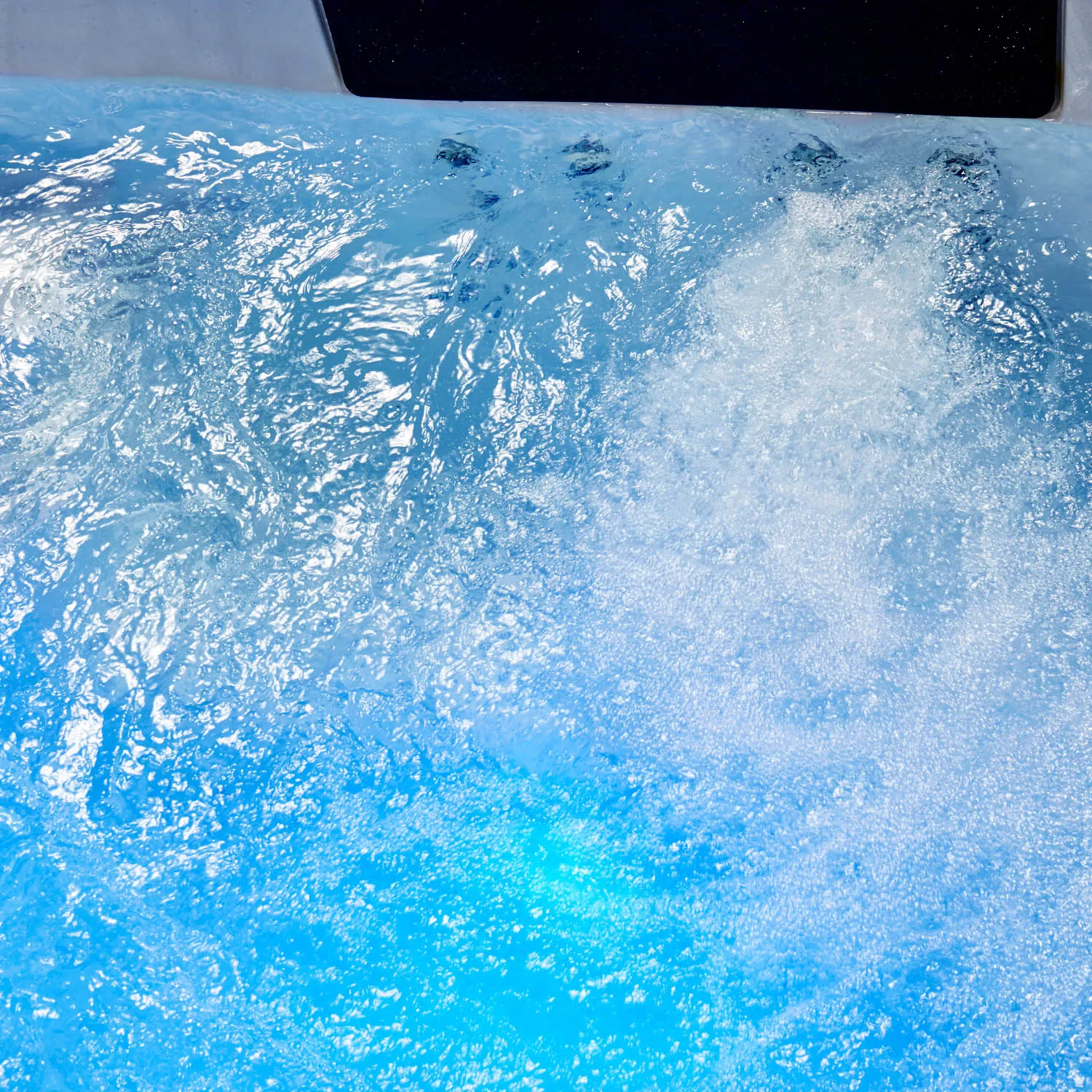
Do swim spa tubs always need to be heated to be used?
This is the first step in understanding the issue of using cold water.
Structurally: The Heating System is Not "Forced On"
Swim spa tubs are typically equipped with a heating system, whose main functions are:
• Providing a comfortable water temperature
• Maintaining a constant temperature environment
• Meeting the needs of spa relaxation
However, it's important to clarify:
The heating system is only an optional feature of the swim spa tub, not a mandatory operating condition.
At the control system level, users can freely choose:
• Turn on the heating
• Lower the set temperature
• Completely turn off the heating function
As long as the circulation and pump systems are functioning properly, the swim spa tub can also operate in cold water.
When would you choose to use a swim spa tub with cold water?
Although swim spa tubs are often associated with hot water, cold water is not uncommon in actual use.
Common cold water usage scenarios include:
• High ambient temperature in summer
• Users do not need spa relaxation functions
• Only swimming or water sports
• Wanting to reduce energy consumption
• Wanting to maintain a near-natural water temperature
In these cases, not heating or using cold water is more in line with actual needs.
It's important to emphasize that "cold water" here does not refer to extremely cold water, but rather to water that is close to ambient temperature or has its temperature artificially lowered without a heating system.
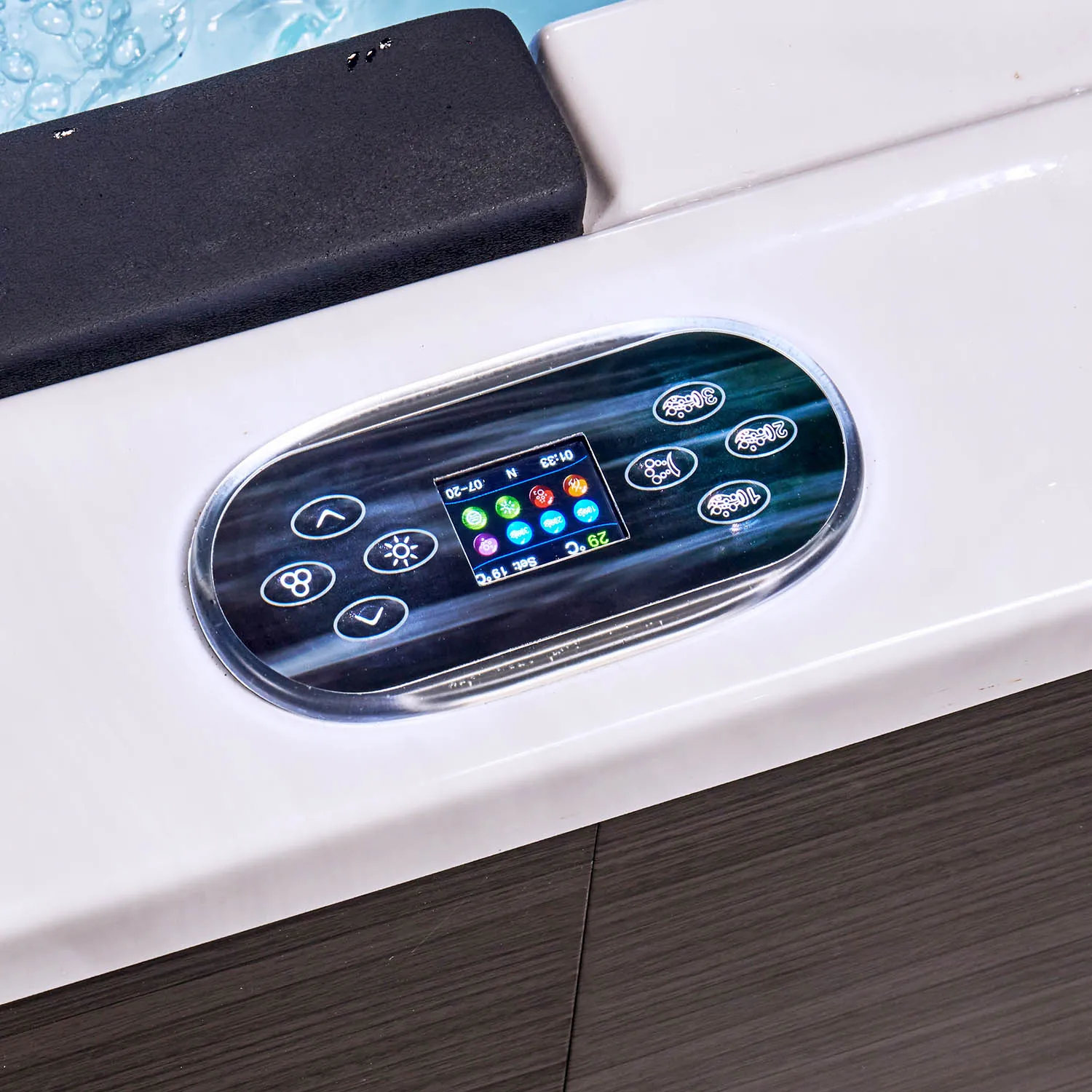
Can the swim spa tub's water flow system still function properly in cold water?
The answer is: Absolutely.
The water flow system and water temperature are independent.
One of the core functions of the swim spa tub is its continuous water flow system, which relies primarily on:
• Pump output power
• Water jet structure
• Water circulation design
The operation of these systems is not directly dependent on water temperature.
In other words:
• Regardless of whether the water is hot, at room temperature, or slightly cold
• The water flow propulsion system can generate a stable water flow.
Therefore, in cold water conditions:
• Swimming against current
• In-place water exercises
• Kicking, paddling, etc.
These will not be technically affected.
Will using cold water affect the swim spa tub's equipment?
This is a question many users are very concerned about.
1. From a safety perspective
Cold water use is safe for swim spa tubs as long as the following conditions are met:
• Water temperature is not lower than the equipment's minimum permissible operating temperature
• There is no risk of water freezing
• The circulation system is operating normally.
Most swim spa tubs are designed with different climates and seasonal changes in mind; therefore, cold water operation will not damage the equipment itself under non-extreme low-temperature conditions.
2. Situations to avoid
While cold water can be used, the following should still be noted:
• Prolonged stagnant cold water in extremely cold environments
• Water temperature below freezing point leading to freezing
• Localized freezing of water due to the circulation system not being activated
These situations are not inherently problematic due to "cold water use," but rather risks arising from improper maintenance or extreme environments.
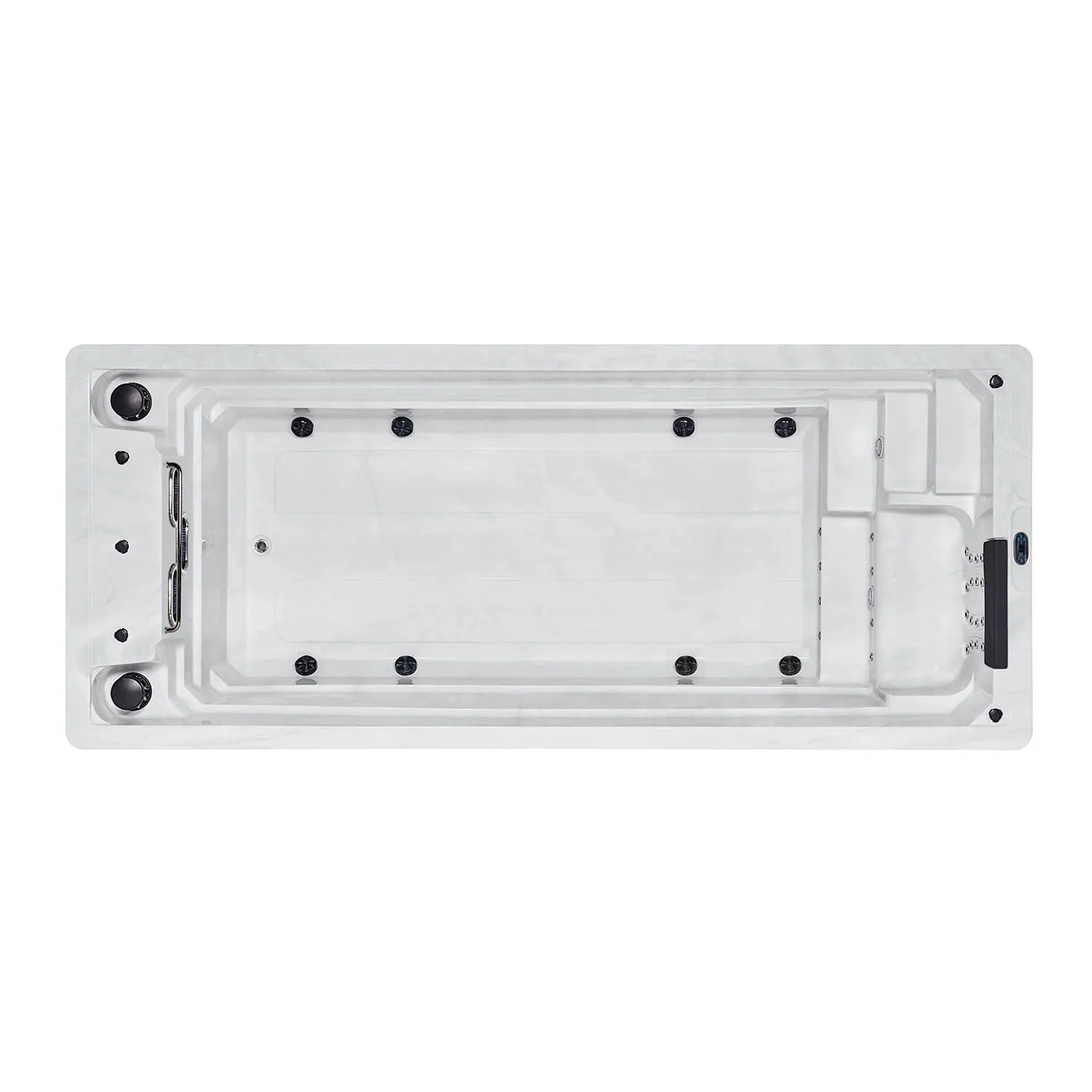
Does cold water use affect the filtration and circulation systems of swim spa tubs?
From a working principle perspective, filtration and circulation systems are also independent of water temperature.
The core functions of a filtration system are:
• Water circulation
• Impurity interception
• Water quality stabilization
Regardless of water temperature:
• The filter pump still operates normally
• The filter cartridge structure is unaffected by water temperature
• Water flow remains stable in non-freezing conditions
Therefore, cold water does not affect the basic water treatment function of the swim spa tub.
Does the swim spa tub still possess "swimming" properties when using cold water?
This is an easily misunderstood question.
1. The essence of swimming does not depend on water temperature
From a sports science perspective, the key to swimming lies in:
• The presence of water
• The presence of resistance
• Continuous body movement against the water flow
Water temperature is merely a comfort factor, not a necessary condition for movement.
In cold water:
• Water resistance remains unchanged
• Water flow intensity remains unchanged
• Body movement pattern remains unchanged
Therefore, using cold water in a swim spa tub is still an effective form of aquatic exercise.
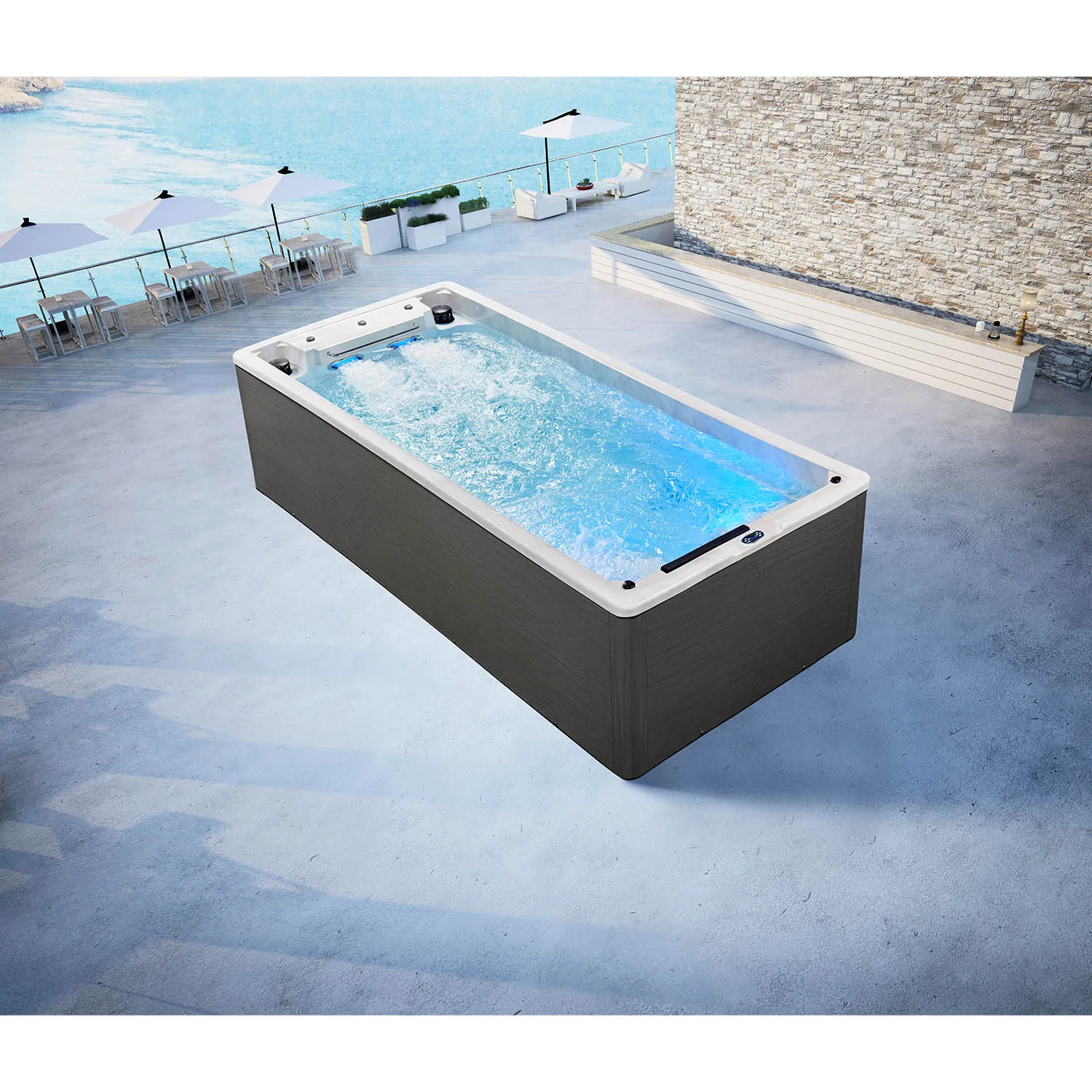
Will using cold water change the user experience of the swim spa tub?
The answer is: it will change the experience, but not the essential function.
The main changes are as follows:
1. Changes in perceived temperature
Cold water will provide a more noticeable temperature difference, especially when the ambient temperature is low.
2. More direct movement sensation
At lower water temperatures, the body's perception of water flow is more pronounced, and movement feedback is clearer.
3. Reduced relaxation properties
Compared to hot water, the "spa relaxation" properties are reduced in cold water, but this does not affect swimming and exercise functions.
It needs to be clarified that:
The swim spa tub is essentially a multi-functional aquatic device, not just for a single use.
Is it possible to flexibly switch between cold and hot water in the same swim spa tub?
From a device design perspective, this is entirely feasible.
The reasons are:
• The temperature control system supports manual adjustment.
• The heating system can be turned on or off.
• The water pump and circulation system operate independently.
This means:
• Heating can be turned off in summer, using cold water.
• Heating can be turned on when the temperature is low.
• Flexible adjustments based on different usage needs.
This flexibility is one of the key advantages that distinguishes the swim spa tub from traditional swimming pools or ordinary bathtubs.
What impact does using cold water have on energy consumption?
From a usage logic perspective, it's clear that:
• The heating system is off.
• Only the water pump and circulation system are running.
The overall energy consumption will naturally be lower than when operating with heating.
This is also one of the important reasons why some users choose to use the swim spa tub with cold water during certain seasons.
Does the daily maintenance of the swim spa tub change when using cold water?
In non-extreme low-temperature environments, using cold water does not significantly increase the difficulty of maintenance.
The key points to remember remain the same:
• Maintain normal water circulation
• Operate the filtration system regularly
• Prevent prolonged stagnation of water
These maintenance principles are not related to water temperature, but rather are general requirements for the long-term stable operation of a swim spa tub.
Why do many people mistakenly believe that swim spa tubs cannot use cold water?
The main reasons include:
1. The name includes "spa" and "hot water"
2. Marketing often emphasizes constant temperature and relaxation
3. Ignoring the structural independence of the equipment
In fact, a swim spa tub is not a "device that must be heated," but rather a "device that can be heated."
This conceptual difference is key to understanding the issue of using cold water.
How Do You Maintain Long-Term Cooperation with Buyers?
We focus on transparent communication, stable supply, and consistent quality. Returning customers receive improved quotes, technical updates, and early access to new models. Whether clients focus on outdoor spa, steam bathroom, or outdoor gazebo sales, Yuehua aims to grow together through long-term partnership rather than one-time transactions.