
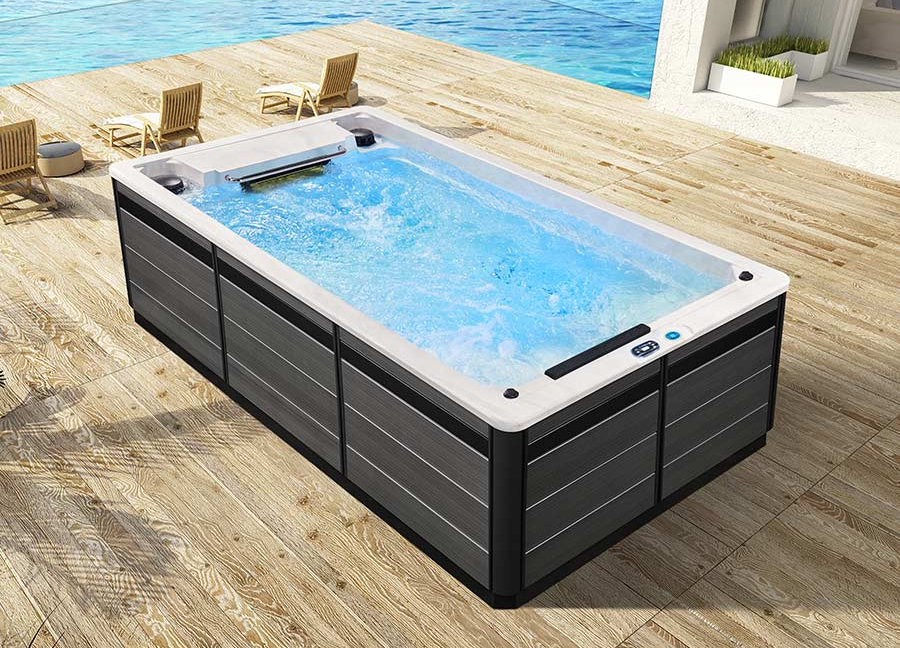
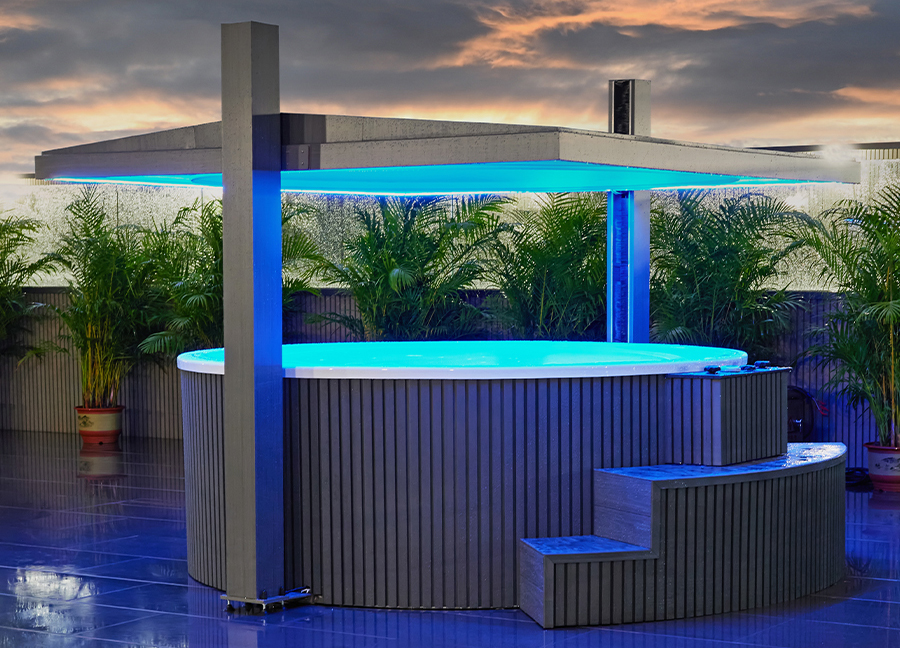


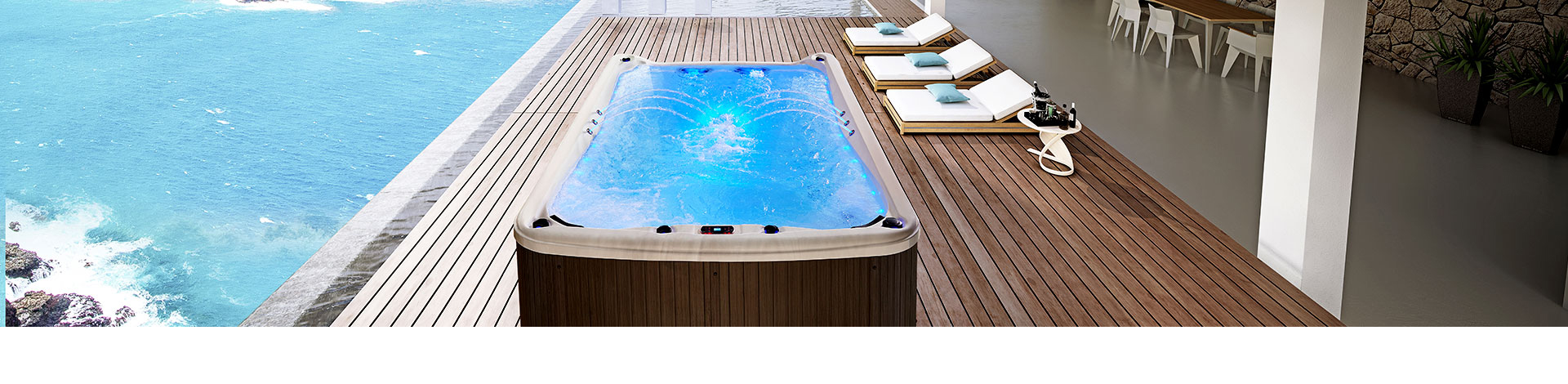
For those who have already installed or are using a swim spa tub, "how often to refill the water" is a very real and unavoidable question. Unlike a regular bathtub, a swim spa tub is not a device that is completely drained and refilled every time it is used; rather, it is a spa system that maintains a constant water volume through a circulation system.
Therefore, refilling is not arbitrary but closely related to the water level, evaporation rate, usage frequency, water circulation system, and overall maintenance logic. Refilling too frequently may increase water and electricity consumption; refilling too late may affect the operation of the equipment and the user experience.
So, how often should a swim spa tub be refilled to be considered reasonable?
This article will systematically break down this question from multiple professional perspectives to help you establish clear and actionable judgment criteria.
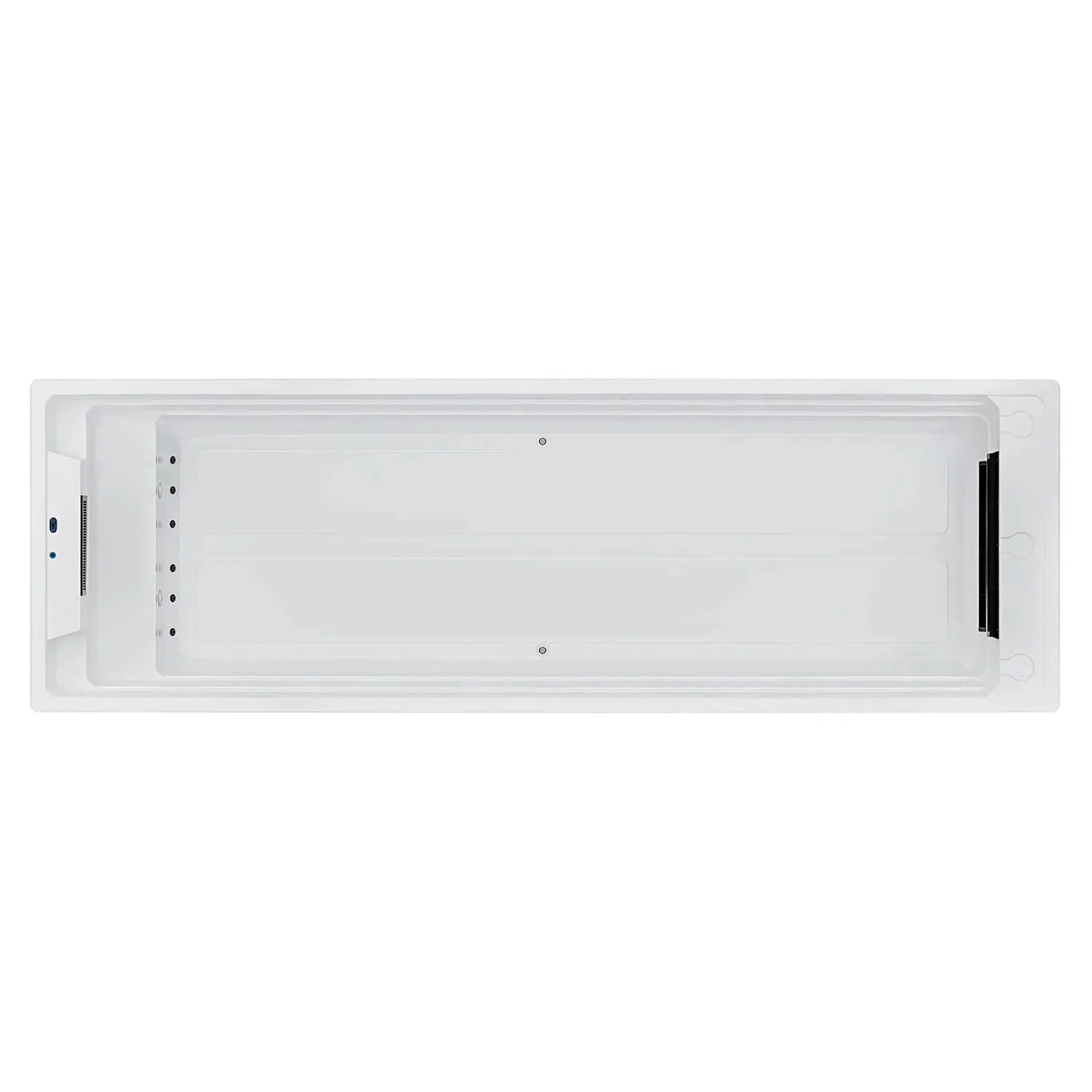
Why Does a Swim Spa Tub Need Regular Refilling?
To understand the refill frequency, we must first understand a basic fact: During normal use, the water volume in a swim spa tub will inevitably gradually decrease.
This is caused by several unavoidable factors:
1. Natural Evaporation
Swim spa tubs are usually equipped with heating systems to maintain a comfortable water temperature. Hot water continuously evaporates in open or semi-open environments, which is the primary source of water loss.
2. Splashing and Carry-away During Use
Splashing is unavoidable when swimming, resistance training, or engaging in other water sports in a swim spa tub. Additionally, water is carried away from the body when the user leaves the tub.
3. Cleaning and Maintenance
Maintenance procedures such as filter cleaning and partial drainage also reduce water volume.
Therefore, even if there are no leaks in the swim spa tub, refilling is a normal and ongoing maintenance practice.
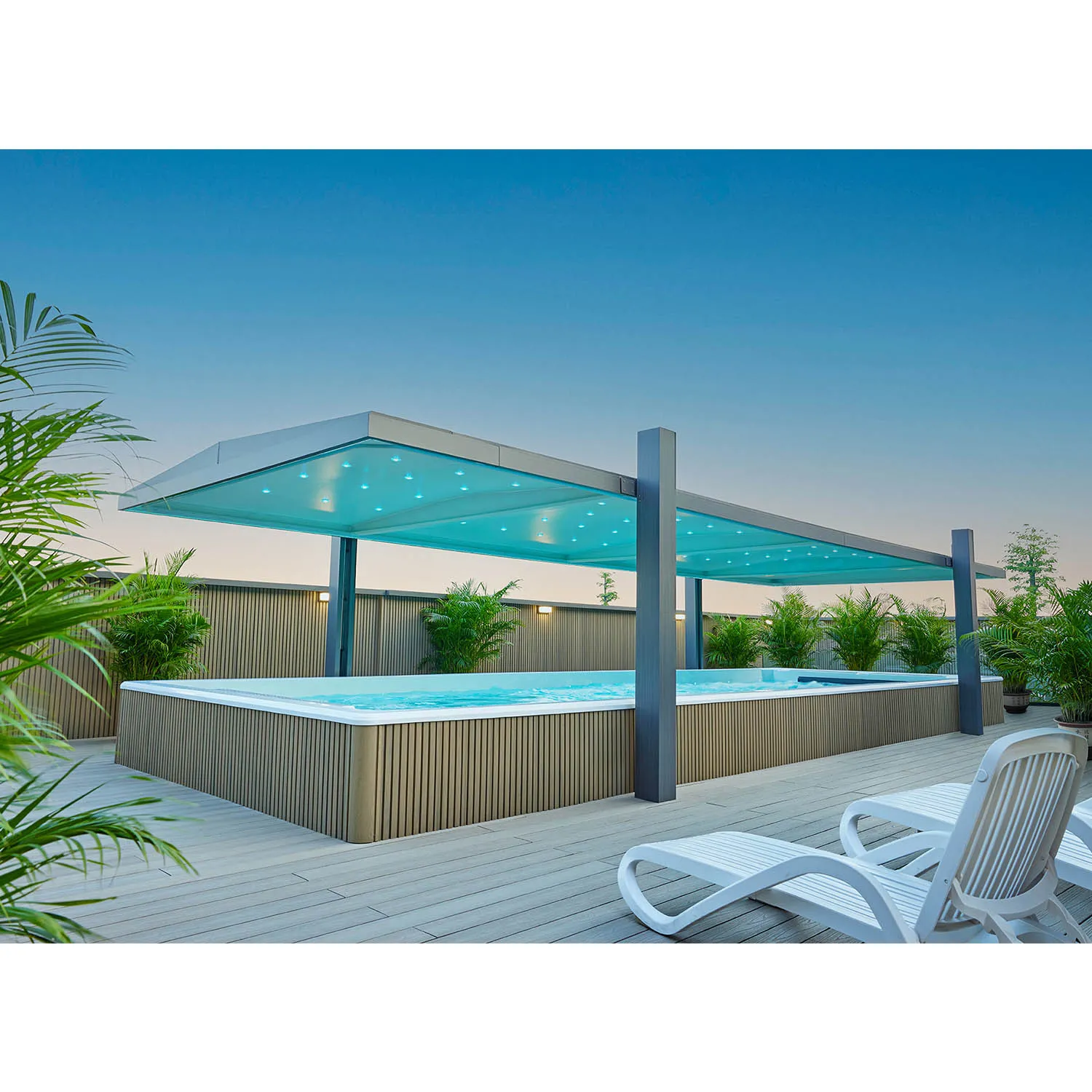
How often should a swim spa tub be refilled?
Based on general usage patterns, most swim spa tubs typically require replenishing water as follows:
• Add a small amount of water every 1–2 weeks
• Or replenish when the water level drops significantly
It's important to emphasize that:
Replenishing water ≠ Changing water
Replenishing water refers to adding a certain amount of fresh water to the swim spa tub to restore the water level to its normal operating height.
For most household environments, this is a common and reasonable frequency range.
However, this is only an "average reference value," not an absolute standard. The actual replenishment cycle will be affected by various factors.
What factors affect the replenishment frequency of a swim spa tub?
The frequency of replenishing a swim spa tub is not fixed and is closely related to the following factors:
1. Frequency of Use
The more frequent the use, the faster the water loss:
• Daily use → Higher replenishment frequency
• Several times a week → Moderate replenishment frequency
• Occasional use → Lower replenishment frequency
Swim spa tubs are designed for long-term operation, so high-frequency use is not abnormal; it just requires adjusting the replenishment frequency accordingly.
2. Water Temperature Setting
The higher the water temperature, the faster the evaporation rate.
If the swim spa tub maintains a high water temperature for a long time:
• Evaporation will increase significantly
• Replenishment needs will naturally increase
This is a result determined by physical laws.
3. Installation Environment (Indoor or Outdoor)
• Outdoor swim spa tubs: Affected by wind, sunlight, and temperature differences, evaporation is faster.
• Indoor swim spa tubs: Evaporation is relatively slow, but still occurs.
Therefore, in outdoor environments, it is usually necessary to monitor water level changes more frequently.
4. Using an Insulated Cover
Whether or not a bathtub cover is used has a significant impact on the frequency of water replenishment:
• Using an insulated cover → Significantly reduced evaporation
• Not using an insulated cover → Water level drops faster
For swim spa tubs, an insulated cover not only saves energy but also significantly reduces the frequency of water replenishment.
5. Spa and Swimming Intensity
If the swim spa tub is mainly used for:
• High-intensity stationary swimming
• Continuous water exercise
Then the splashing and water volume will increase significantly, and the need for water replenishment will increase accordingly.
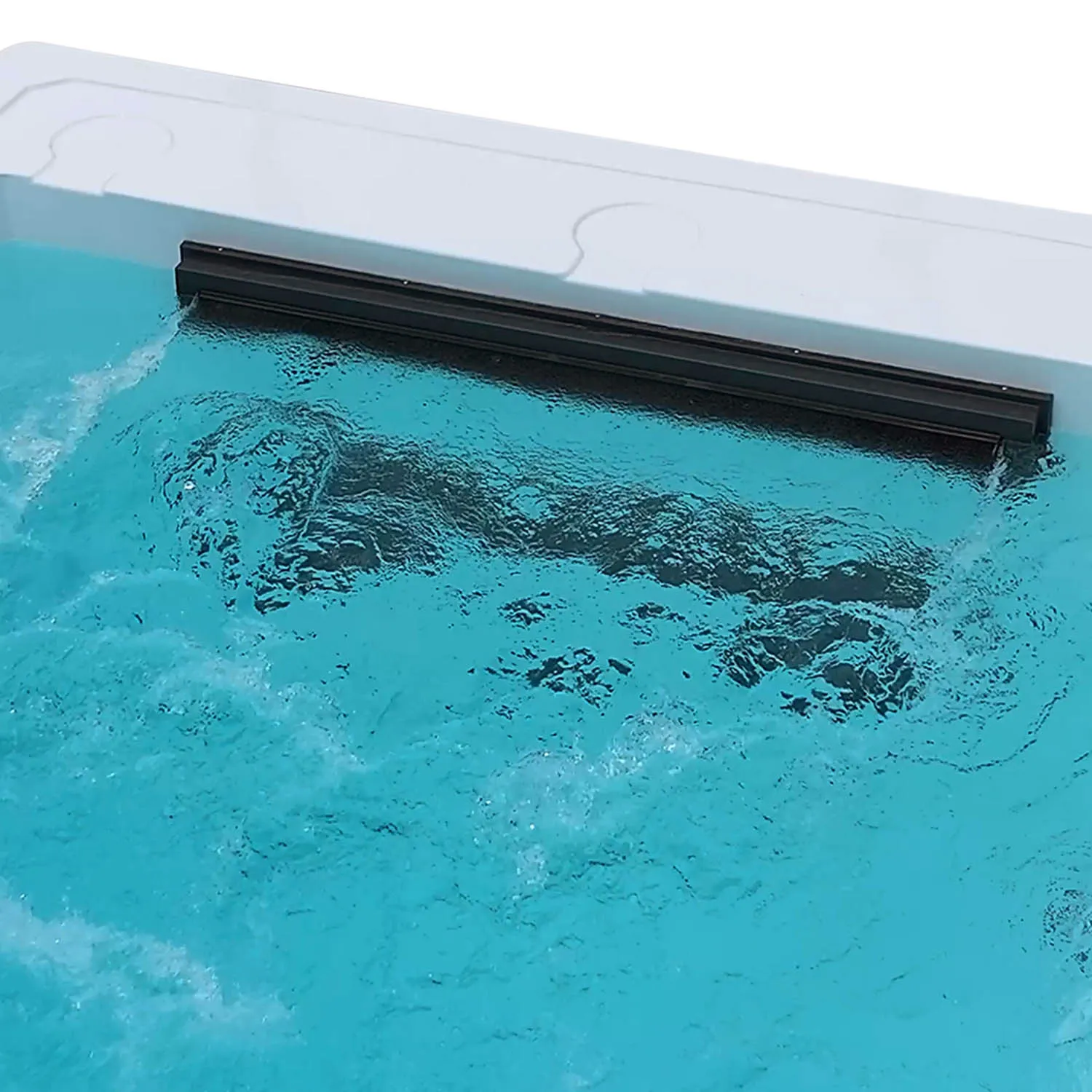
How to determine if the swim spa tub needs replenishing?
A more scientific method than memorizing time cycles is to determine whether water needs to be replenished by checking the water level.
1. Observe if the water level is below the recommended height
Most swim spa tubs have a recommended operating water level range. If the water level is below this range, it means water needs to be replenished.
2. Changes in Jet Flow or Water Effect
When the water level is too low, the following may occur:
• Uneven water flow
• Weakened jet effect
• Air intake at the inlet
These are all signals that you should add water to the swim spa tub.
3. Changes in Pump Operation Noise
If the pump is drawing in air due to low water level, the sound may become unstable. In this situation, it is not advisable to continue operating; water should be added as soon as possible.
4. Visual Inspection (Most Direct)
Regularly checking the water level visually is the simplest and most effective method.
How much water should be added to the swim spa tub?
The goal of adding water is not "the more the better," but rather to restore it to a reasonable operating water level.
The general principles are:
• Water level should cover all nozzles.
• Water level should not exceed the maximum line indicated on the equipment.
• Ensure the circulation system operates normally.
Excessive water replenishment may lead to:
• Overflow during use
• Increased water splashing
• Persistent dampness on the surrounding ground.
Therefore, precise water replenishment is more important than frequent replenishment.
What are the effects of overly frequent or insufficient water replenishment on the swim spa tub?
Potential problems with insufficient water replenishment:
• Risk of pump running dry
• Unstable water flow
• Decreased system operating efficiency
• Long-term impact on equipment lifespan
Potential problems with overly frequent water replenishment:
• Unnecessary water waste
• Increased water treatment burden
• Increased energy costs
A reasonable water replenishment schedule aims to minimize unnecessary consumption while ensuring normal equipment operation.
Is replenishing water in a swim spa tub the same as regular water changes?
This is a very easily confused question. The answer is: absolutely not.
Top-up:
• Add small amounts of water
• To restore water level
• Frequently
• Do not drain the original water
Water Change:
• Drain a large amount of water
• Clean the system
• Refill with water
• Less frequently
The swim spa tub is designed to extend the life of the water body through filtration and circulation; therefore, top-up is routine, and water changes are periodic maintenance.
Can the frequency of top-up be reduced by decreasing usage?
Theoretically, yes, but not practically.
The swim spa tub is designed for:
• Exercise
• Hydrotherapy
• Relaxation
Reducing usage frequency due to concerns about top-up defeats the purpose of the equipment.
A more reasonable approach is:
• Use an insulated cover
• Set the water temperature appropriately
• Check the water level regularly
• Develop a consistent checking habit
This ensures normal use of the swim spa tub while maintaining a reasonable top-up frequency.
What are some basic precautions when top-up a swim spa tub?
During water replenishment, it is recommended to follow these basic principles:
1. Replenish water slowly, avoiding impact on the water surface.
2. Observe water level changes after replenishment.
3. Ensure all nozzles are covered with water.
4. Avoid exceeding the maximum water level line.
5. Run the circulation system briefly after replenishment.
These simple operations help maintain the long-term stable operation of the swim spa tub.
Can a fixed replenishment cycle be set?
A "reference cycle" can be set, but complete mechanization is not recommended.
A more ideal approach is:
• Use water level as the primary criterion.
• Use time as a secondary reference.
For example:
• Check the water level weekly.
• Replenish water appropriately when a drop is observed.
This avoids both over-replenishment and missed opportunities.
What is the relationship between swim spa tub replenishment frequency and overall maintenance?
Refilling water is an essential part of routine maintenance for swim spa tubs and is closely related to the following maintenance practices:
• Water level check
• Filtration system operation
• Water circulation
• Cleaning frequency
A good water-refilling habit often indicates that the user has developed a relatively sound maintenance awareness, which is crucial for the long-term stable operation of the equipment.
Can Buyers Request Product Samples Before Large Orders?
In many cases, yes. Yuehua can arrange samples of selected massage bathtubs, sauna rooms, or outdoor spa models for evaluation. This allows buyers to verify quality, materials, and workmanship before committing to larger purchasing plans. Sample costs can often be offset against future wholesale orders, helping buyers make informed decisions with lower risk.