



Swim spa hot tubs are increasingly popular in homes and gyms due to their combination of swimming, relaxation, and spa functions. To maintain water safety, extend equipment lifespan, and ensure a superior user experience, shock treatment is an essential part of maintenance.
This article will systematically introduce the principles, operation methods, precautions, and common problems of shock treatment for swim spa hot tubs from a professional perspective, helping users maintain their equipment scientifically.
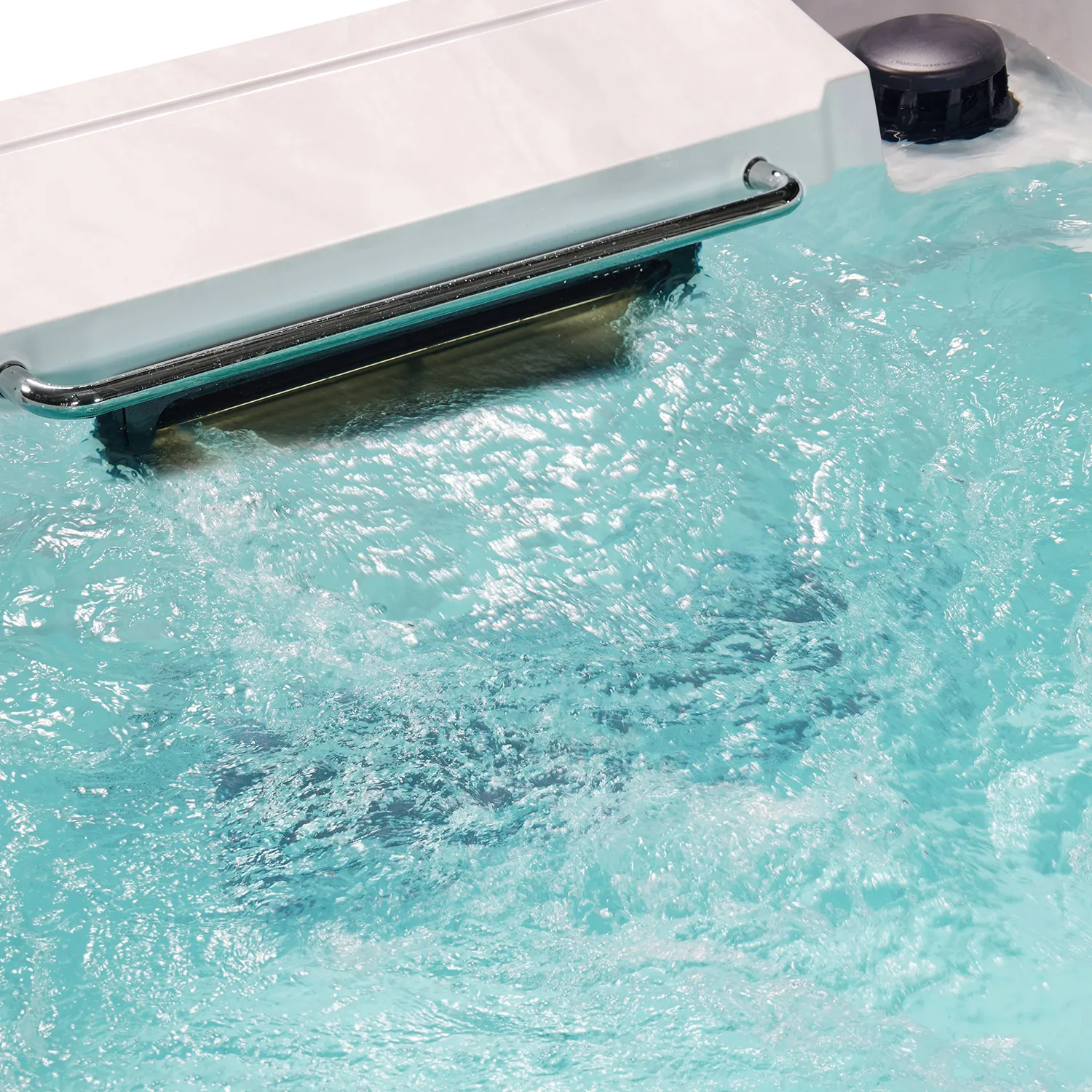
What is Shock Treatment for a Swim Spa Hot Tub?
Shock treatment for swim spa hot tubs, also known as "water quality shock" or "water disinfection shock," refers to the process of adding a high concentration of disinfectant (usually chlorine or bromine) to the bathwater to quickly eliminate residual bacteria, algae, organic matter, and other contaminants.
The main purposes of shock treatment include:
1. Eliminating Organic Matter Accumulation
After a period of use, human skin secretions, sweat, and cosmetic residues accumulate in the water, which cannot be completely removed by conventional low-concentration disinfection.
2. Killing Drug-Resistant Microorganisms
Long-term use may result in low-concentration disinfectants failing to completely kill some bacteria or viruses; shock treatment can quickly eliminate them.
3. Maintain Water Clarity and Fresh Odor
The accumulation of organic matter and algae can make water cloudy and develop an unpleasant odor. Shock treatment can restore water clarity.
4. Prevent Equipment Damage
If the internal pipes, nozzles, and heater of a swim spa hot tub are exposed to organic matter and microorganisms for a long time, blockages or corrosion can occur. Shock treatment can protect the lifespan of the equipment.
In short, shock treatment is a crucial step in maintaining water quality in a swim spa hot tub.
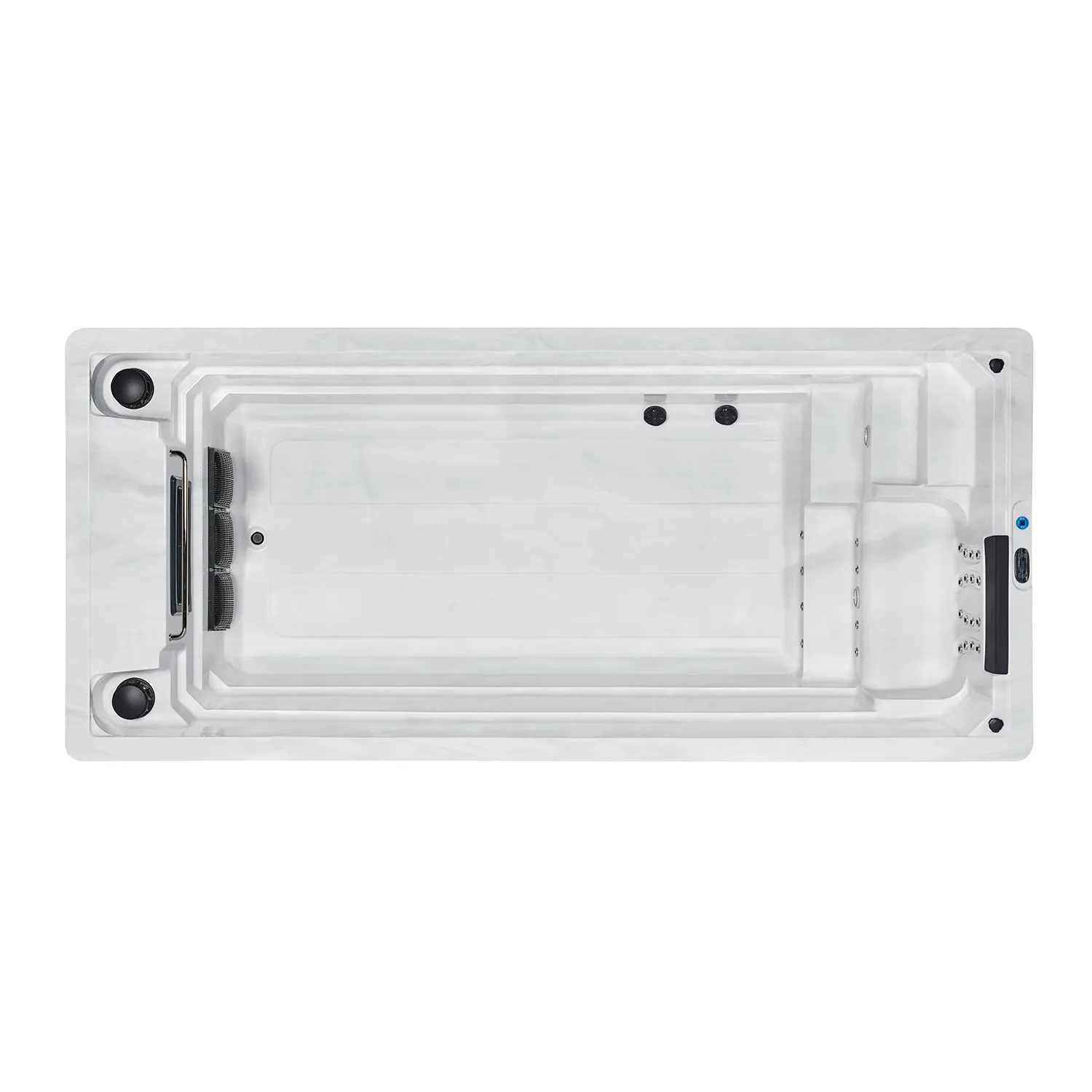
Why Does a Swim Spa Hot Tub Need Shock Treatment?
Many users believe that routine chlorination or bromine addition is sufficient to maintain water quality, but this is not the case:
1. Routine Disinfection Only Maintains Basic Water Quality
Conventional disinfectants have low concentrations and can only inhibit microbial growth, not completely eliminate existing bacteria or viruses.
2. Increased Usage Frequency and Number of Users Increase Water Quality Pressure
The higher the frequency of use of the swim spa hot tub, the faster organic matter and microorganisms accumulate in the water, making it difficult for routine maintenance to completely maintain water quality.
3. Water Temperature and Humidity Accelerate Pollution
Swim spa hot tub water temperatures are typically between 26°C and 38°C, creating a humid and warm environment ideal for bacterial and algal growth.
Therefore, regular shock treatment is not only a measure to clean the water but also a necessary means to extend the life of the swim spa hot tub and protect the health of users.
What are the types of swim spa hot tub shock treatments?
Shock treatments can be divided into several types depending on the chemical agents used:
1. Chlorine Shock
• Principle: Uses a high concentration of chlorine to rapidly oxidize organic matter and microorganisms in the water.
• Suitable for: Turbid water, noticeable odor, algae presence, or insufficient conventional chlorination treatment.
• Precautions: After shock treatment, wait for the residual chlorine in the water to drop to a safe range (1–3 ppm) before use.
2. Bromine Shock
• Principle: Uses a high concentration of bromine for rapid disinfection, suitable for warm water environments.
• Suitable for: Higher water temperatures, users with sensitive skin, or when a reduced chlorine smell is desired.
• Advantages: Better water quality stability in high-temperature spa tubs; strong sterilization ability.
3. Oxidative Shock (Non-chlorine Oxidant)
• Principle: Uses oxidants such as hydrogen peroxide or perborate to decompose organic matter in the water.
• Suitable for: Users sensitive to chlorine or bromine can use it as an auxiliary shock treatment.
• Precautions: Precise dosage control is required; otherwise, it may lower the pH value of the water and cause pipe corrosion.
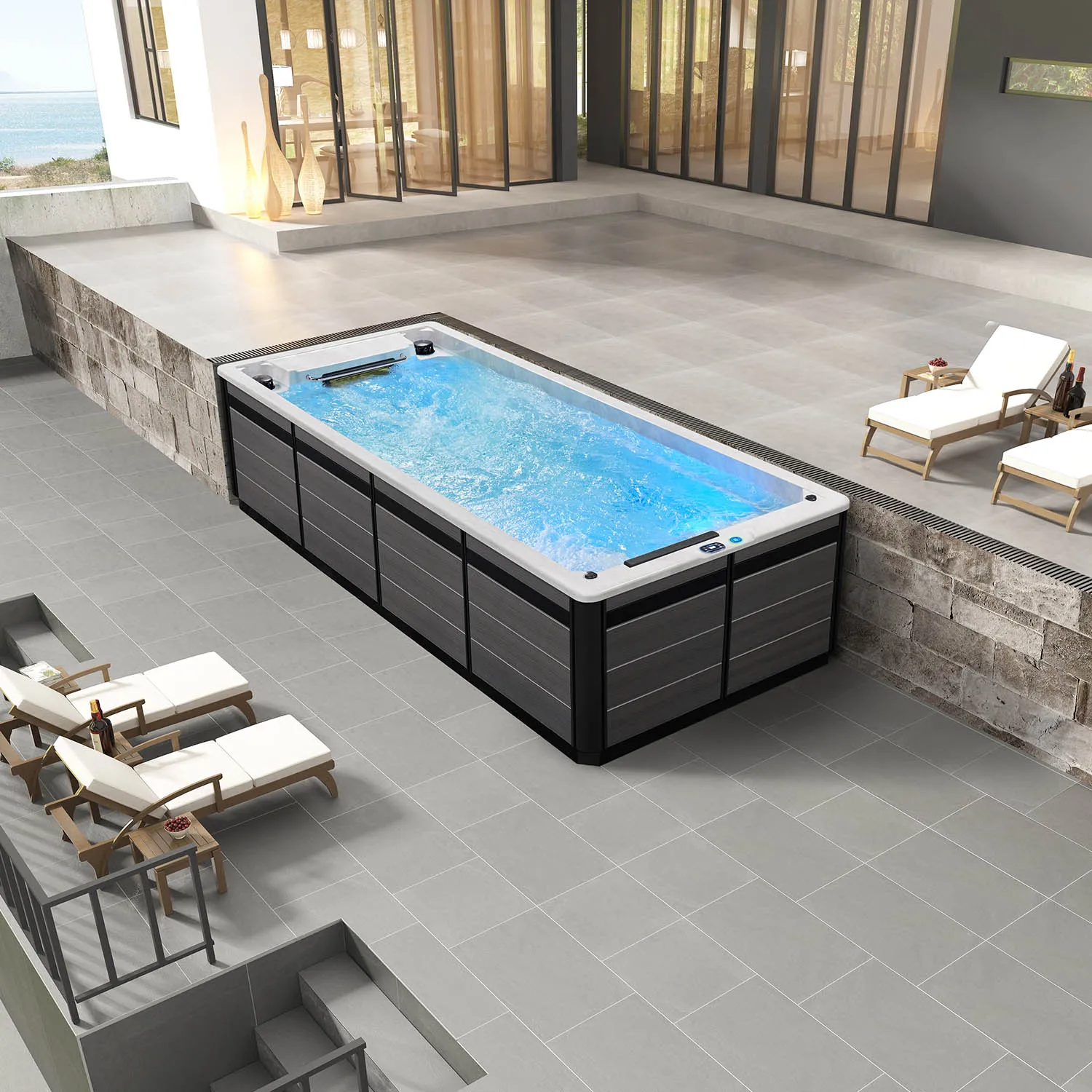
How to determine the frequency of shock treatment for swim spa hot tubs?
The frequency of shock treatment should be determined based on the usage environment, number of users, temperature, and water quality:
1. High-frequency use (daily or multiple users)
It is recommended to shock once a week to ensure water quality safety.
2. Medium-frequency use (several times a week)
Shock once every two weeks, combined with regular disinfection, can maintain water quality.
3. Low-frequency use (1-2 times per month)
Even with low usage frequency, it is recommended to shock at least once a month to remove long-term accumulated organic matter.
4. Water Quality Abnormalities
If the water becomes cloudy, has an unusual odor, foams, or exhibits algae, a flushing procedure should be performed immediately without waiting for the regular cycle.
How to Properly Perform a Swim Spa Hot Tub Flushing?
1. Preparation
• Check Water Temperature: The recommended water temperature is between 26°C and 38°C.
• Check pH Value: The optimal pH range is 7.2–7.6 to ensure the flushing agent works best.
• Wear Protective Equipment: The flushing agent is a strong oxidizing agent; gloves and goggles must be worn.
2. Flushing Procedure
• Calculate Dosage: Calculate the required flushing dosage based on the volume of the swim spa hot tub (in liters). Recommended dosage is usually provided on the packaging.
• Dissolve the Flushing Agent Evenly: Dissolve the flushing agent in a small amount of water, then slowly pour it into the tub water.
• Turn on the Circulation System: Start the water pump and filtration system, allowing the water to circulate fully for 15–30 minutes.
• Check residual chlorine or bromine concentration: Use test strips or a testing instrument to check the residual chlorine or bromine concentration in the water and ensure it has dropped to a safe level before use.
3. Water Treatment After Shock
• Maintain circulation: Continue running the circulation system for 1–2 hours to accelerate the decomposition of oxidation products.
• Clean the filter: After shock, the filter may have captured a large amount of organic matter and needs to be cleaned.
• Check and adjust pH: Shock may change the pH; ensure the water quality remains neutral.
Common Shock Treatment Problems and Solutions
Problem 1: Foaming Water After Shock
• Cause: Organic matter in the water is oxidized, releasing bubbles, or the shock agent dosage is too high.
• Solution: Extend the circulation time and use a foam remover.
Problem 2: Turbid Water After Shock
• Cause: Organic matter oxidizes and forms suspended solids.
• Solution: Use a filter or water clarifier and continue circulation for 2–4 hours.
Problem 3: pH Drop After Shock
• Cause: Acidic effect of the oxidant.
• Solution: Use a pH adjuster to restore the water quality to the range of 7.2–7.6.
Problem 4: Skin irritation from shock agent
• Cause: Shock agent concentration too high or not completely diluted.
• Solution: Ensure thorough circulation and water quality testing after shocking; avoid direct use.
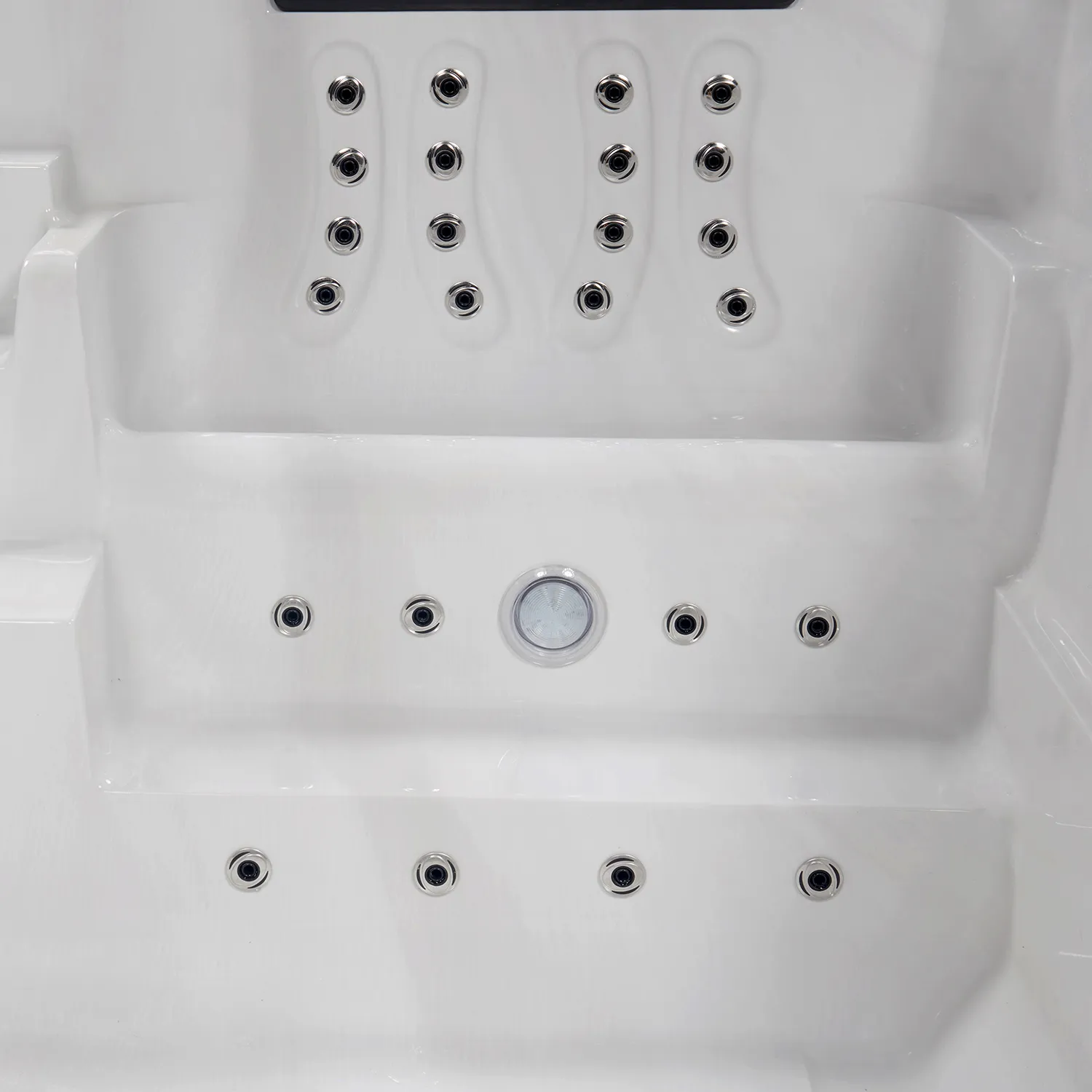
Does shocking affect swim spa hot tub equipment?
• Pipes and nozzles: Excessive shock agent may accelerate corrosion of metal parts; therefore, strictly follow the instructions.
• Heater: High concentrations of oxidizer may cause slight oxidation if in prolonged contact with metal heaters.
• Plastic and acrylic surfaces: It is recommended to use fully dissolved shock agent and avoid direct application to surfaces to prevent material damage.
Properly operating a shocker will not only not damage the equipment, but will also help extend its lifespan and maintain water quality.
Safety Precautions for Swim Spa Hot Tub Shocking
• Keep away from children and pets: Shock agent is a chemical oxidizer; avoid accidental contact.
• Use dedicated containers and tools: Avoid using metal spoons or metal buckets to prevent chemical reactions.
• Maintain indoor ventilation: Turn on exhaust or ventilation equipment during indoor flushing to prevent the odor of the oxidant from irritating the respiratory tract.
• Test water quality: After flushing, be sure to test residual chlorine/bromine, pH, and total alkalinity to ensure safe use.
• Avoid direct skin contact: High concentrations of flushing agent can cause skin irritation. Wait until the water quality has returned to normal before bathing.
How to establish a flushing maintenance plan for your swim spa hot tub?
To maintain long-term water quality and equipment safety in your swim spa hot tub, it is recommended to establish a flushing maintenance plan:
• Perform regular flushing once a week or every two weeks (depending on usage frequency).
• Water quality testing: Test pH, residual chlorine/bromine, and clarity before and after each flush.
• Keep a maintenance log: Include flushing date, dosage, water temperature, and test data.
• Combine with other maintenance measures: such as cleaning the filter, draining, or changing the water to ensure stable water quality.
Through scientific maintenance, your swim spa hot tub will not only be comfortable to use but will also significantly extend its lifespan.
How Do You Maintain Competitive Prices Without Lowering Quality?
By controlling our entire manufacturing chain in-house—shell forming, fiberglass reinforcement, trimming, drilling, assembly, and testing—we significantly reduce outsourcing costs. This gives Yuehua the ability to offer low-price but high-quality outdoor spa, swim spa, outdoor gazebo, and steam bathroom products. Bulk purchasing and long-term agreements grant additional discounts, while certified raw materials ensure safety and durability.