


During routine maintenance, many users encounter a common phenomenon: the chlorine in their swim spa tub seems to deplete remarkably fast. Shortly after adding chlorine sanitizer, subsequent testing reveals a significant drop in chlorine levels. This often raises questions: Is there a problem with the equipment? Is the water quality abnormal? Or is it simply necessary to replenish the sanitizer more frequently?
In reality, in most cases, a rapid rate of chlorine depletion does not necessarily indicate an equipment malfunction. For swim spa tubs, the consumption of chlorine tends to be more pronounced due to differences in water volume, operating environment, and water circulation patterns compared to standard swimming pools.
Therefore, understanding the mechanisms by which chlorine functions in water—as well as the factors that influence its depletion rate—is crucial for maintaining stable water quality in your swim spa tub.
This article will systematically explain why chlorine depletes relatively quickly in swim spas by examining various perspectives, including water chemistry principles, environmental factors, equipment design, and usage habits. Our goal is to help you gain a more comprehensive understanding of this common phenomenon.
What Exactly Does Chlorine Do in a Swim Spa?
In a swim spa tub, chlorine primarily serves the following functions:
•Sanitization: Killing bacteria and microorganisms present in the water.
•Oxidation: Breaking down organic contaminants.
•Water Quality Stabilization: Reducing water turbidity (cloudiness) and eliminating odors.
When chlorine is added to the water in a swim spa tub, it forms active chemical species with strong oxidizing capabilities; these substances continuously react with the contaminants present in the water. It is precisely this ongoing reaction process that causes the chlorine to be gradually consumed during use.
Consequently, the depletion of chlorine itself is actually an integral part of the water purification process.
Why Does Chlorine Deplete So Quickly in a Swim Spa?
Compared to large swimming pools, swim spa tubs typically have a smaller water volume, yet the water undergoes much more vigorous activity. These characteristics accelerate the rate at which chlorine is consumed, making its depletion more noticeable.
The primary reasons include:
•Faster Water Circulation Rates: The water cycles through the system more rapidly.
•Higher Water Temperatures: The water is typically kept at a warmer temperature.
•Concentrated Usage Patterns: The spa is often used intensively over relatively short periods.
When these factors combine, the rate at which chlorine reacts within the swim spa increases significantly; as a result, subsequent testing often reveals a rapid decline in chlorine levels.
How Does Water Temperature Affect Chlorine Consumption in a Swim Spa?
Temperature is one of the key factors influencing the stability of chlorine.
Swim spa tubs typically maintain a relatively high water temperature to provide a comfortable hydrotherapy experience; however, these elevated temperatures also accelerate the chemical reactions involving chlorine.
Under high-temperature conditions:
•The rate at which chlorine evaporates increases.
•The rate at which chlorine reacts with organic matter accelerates.
•Disinfection reactions become more vigorous.
All of these changes result in a significantly faster rate of chlorine depletion within the swim spa tub. Consequently, a decline in chlorine levels is a relatively common phenomenon in high-temperature environments.
Why does sunlight cause chlorine levels to drop in a swim spa tub?
If a swim spa tub is installed outdoors, sunlight will also have an impact on its chlorine levels.
The ultraviolet (UV) rays present in sunlight can break down active chlorine in the water, thereby reducing its effective concentration.
This phenomenon is known as photodegradation. Under conditions of prolonged sun exposure, chlorine undergoes continuous decomposition, leading to lower chlorine readings when the water is tested.
For outdoor swim spa tubs, this effect is often more pronounced because the water's surface is directly exposed to the natural environment.
Why does organic matter in the water deplete chlorine?
Chlorine serves not only as a disinfectant but also participates in oxidation reactions. When organic matter is present in the water, the chlorine reacts chemically with these substances, resulting in its consumption.
Common types of organic matter found in swim spa tubs include:
•Substances shed from the skin.
•Microscopic particles.
•Airborne dust.
Once these substances enter the water, the chlorine continuously engages in oxidation reactions, leading to its gradual depletion. Therefore, as the concentration of organic matter in the water increases, the rate at which chlorine is consumed in the swim spa tub also rises.
Does the swim spa tub's water circulation system affect chlorine consumption?
The water circulation system is a vital component of any swim spa tub. The water pump and filtration system continuously drive water flow, ensuring that chlorine is distributed evenly throughout the entire body of water.
While this continuous circulation helps maintain stable water quality, it also increases the frequency with which chlorine comes into contact with contaminants. In other words, the more thorough the circulation, the faster the rate at which chlorine participates in chemical reactions.
Consequently, in a properly functioning swim spa tub, chlorine consumption tends to be a continuous and steady process.
Why are fluctuations in chlorine levels more noticeable in smaller swim spa tubs?
Compared to traditional swimming pools, swim spa tubs typically hold a smaller volume of water. When the water capacity is relatively low, even minor changes within the water become much more apparent in the test results.
For example:
•Small amounts of contaminants enter the water
•Temperature fluctuations occur
•Chlorine undergoes volatilization
These changes are more easily detected in smaller bodies of water, which can give the impression that chlorine is being consumed at an exceptionally rapid rate.
Does the filtration system affect the chlorine levels in a swim spa tub?
The primary function of a filtration system is to remove particulate matter and impurities from the water. While filters do not directly consume chlorine, they do influence the quantity of contaminants present in the water.
If the filtration is effective, the level of contaminants in the water decreases, and the rate of chlorine consumption tends to remain relatively stable. Conversely, if the filtration system is not sufficiently clean—leading to an accumulation of contaminants—the chlorine is required to participate in a greater number of oxidation reactions, resulting in its more rapid depletion.
Therefore, the maintenance status of the filtration system indirectly impacts the chlorine levels within a swim spa tub.
Does the water's surface area affect chlorine consumption?
Swim spa tubs typically feature a large water surface area, which is essential for the swimming and spa experience. However, the larger the water surface, the greater the area of contact with the surrounding air.
When the contact between the water surface and the air increases:
•The likelihood of chlorine volatilization increases
•The susceptibility of the chlorine to environmental factors rises
Consequently, the extent of the water surface's exposure is another factor that influences chlorine consumption in a swim spa tub.
How can you determine if chlorine consumption in a swim spa tub is normal?
To determine whether chlorine consumption is normal, you should observe several key aspects:
•Is the decline in chlorine levels gradual and steady?
•Does the water quality remain clear?
•Are there any unusual odors present?
If the drop in chlorine levels occurs gradually and the water quality remains good, then this rate of consumption is generally considered normal. Conversely, if the chlorine disappears rapidly and the water quality appears compromised, further inspection of the water's condition and the equipment's operational status is required.
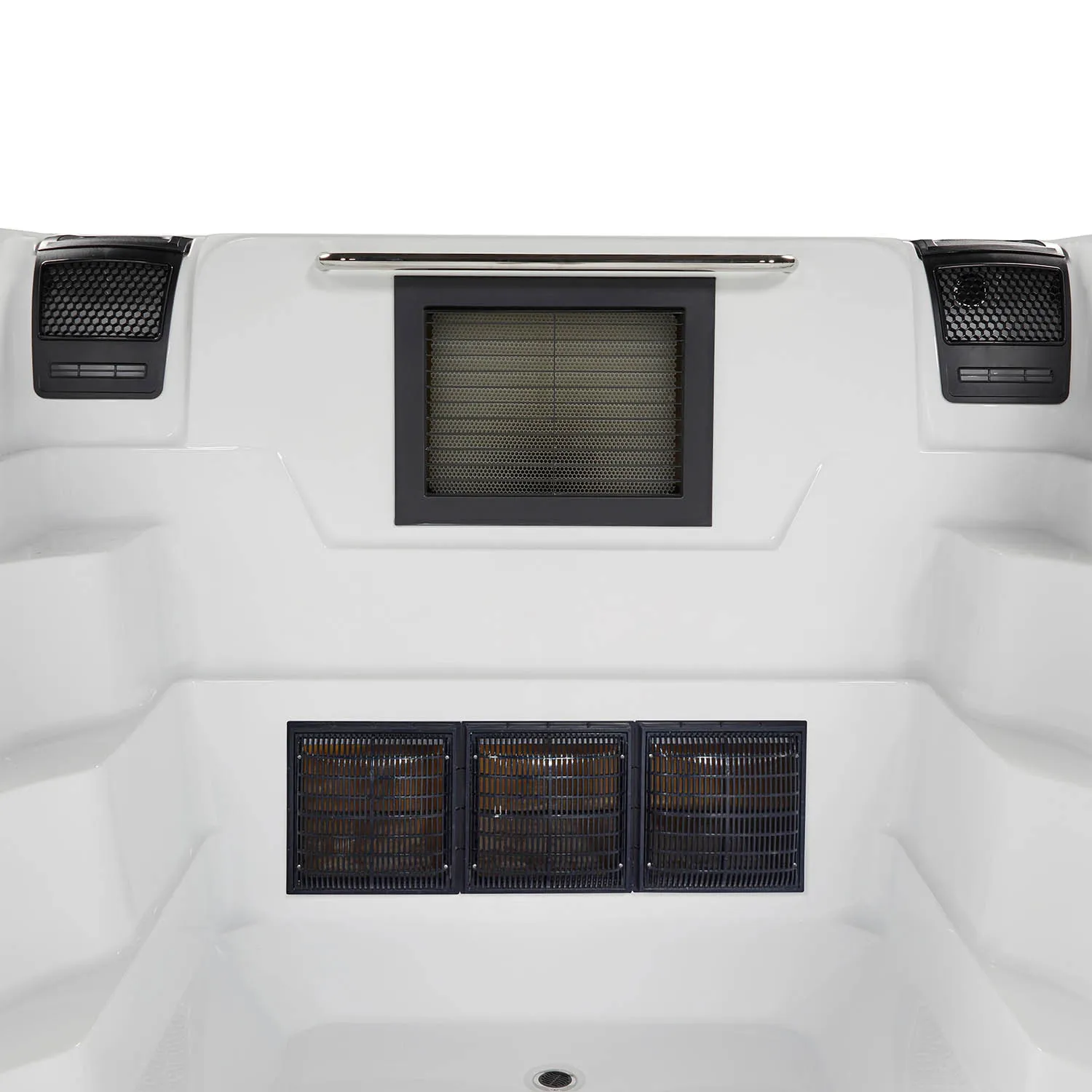
Why do swim spa tubs consume so much chlorine?
The rapid consumption of chlorine in a swim spa tub is typically the result of the combined effects of multiple factors. These factors primarily include:
•Elevated water temperatures
•Frequent water circulation
•Exposure to ultraviolet (UV) radiation from sunlight
•Reactions involving organic matter present in the water
•A relatively smaller water volume
Under these conditions, the chlorine is continuously engaged in disinfection and oxidation reactions; therefore, the decline in its concentration is a normal chemical process.