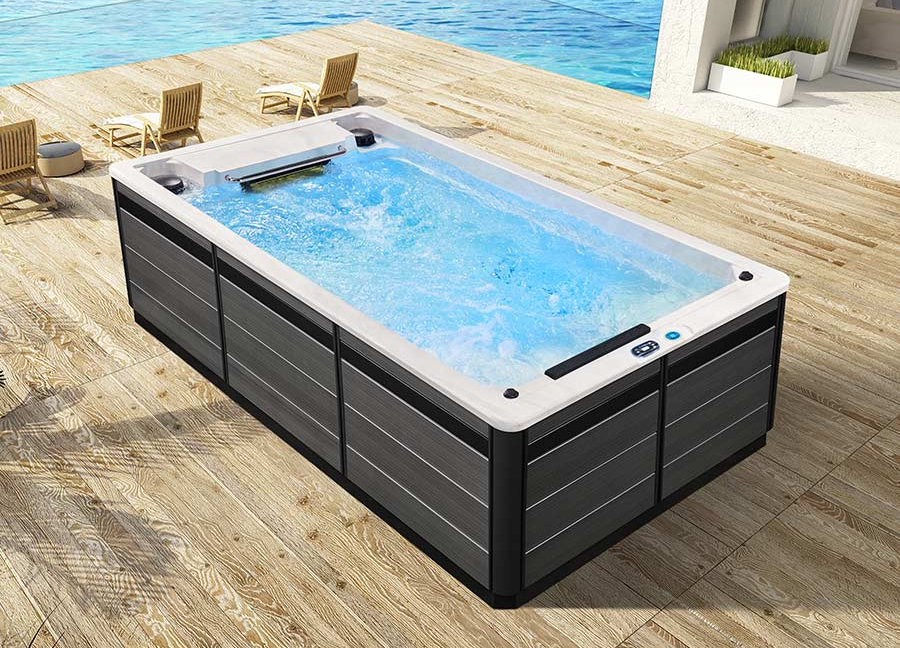
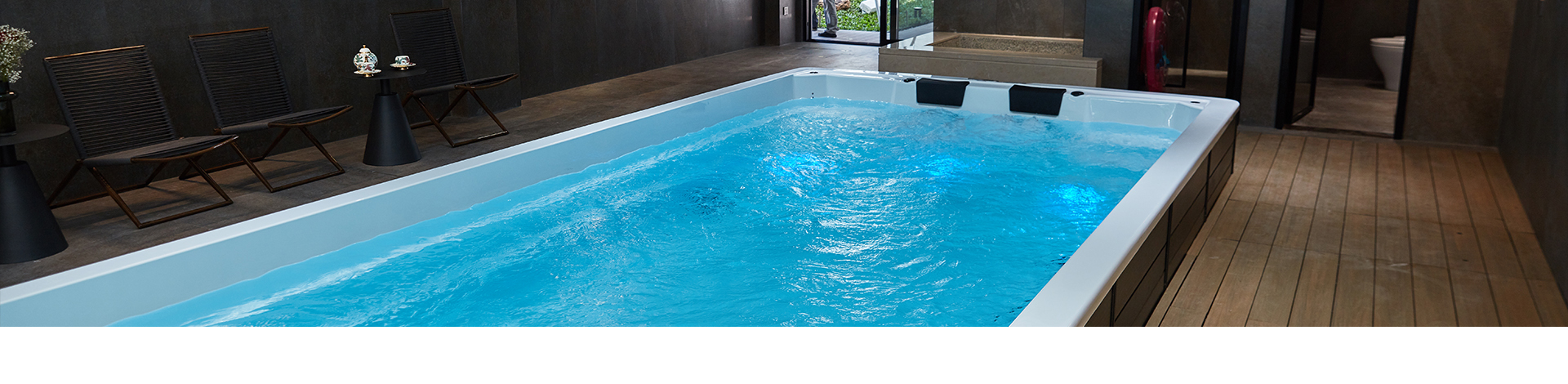
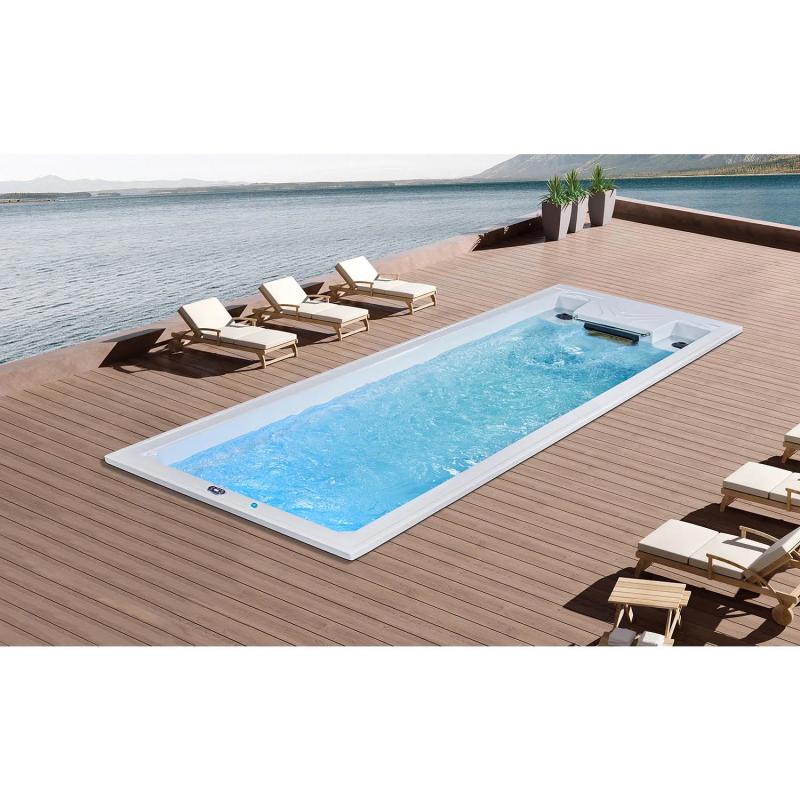
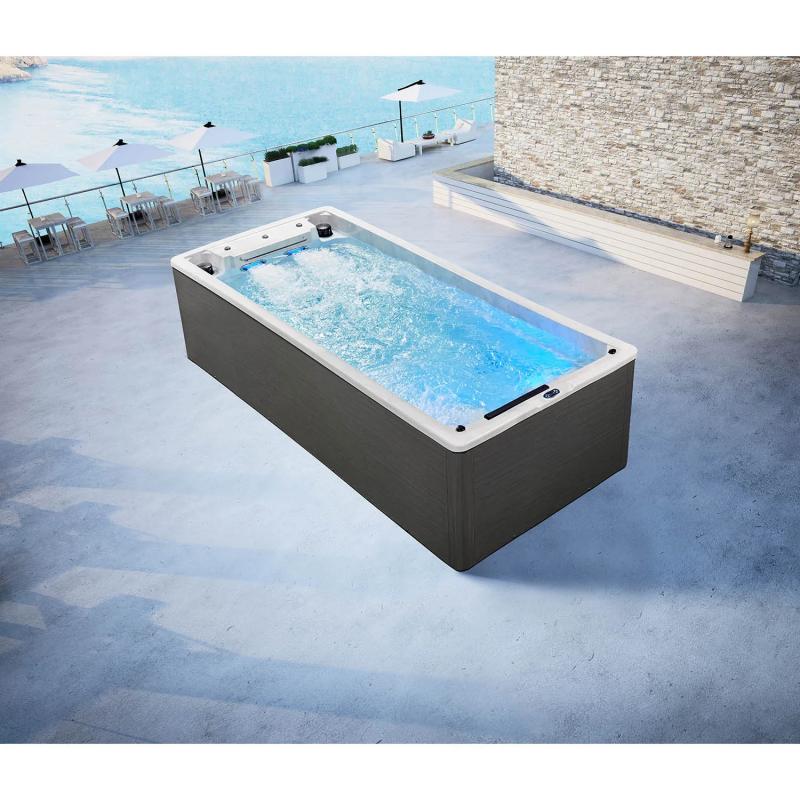
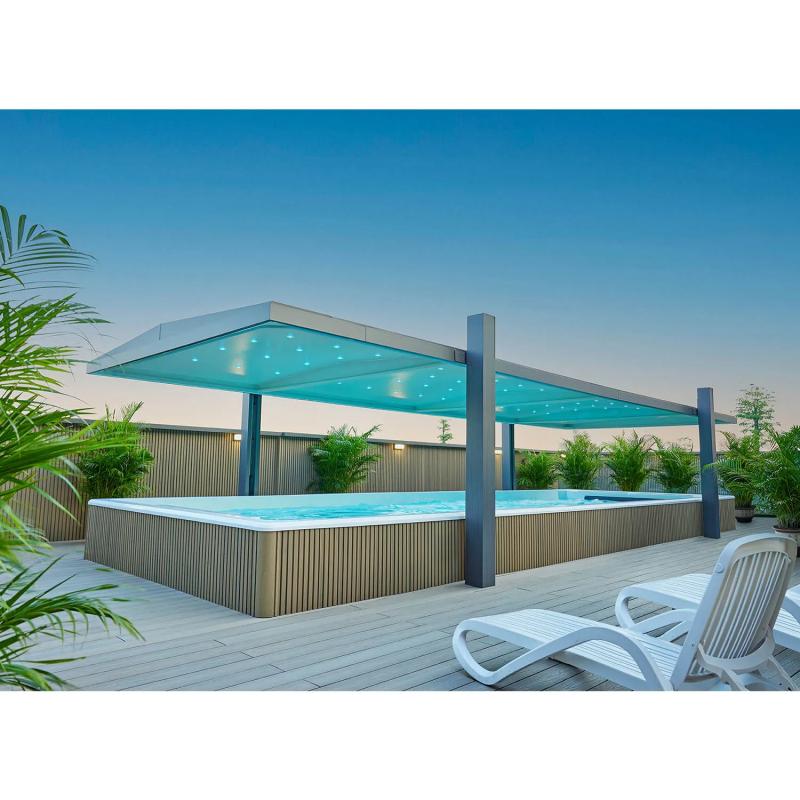
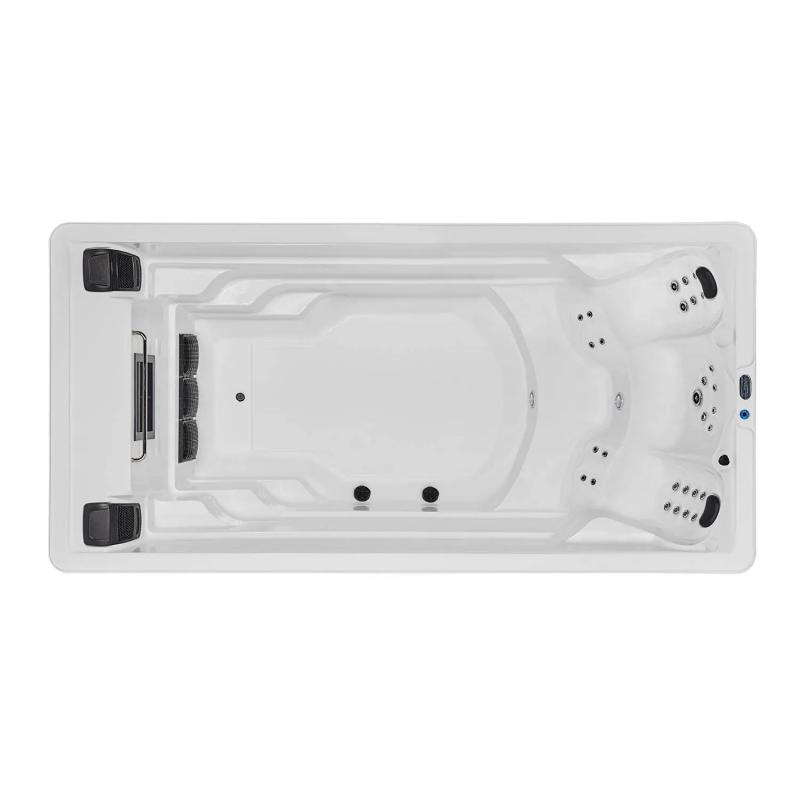
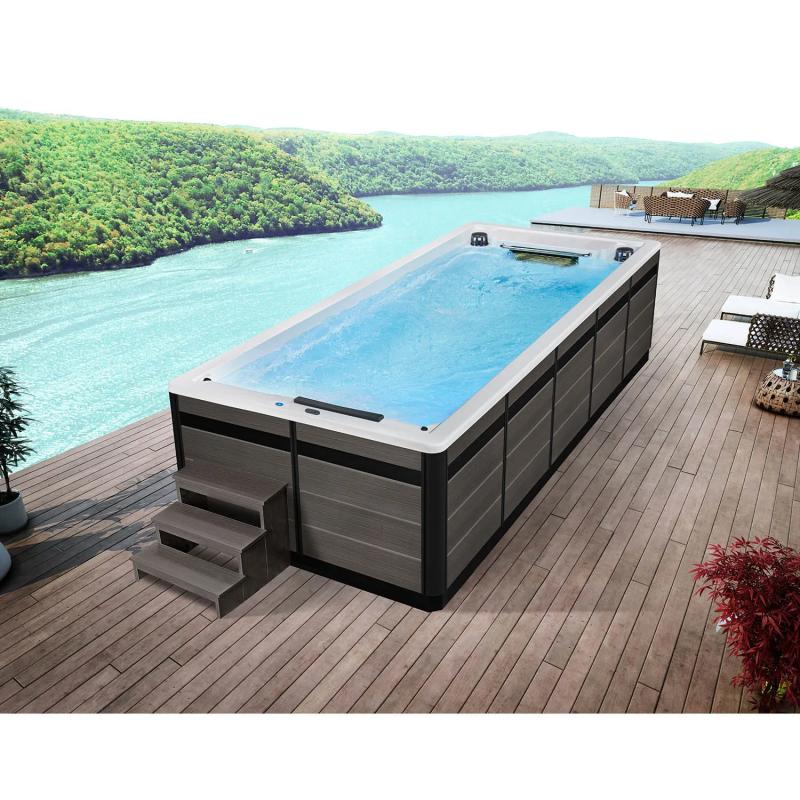
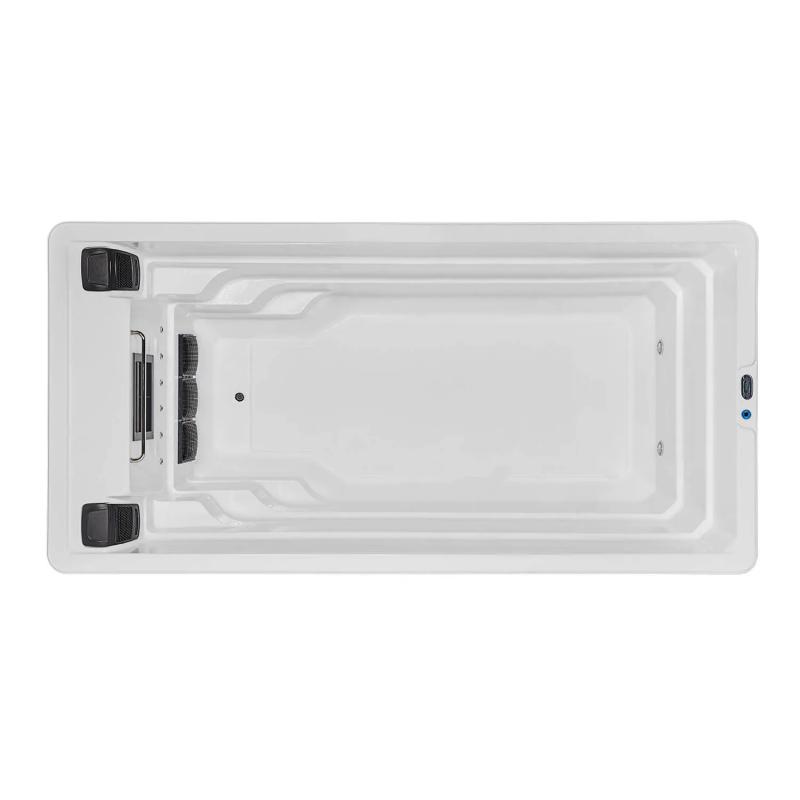
Swim spa tubs are not "only" placed on concrete floors, but they must be placed on floors that meet the requirements for load-bearing capacity and stability.
Concrete floors are simply the easiest way to meet these requirements.
Despite its name including "spa" and "bathtub," a swim spa tub is not a device that can only be used under high water temperatures. In fact, in terms of technical structure and functional design, a swim spa tub can fully support normal operation even without heating or at low water temperatures.
Based on general usage patterns, most swim spa tubs typically require replenishing water as follows:
• Add a small amount of water every 1–2 weeks
• Or replenish when the water level drops significantly
It's important to emphasize that:
Replenishing water ≠ Changing water
In winter, the outdoor temperature is cold, but the constant-temperature hot water in the swim spa tub stimulates blood circulation, helping the body resist the cold and relieve stiffness. The contrast between hot water soaking and cold air enhances metabolism and promotes muscle relaxation.
For most home and luxury swim spa tubs, a concrete slab is the safest and most reliable foundation. A concrete slab prevents damage from tilting, settlement, and vibration, extending the lifespan of the equipment.
If the swim spa tub is primarily used for aquatic exercise or rehabilitation training, the ideal temperature is 26°C–30°C.
This temperature range helps maintain alertness, prevents overheating, and preserves athletic performance.