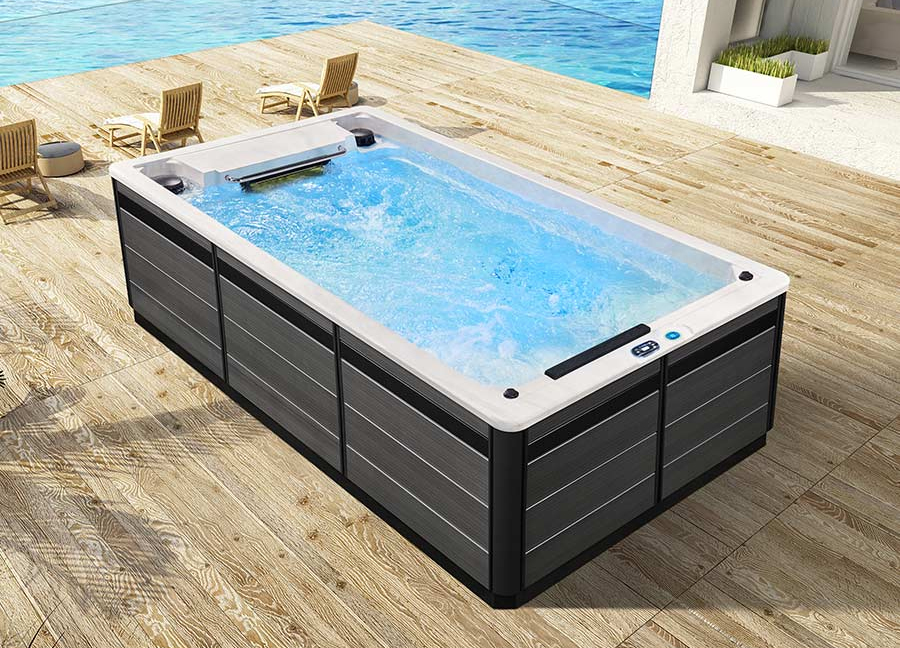
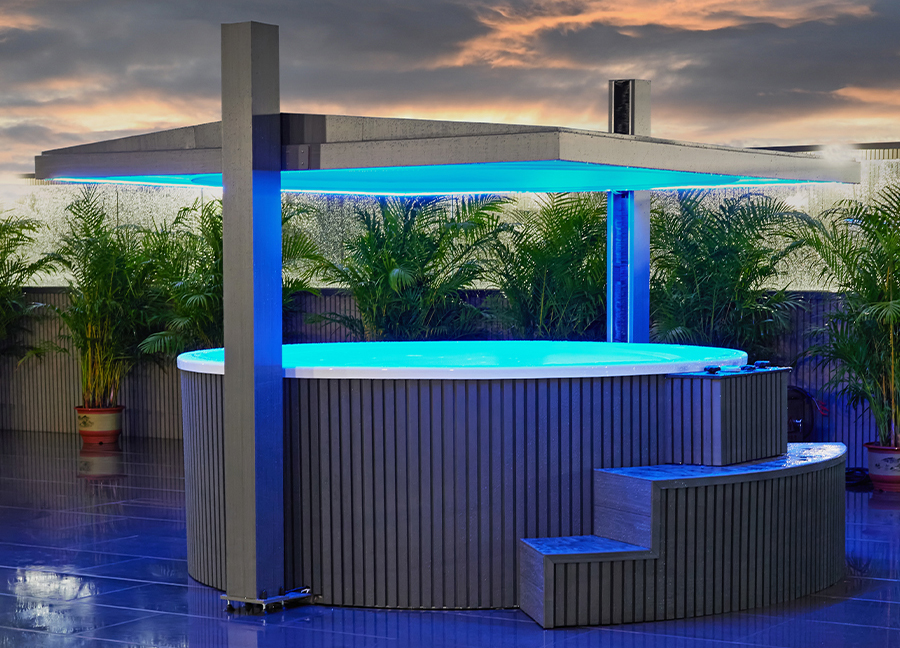

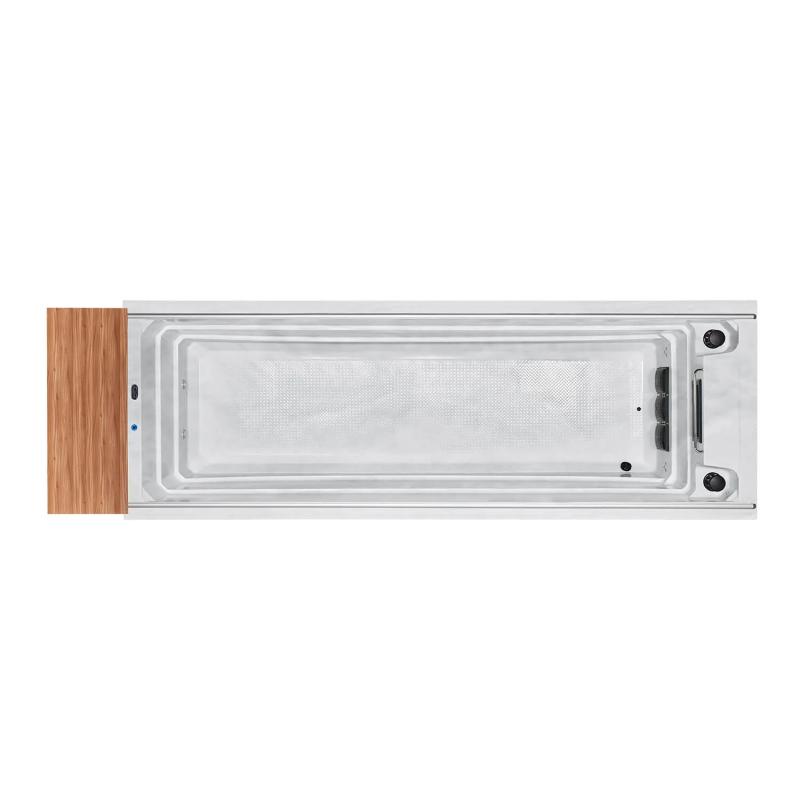
Swim spa tubs are not "only" placed on concrete floors, but they must be placed on floors that meet the requirements for load-bearing capacity and stability.
Concrete floors are simply the easiest way to meet these requirements.
Despite its name including "spa" and "bathtub," a swim spa tub is not a device that can only be used under high water temperatures. In fact, in terms of technical structure and functional design, a swim spa tub can fully support normal operation even without heating or at low water temperatures.
In most cases, using a luxury spa hot tub when you have a cold is not a wise choice.
While short, low-temperature soaks can provide some relief, if you have a fever, are dehydrated, or are weak, hot water therapy can worsen symptoms and delay recovery.
The water temperature is typically maintained at 37–40°C. Full-body immersion causes peripheral vasodilation and accelerated circulation.
This not only helps with overall relaxation but also improves nasal blood flow, gradually reducing swollen mucosa and alleviating nasal congestion.
Based on general usage patterns, most swim spa tubs typically require replenishing water as follows:
• Add a small amount of water every 1–2 weeks
• Or replenish when the water level drops significantly
It's important to emphasize that:
Replenishing water ≠ Changing water
Under certain conditions, brief, mild dizziness is a normal physiological response that may occur.
When you soak in a hot spa tub at a high temperature (typically 37°C to 40°C) for an extended period, your body undergoes the following changes:
• Vasodilation
• Drop in blood pressure
• Redistribution of blood flow
• Fluid loss