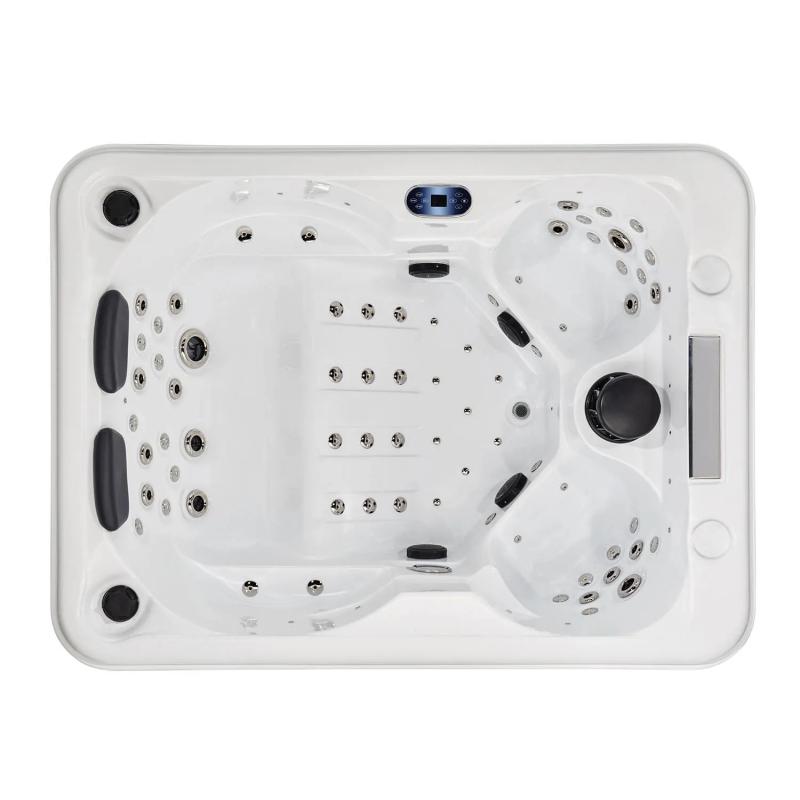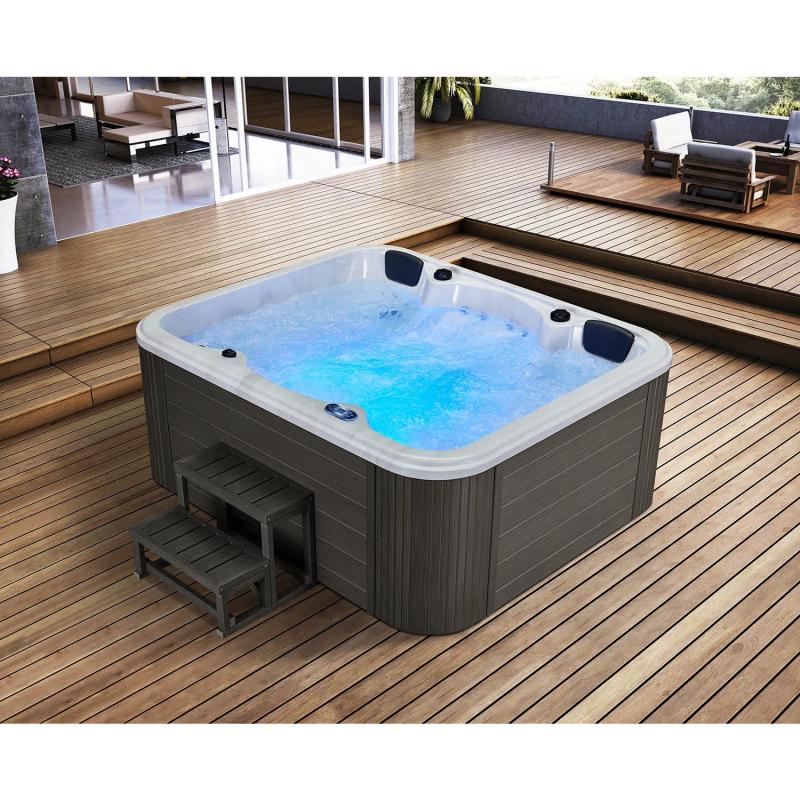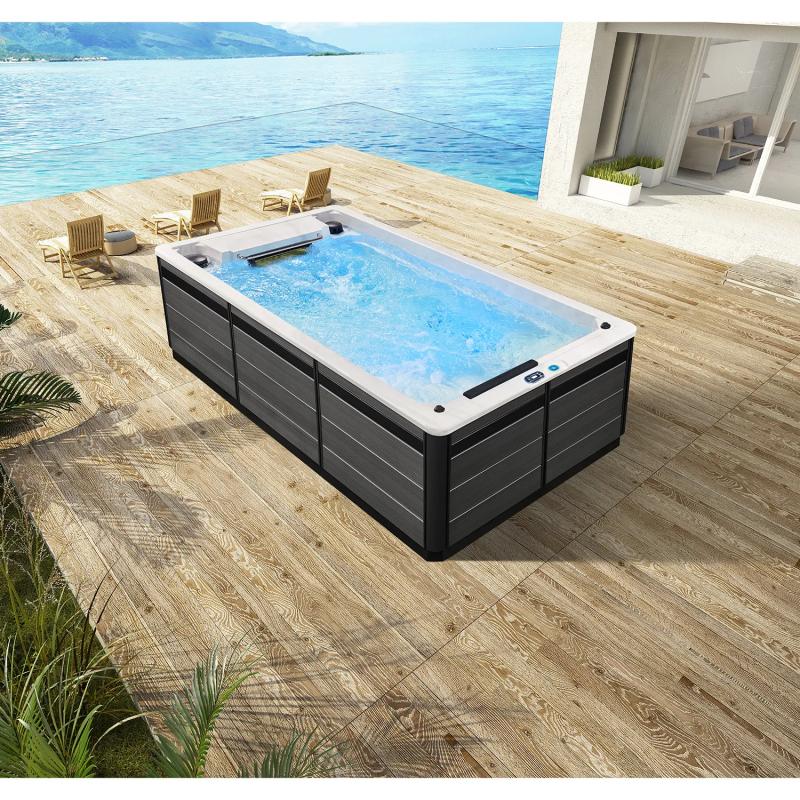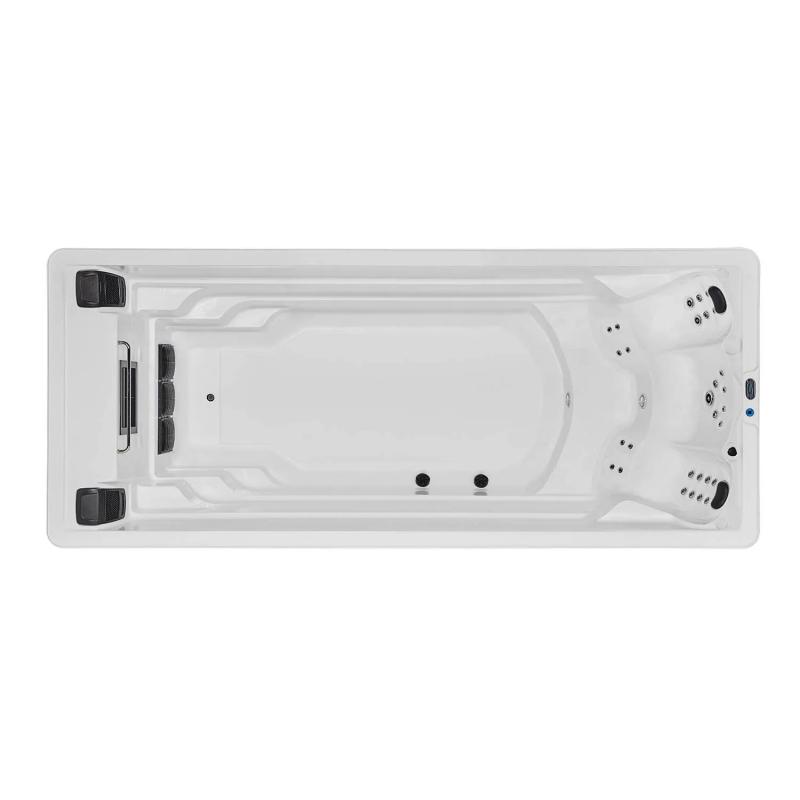
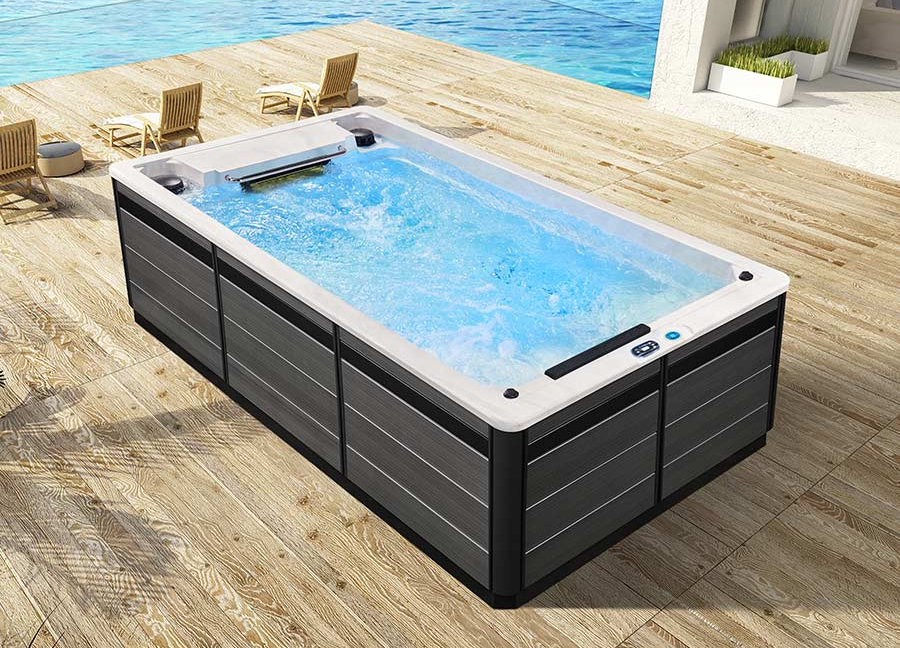
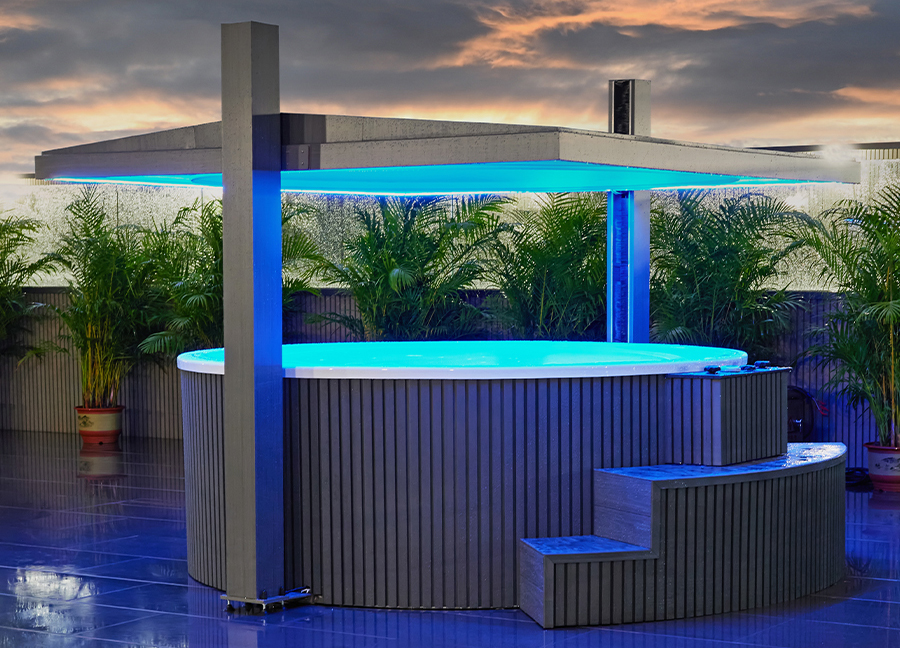


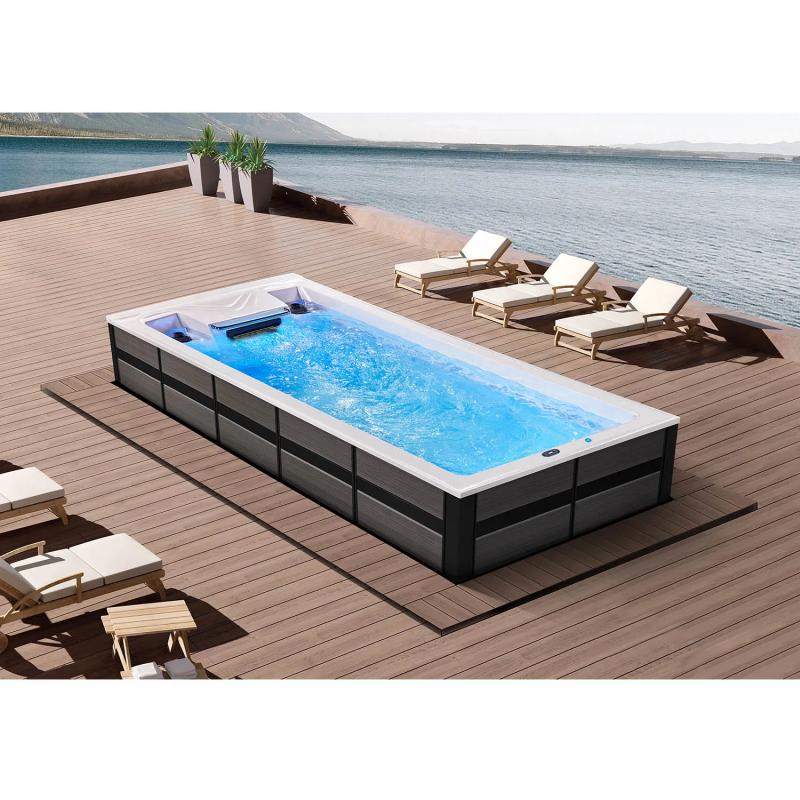
Yes. Soaking in a spa hot tub for two hours consecutively may offer psychological and muscular relaxation benefits, but it also carries health risks such as dehydration, dry skin, cardiovascular strain, and dizziness.
For most home and luxury swim spa tubs, a concrete slab is the safest and most reliable foundation. A concrete slab prevents damage from tilting, settlement, and vibration, extending the lifespan of the equipment.
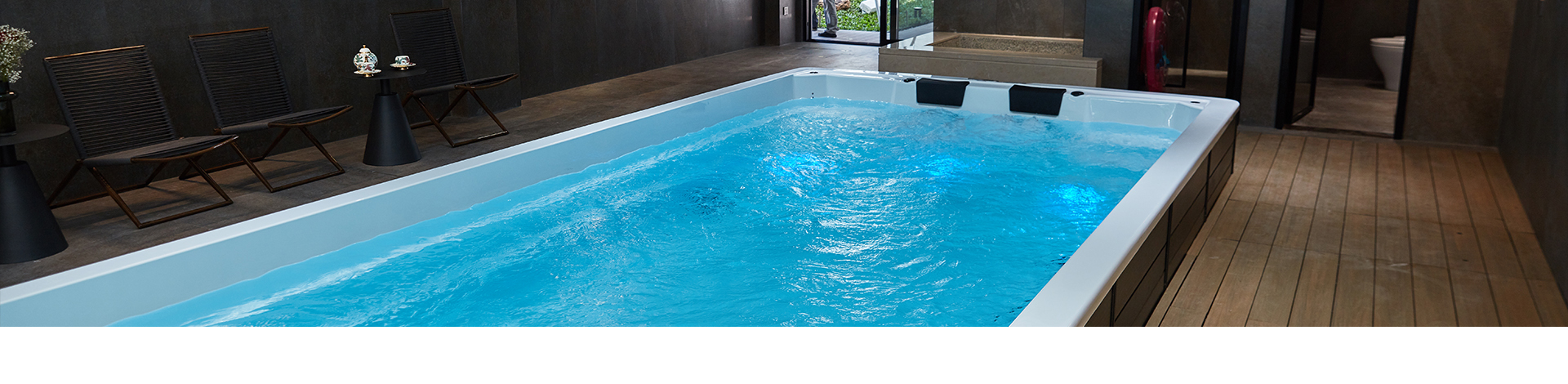
If the swim spa tub is primarily used for aquatic exercise or rehabilitation training, the ideal temperature is 26°C–30°C.
This temperature range helps maintain alertness, prevents overheating, and preserves athletic performance.
If multiple people use it daily, it is recommended to test and add chlorine as needed daily.
If used occasionally, adding chlorine 2–3 times per week is sufficient.
In summary, in most cases, it is recommended to test the water quality of a swim spa tub at least every 2–3 days and add chlorine as needed.
Most countries and regions have clearly defined maximum temperatures for hydrotherapy hot tubs. The U.S. Consumer Product Safety Commission (CPSC) recommends a maximum temperature of 104 degrees Fahrenheit to balance comfort and safety.
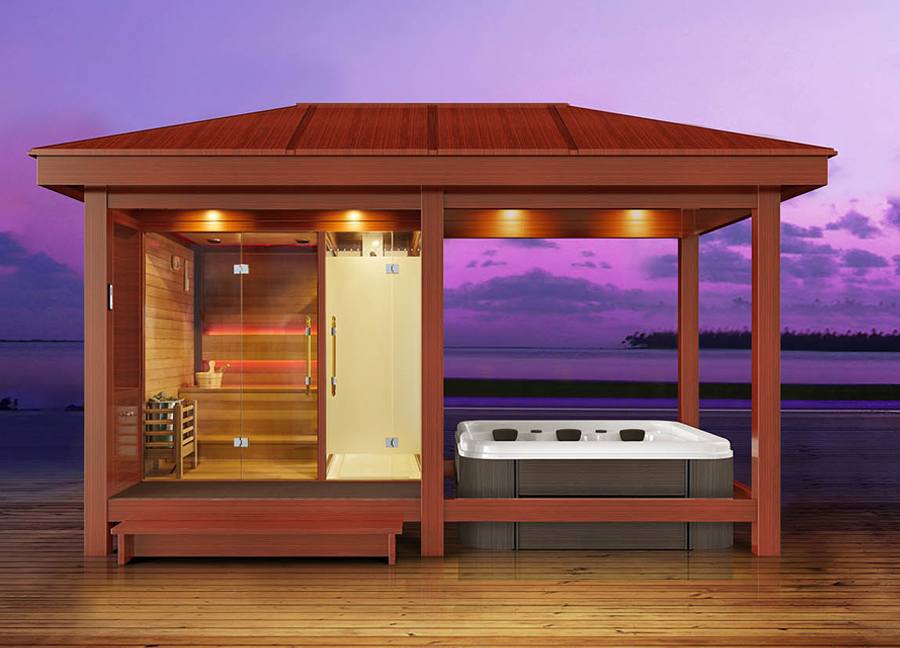
Installing a steam sauna at home allows for convenient use anytime, eliminating reliance on gym or spa opening hours. This convenience is highly appealing to busy individuals or those living in remote areas.